Listen to this story on Spotify:
A wildfire report reads differently when you recognize the name of the nearby town.
You look for details: how far the fire has spread, how close it is to the houses. If friends or relatives live there, you keep calling. If it’s the forest you’ve been visiting since childhood, you study the photographs, trying to place what you see. The acreage burned becomes a trail you have walked with friends dozens of times, the trees you have rested under.
You want to read that the fire is under control. You want to know there will still be shade when you go back.
This often depends on delivery drivers, project managers, mechanics—people with jobs like yours. When a fire breaks out, they put on protective gear and join professional firefighters as volunteers. A love of nature, a sense of duty, a desire to help people in trouble has brought them together. They have trained to be useful when fire crews need more hands.
Stanil Ereev was 23 when he signed up. Now a cofounder of the volunteer team Sofia 343, he was studying in the Netherlands when he spotted a call for disaster-response volunteers in the Bulgarian news. After returning home, he joined the municipal volunteer unit in Sofia, Bulgaria’s capital. His first fire was in the Bistrishko Branishte nature reserve, near Sofia, in 2012. Bringing it under control took days of work by professional crews and hundreds of volunteers. Stanil was among those nominated for a city honor for their contribution.
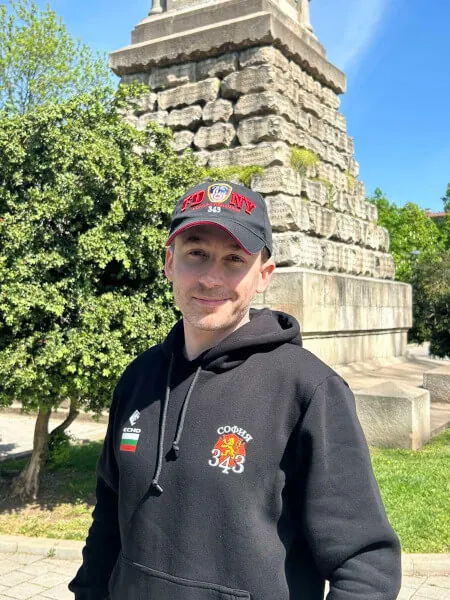
Much has changed in his life since then. He has built a career and a family in Bulgaria while continuing to make room for training and emergency callouts alongside work and responsibilities at home. As his experience grew, so did his responsibilities to fellow volunteers. For nearly a decade, he helped lead Sofia’s municipal unit as its deputy head, preparing others for the demands of the work. An initial impulse to help has become 15 years of fighting fires, responding to floods, and organizing donations and humanitarian aid.
“This is what modern-day patriotism means to me,” he says. “I believe this is how I can do something good for Bulgaria.”
He recognizes that outlook in many of the volunteers he has worked with. For some, the strongest pull is a love of nature; for others, it’s concern for people. All are willing to put their own time, effort, and money into protecting something they share with others.
Stanil and Stanislav Minchev knew each other through volunteering. They decided to form their own team so they could shape its training and development themselves. The result was Sofia 343, Bulgaria’s only volunteer unit devoted exclusively to fighting wildfires. About 15 people came together around the two founders. For most, the summer of 2026 was their first fire season.
Stanislav leads the crew during operations. With more than 40 fires behind him, he is the team’s most experienced member. He knows everyone needs to be comfortable with the tools and able to judge the danger. If someone gets hurt because they aren’t prepared, others have to stop fighting the fire to help. The fire won’t wait.
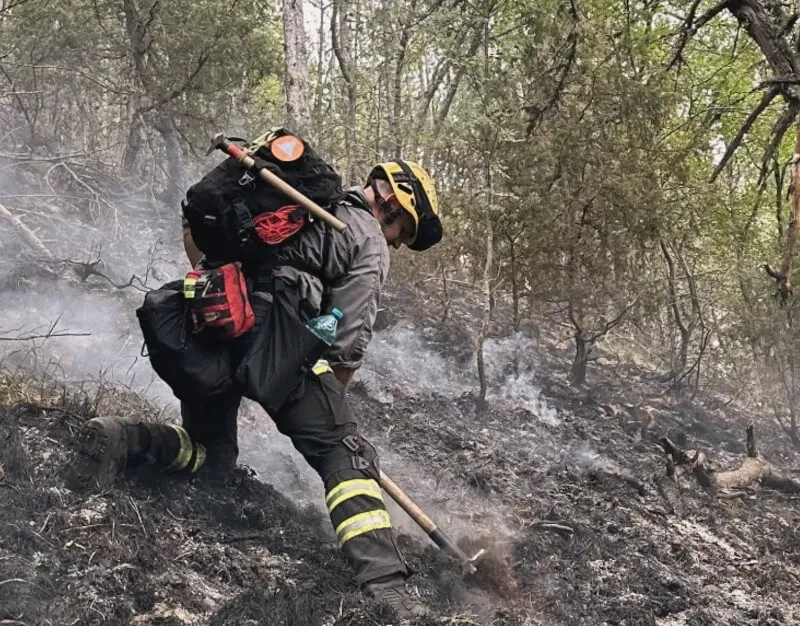
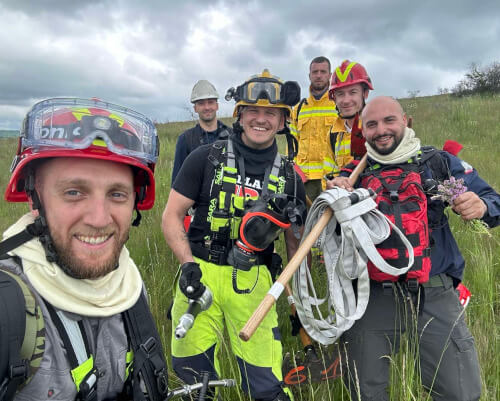
Training begins long before the first callout and goes beyond Bulgaria’s legal requirements. The volunteers work with firefighters and instructors at home, practicing together in the field. They also draw on expertise from abroad, taking online courses developed in the United States to learn how weather affects fire behavior. The wind can pick up, the temperature can climb, and a fire that looked one way in the morning may demand a different approach by afternoon. They have to be able to use what they have learned even when they are exhausted.
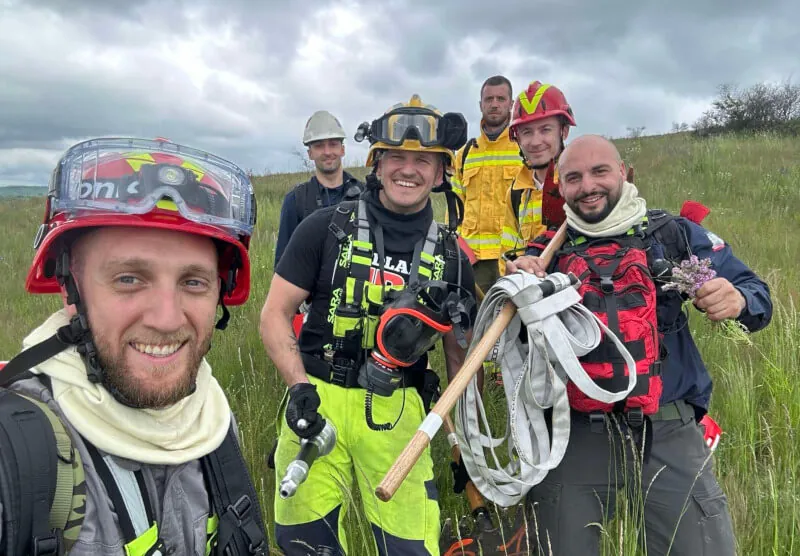
And just about everything they do is exhausting. In temperatures above 86°F, they wear long protective clothing, gloves, and helmets, sometimes adding full-face masks with filters. They haul backpack pumps holding 20 liters of water—roughly five gallons—and carry hand tools to clear vegetation ahead of the flames. They can work for hours, until dusk. Stanil describes being soaked in sweat within minutes and having to watch for dehydration. The gear makes the heat harder to bear, but it protects them from injury.
Even with every precaution, helping someone else can put your own life at risk. Sofia 343’s name commemorates the 343 firefighters killed in New York on September 11, 2001—a loss felt throughout the profession, far beyond the United States. Stanil visited the memorial and suggested the number both to honor the dead and to remind the living of what they are taking on.
In its first summer, Sofia 343 helped fight ten fires. For the newcomers, these were the first real tests of their training: working alongside experienced volunteers, sharing the hard physical labor, and helping stop a fire before it could consume more forest or reach someone’s home.
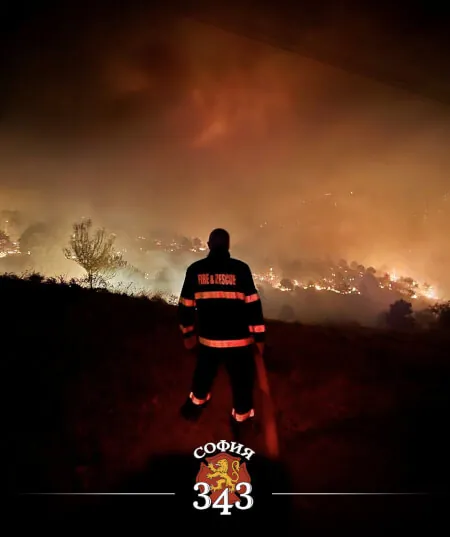
Unlike Bulgaria’s municipal volunteer units, which receive government funding for equipment, Sofia 343’s members buy their own protective gear. Each spends between €500 and €1,500 before heading out to help. But their personal budgets can’t cover everything the team needs for its firefighting vehicle, tools, and medical kit. That’s where the rest of us come in: helping equip the people we count on to protect our homes and forests.
On September 19, Sofia 343 will park its vehicle in the courtyard of Bar Petak in Sofia and lay out the gear its volunteers have been using all summer. At “Together Against the Fire,” you can try on a firefighter’s helmet, take hold of a hose, and see what it’s like to use it. You can watch footage from the fires and ask the people who were there what it was like. And if you are thinking about volunteering yourself, you will have someone to talk to.
Bulgarian singer Mihaela Marinova will close the evening with a performance in support of the volunteers.
You can help even if you can’t make it to Sofia. Donate through Sofia 343’s website to help pay for tools and equipment maintenance.
If you do come, try lifting the backpack with its 20 liters of water. Feel the weight settle on your shoulders. After a minute, you will probably take it off. The people beside you carry it for hours, in the heat, covered in protective clothing.
So the rest of us can still find a place in the shade.