 A cardboard house controlled by sensors. A detective mission where participants search for a lost sock in their hometown. (You need a pair to be completely happy!) Crowds of monsters that keep you from reaching your goal, a precious ladle. A space walk with a DIY moon rover.
A child’s imagination knows no bounds, and even the most creative idea can become reality with several lines of code.
The 70-plus participants in the second Bulgarian edition of Kids Game Jam, an international video game programming competition for children ages 7–16, proved this yet again. On January 26 and 27, fifteen teams took part in the first round of the competition. Within two days, the young programmers developed games on the Scratch platform according to preset criteria: the games had to feature a sock, a landmark from the players’ hometown, obstacles, and happiness. The winners, to be announced at the end of March, will take part in the international round of the competition in Italy in May.
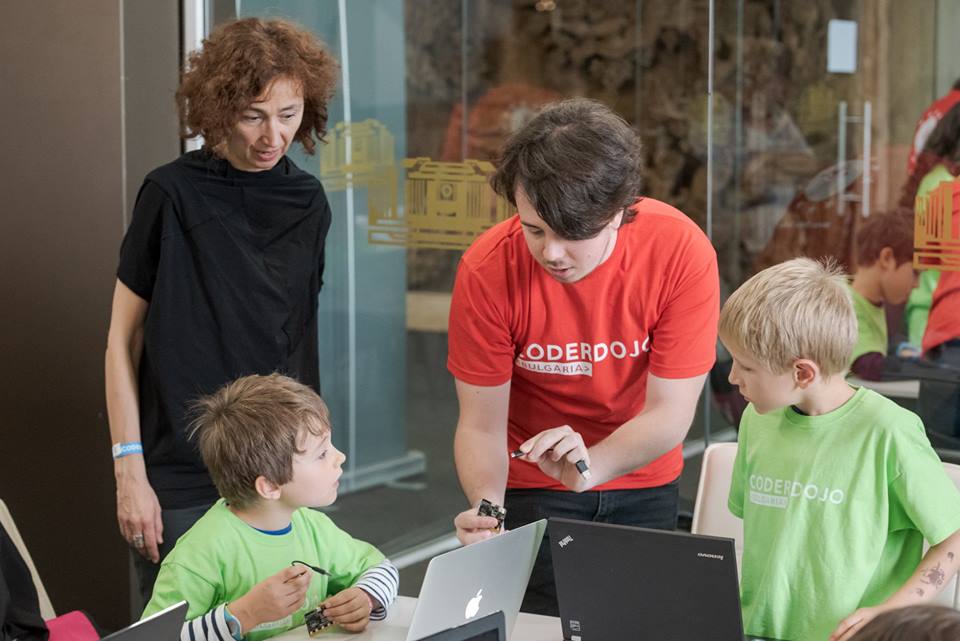
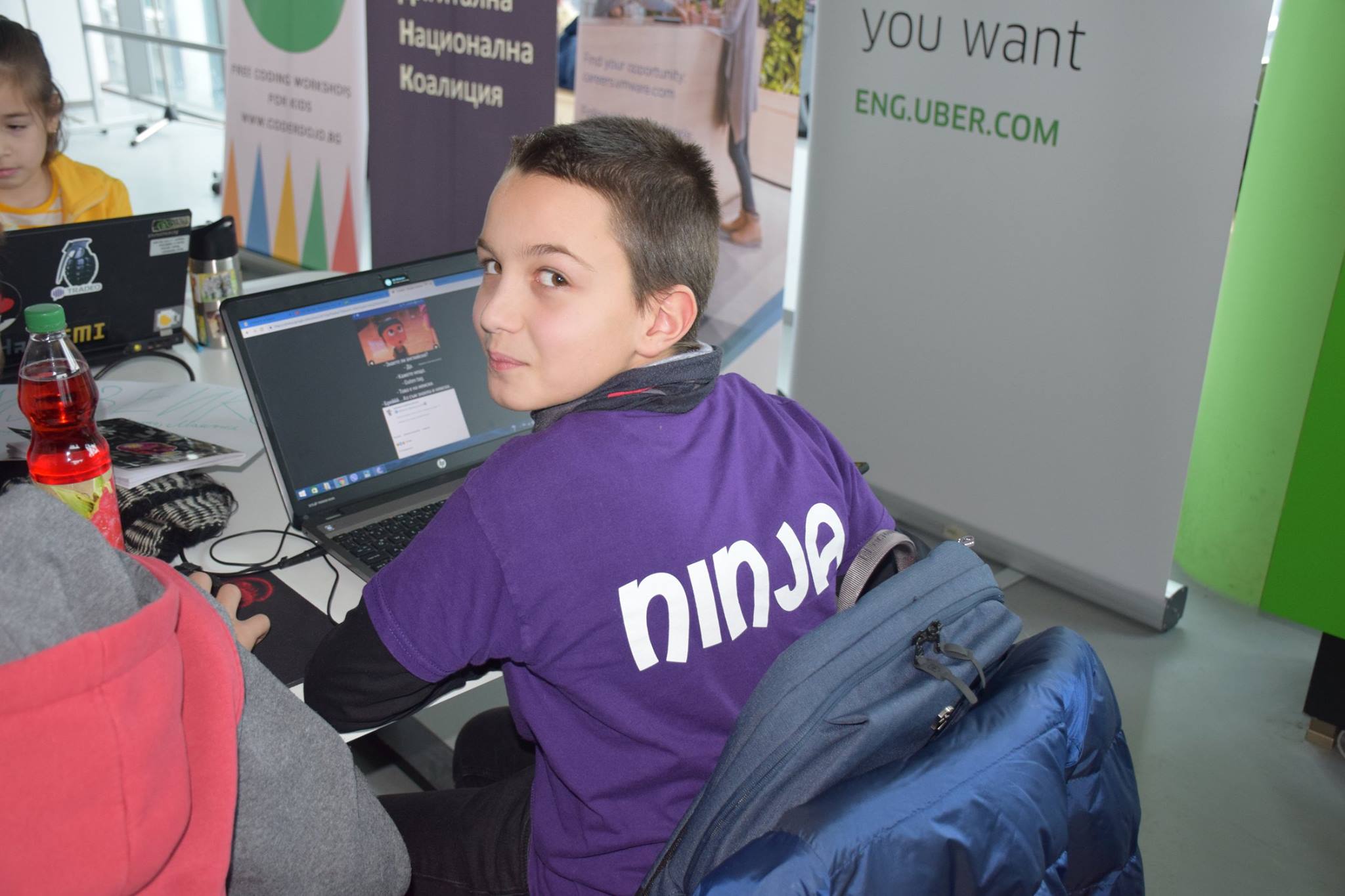 Many of the contestants call themselves “ninjas.” These are not to be mistaken with the Japanese fighters from Antiquity; they are modern ninjas—virtuoso programmers or, at least, virtuosos in the making. In Bulgaria, their number is increasing thanks to CoderDojo Bulgaria, a network of free children’s programming clubs, part of the global CoderDojo organization. In the “dojos,” children as young as 5 or 6 years old can learn to code by taking part in fun, informal activities with mentors from the IT sphere.
Dojo clubs do not follow a strict curriculum. They are driven by the interests and capabilities of the ninjas, who take their first steps in video game programming, automation, and VR creation.
This freedom is no coincidence. “Children want to find their own answers, not repeat someone else’s,” says Vessela Simova, founder of CoderDojo Bulgaria. The philosophy behind the dojo clubs is that children learn better when they do things that interest them. Apart from having fun, they learn to solve problems and work in a team.
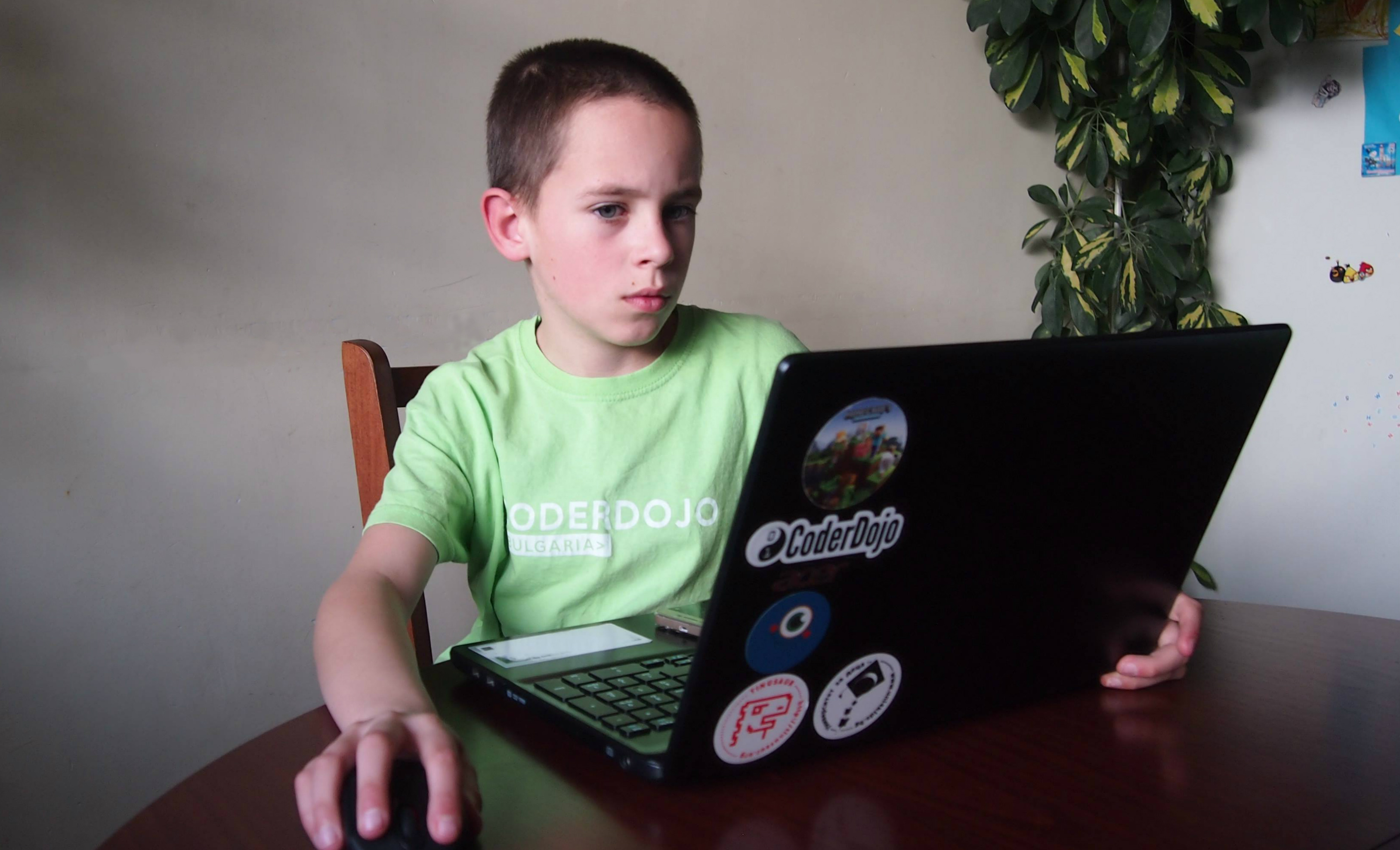 Ten-year-old Yoan Yanchev appreciates dojo clubs because “you don’t have to do what you’re told; you can make a game up, and the mentors help you.” Yoan was a dojo member for two years before he and his mother founded their own club a year ago. (“Mom knows a bit about coding, but she doesn’t really get which games would be fun for kids, so I’m captain and mentor of the dojo and I help other children code.” This is Yoan’s idea of the distribution of tasks in their club.)
Yoan is part of the international jury in this year’s Kids Game Jam. A game has to be “beautiful and fun and work well” to win, he says.
Informal activities motivate children to learn and attract more and more followers. “After we announced that the kids had an hour for lunch at Kids Game Jam 2019, many of the teams asked if they could keep working during the break,” says Martin Dimitrov, another judge in the competition this year and a longtime mentor at CoderDojo Bulgaria. Martin began coding at 15 and got his first full-time job as a software engineer a year ago. He is 20.
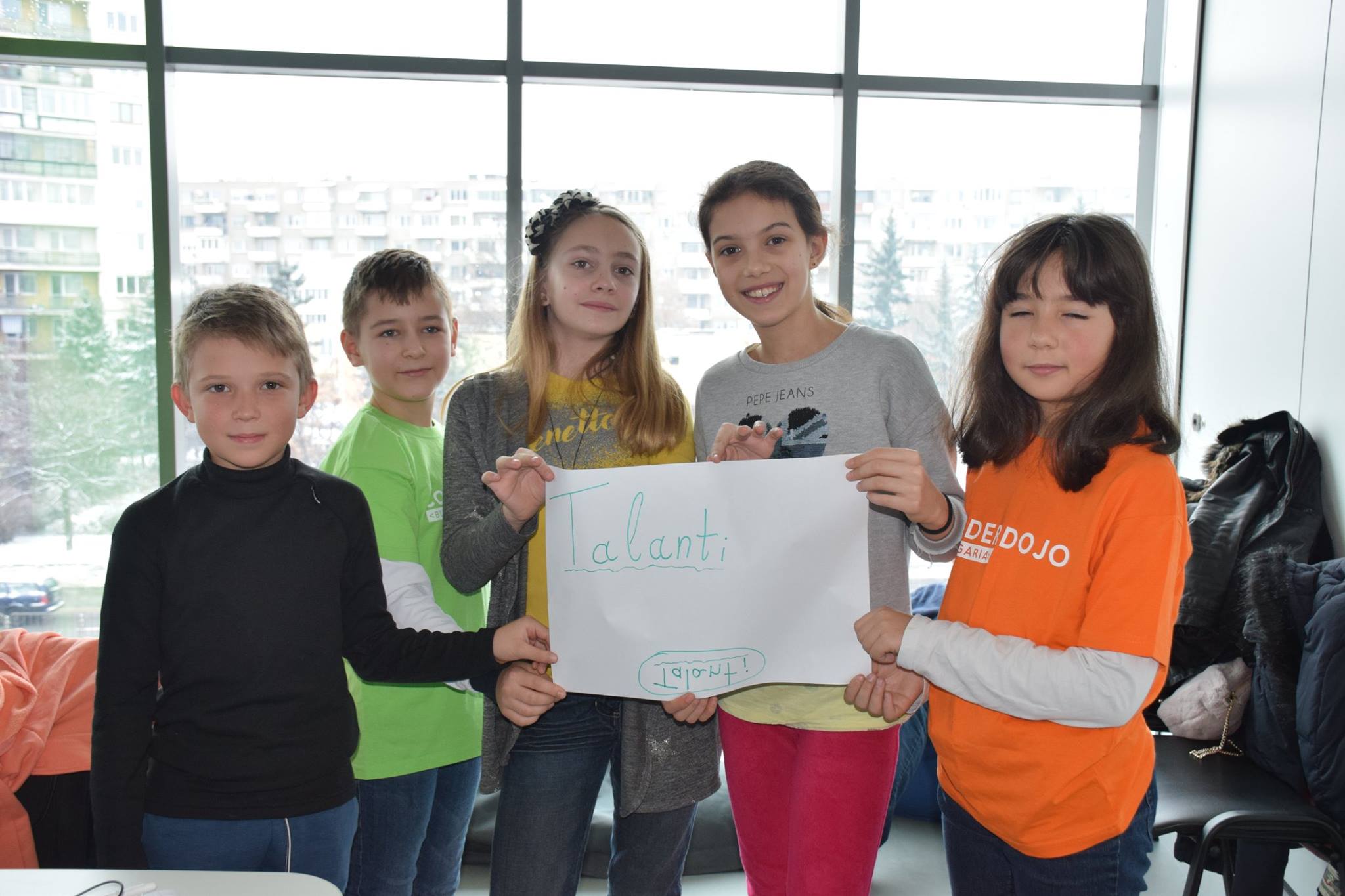 Ten-year-old Lydia Sheljaskova likes her dojo club because her mentors’ explanations are fun and easy to understand. “At school, our teachers do a lot of explaining, but I still don’t understand sometimes. I always understand everything at the dojo,” she says. What’s more, ideas can be put into practice immediately at the dojo club, making them more accessible. Lydia also likes that mentors pay individual attention to each ninja and that she constantly learns new things.
“There were no dojo clubs when I was a child, but it would have been very helpful if there had been. This is why I want to give kids a chance now,” Martin says. “I also love to be around kids, and I love how their eyes light up when they learn something new and cool. This is something that makes me really happy.”
CoderDojo Bulgaria clubs are just one of the many extracurricular initiatives helping Bulgarian students acquire programming skills. Through its support for Telerik School Academy, Vratsa Software Society, and the Coding4all initiative, the America for Bulgaria Foundation helps hundreds of children and adolescents across the country acquire digital skills for the jobs of the future.
Photo 1: Martin Dimitrov has volunteered as a mentor for more than three years.
Photo 2: A young ninja
Photo 3: Yoan Yanchev
Photo 4: Talanti – Lydia Sheljaskova’s team at Kids Game Jam 2019