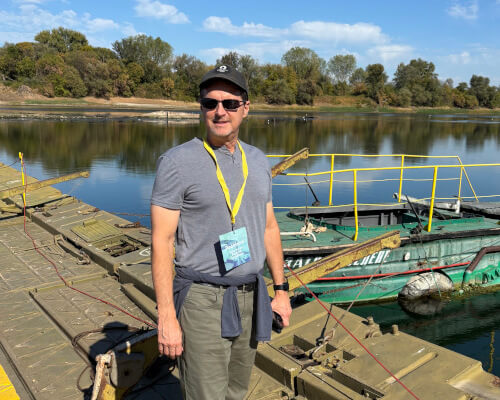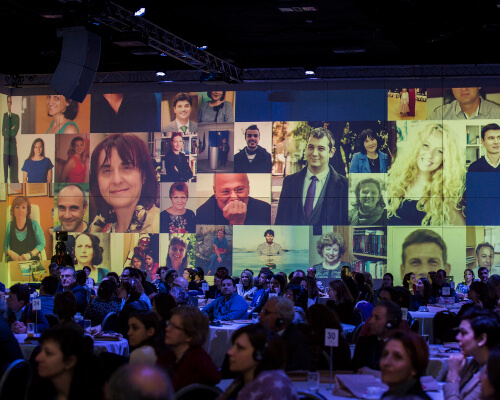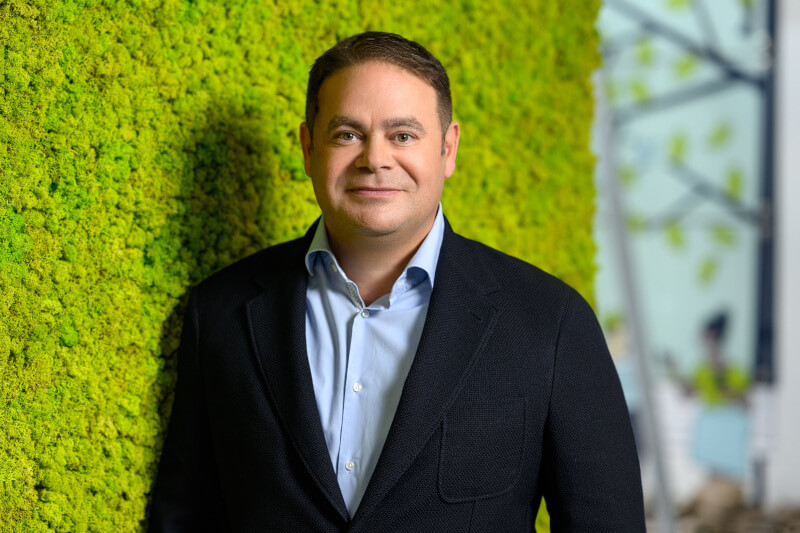
Jason King didn’t set out to become a telecom CEO. He grew up in Saint John, New Brunswick, Canada, and began his studies in chemical engineering and biochemistry before changing course. A 1996 development project in rural Philippines introduced him to digital technology – and set him on a new path. Over three decades later, he’s leading Yettel Bulgaria through one of the country’s most dynamic transformations – anchored not just in performance, but in people.
“We write the future,” he says. “And we have to be the change agents ourselves.” It’s a message that resonates deeply at Yettel, where under King’s leadership, the company has combined market leadership with a human-first culture – from industry-best customer service to innovative environmental and inclusion programs. Whether it’s rethinking talent development through initiatives like Growth Mindset, Edu Grants, or Side by Side, or giving back through creative ESG campaigns, his vision of leadership is as personal as it is strategic.
One standout example: Yettel’s digital reinvention of the iconic 100 National Tourist Sites platform. What began as a beloved paper passport program for Bulgarian travelers is now an award-winning multimedia experience accessible to all. “We’re not commercializing it,” King says. “It’s about giving back – and doing something meaningful that connects people to this country.”
In this wide-ranging interview, King reflects on the lessons of leadership, the importance of culture, and how Yettel is preparing both people and platforms for the future.
America for Bulgaria Foundation: Looking back on your tenure as CEO of Yettel Bulgaria – nearly 7 years now! – what are you most proud of?
Jason King: It’s not one thing. Seven years is practically a business lifetime. We’ve built a well-run and profitable business that contributes to society and delivers on customer experience. We’re not always fully there, but we get better every day – and that’s something we want to differentiate on going forward.
A big part of that is people. We’ve nurtured excellent teams – among the best in the country. I often hear from other employers that we’re a training ground. What’s really interesting is how many employees who leave for other experiences eventually come back. That speaks volumes.
ABF: What has been the biggest challenge in leading Yettel, and how did you address it?
J.K.: Maintaining our leadership in revenue market share. That’s hard. You’re always in a defensive position – it’s easier to be the underdog. Our competitors are tough. But we’ve tried to avoid knee-jerk reactions. Instead, we stay strategic, even if that means taking a short-term hit.
Another challenge? Changing mindsets. When things are going well, people ask, “Why change?” But that’s exactly when you need to. We’ve fought complacency by talking about becoming change agents ourselves – writing our own future.
ABF: Yettel is widely recognized for its workplace culture. What are the building blocks of that success?
J.K.: We’ve built a culture where people really feel part of something. Even during Covid, when we had remote options, I had people asking when they could come back – not because they had to, but because this place feels like their second home.
Going through that period where people were in different places, we had to find a way to bring them back – not just physically, but mentally. Around the same time, we were also stepping up our digital transformation. So we kicked off the Growth Mindset program to help people build resilience and adaptability and think differently about innovation.
We brought in international speakers and ran practical workshops. One of the speakers was the lead Oxford scientist behind the AstraZeneca vaccine – she talked about shrinking innovation cycles under pressure and how you still have to follow the science. It really made people think.
We’re also trying to get more of a voice into our workforce. We tell people: don’t wait for someone to choose you – say what you want to do, take ownership of your learning and growth.
And we’ve launched digital literacy and AI readiness programs across the company – we’re asking everyone to explore how automation and new technologies can improve the way they work.
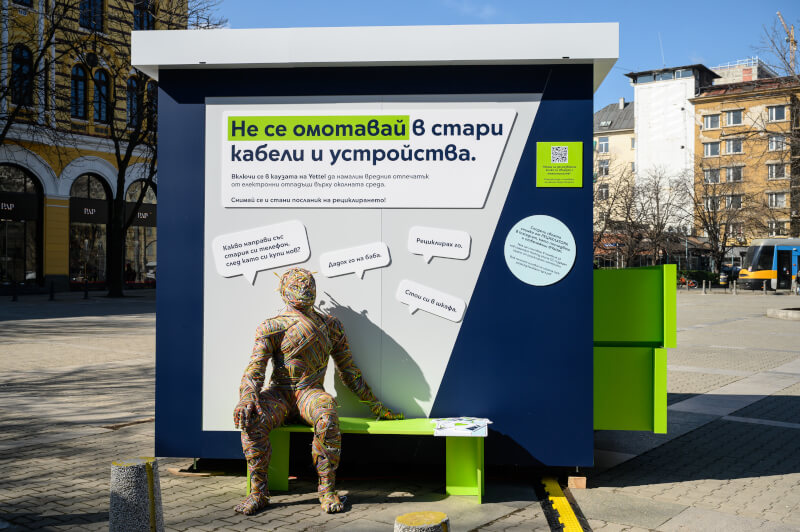
That’s part of how we’re preparing for what’s next.

ABF: How do you support professional growth more tangibly?
J.K.: We run Edu Grants, which helps our employees get expert qualifications – mini MBAs, chartered credentials, whatever fits their path. I’ve been through it too. I became a Chartered Director through the Institute of Directors in London. Galina Chuleva, our head of HR, just completed her diploma. I’m proud of that because it means we’re leading by example.
We also launched Hub by Yettel ten years ago. It’s a one-year paid internship for students or recent grads (not the usual 1–3 months), and we have welcomed about 100 people for the past ten years. And Second Shift lets high schoolers – kids of our employees – join real teams and discover where they want to grow. It’s a great way to connect generations.
ABF: How do you make sure the company is a place where such a wide range of people can thrive?
J.K.: The Side by Side program just turned ten. It’s not symbolic – it’s about real integration. We bring in people with different capabilities and give them real roles on real teams. They get a mentor, psychological support, and specialized onboarding. Over the past ten years, we’ve welcomed 40 participants – and nearly one-third have continued their professional journey with us.
Last year we also ran a campaign called Look Around – it was a mirrored, tree-shaped installation that we launched around the International Day of Persons with Disabilities. The idea was to get people to reflect – to look at themselves, and others, a little differently. We wanted something that would stop people in their tracks and make them think.
And we feel a responsibility to support digital education more broadly – Digital Scouts is one of the programs we’ve launched to promote digital literacy among kids and young adults. It’s part of how we help the next generation understand both the opportunities and the risks that come with life online.
ABF: Tell us how the idea came about to digitize the 100 National Tourist Sites.
J.K.: First, it was something really unique in Bulgaria. We said, how do we differentiate? How can we give back? And we thought – this [platform] is cool. Everybody here knows about it. It’s nostalgic. So we said, okay, how do we modernize this? How do we make it accessible and fun, but still honor what it means?
What surprised me was how emotional it got. At the launch, one woman who was part of the initial team was in tears. She said it brought her back to her childhood. That’s when I realized – we’re doing something that really matters to people.
ABF: How did you bring it to life – and what makes it different?
J.K.: It was done in-house in partnership with the Bulgarian Tourist Union. Our creative and advertising agency – guts&brainsDDB, got some brains involved, but it was really led by Maria Marinova – our marketing and communications director. She took it to heart. It was her project, and her passion was infectious.
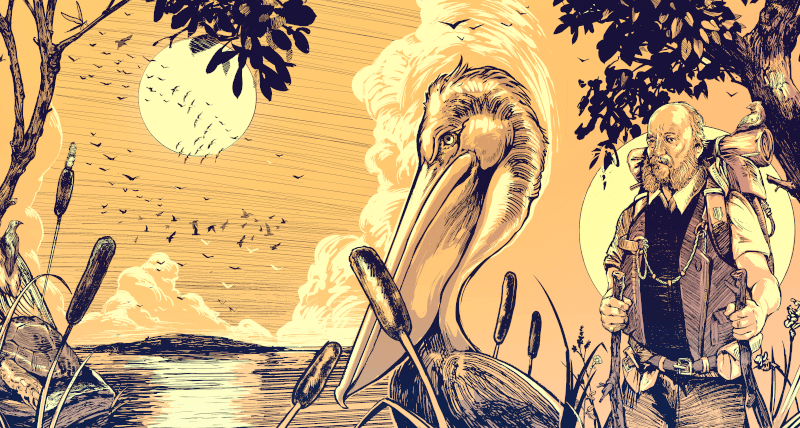
We involved Bulgarian artists – the illustrations, the audio, the whole design – it’s really outstanding. And we made it free and open. Not just for Yettel customers, but for everyone. We even made it in English, so visitors can use it too.

We’re not commercializing it. I mean, sure, some might think it could be monetized, but that wasn’t the point. This is a brand. It’s something we’re giving back – and I’m really proud of it.
ABF: Have you been to all 100 sites?
J.K.: Only 23. I was on a flight the other night, saw the question, and actually went through the app to count. I don’t have any stamps in my booklet – my wife’s the one who uses it.
My three favorite places are Nessebar, Balchik – the gardens are stunning – and the National Museum of Military History here in Sofia. For me, it’s one of the most fascinating museums I’ve been to. If you want to know everything about Bulgaria, go there.
My wife’s favorite is Pirin Mountain. She’s climbed it – she loves Vihren.
ABF: What’s the next big thing for Yettel?
J.K.: One of the big things we’re doing here is running a full digital transformation – it’s going to touch everything, from our online experience to our physical channels. Customer journeys are going to be simpler and more friendly, with fewer touchpoints.
By 2030, we want to be a fully digital business. My goal is for 100% of care to run through our app – there’s no reason it can’t, except for maybe a few extreme cases. By the end of this year, we’ll be at 80% – that means customers can do almost everything online, without needing to talk to someone, if they choose.

Of course, this is still a very relational market, so there will always be a place for retail shops. But we’re building for an omnichannel future, where you can start something in one channel and finish it in another.
On the employee side, we’re simplifying front-end systems, rolling out AI tools, and launching things like a virtual buddy – a chatbot that helps our people find answers and work more easily.
ABF: Are there causes you care deeply about, beyond your role at Yettel?
J.K.: Before Yettel, I helped launch Smarter Kids in Nepal – donating tech to rural schools. It faded during Covid, but the passion is still there. That’s why our digital literacy work here resonates so much.
I’ve volunteered with the Red Cross too. I don’t have much time these days – but that commitment to social impact is part of why I’m proud to lead here. There are many great innovation drives in Bulgaria like Hello Space 3.0, masterminded by Solomon Passy, promoting kids to reimagine sciences and space exploration. Hello Space is one of those experiences that could truly catalyze an innovation mindset change for our younger generations.
ABF: You mentioned earlier that Covid was a turning point for your leadership and team culture. What lessons from that time still shape your thinking?
J.K.: People don’t like to talk about Covid anymore, but they should. It was a global, collective happening – we all lived through that. It made us rethink everything, especially contingency planning. Before 2020, a pandemic wasn’t even on our risk register. Now it’s forced us to look at risks differently – from cybersecurity to staffing continuity.
What I find interesting is that when I talk to other senior leaders, we often start with business – but five minutes later, it gets personal. Everyone’s asking, “What’s your plan B?” Covid made people think not just about work, but about what really matters and what might come next.

ABF: You’ve worked in a number of countries. What stands out to you about doing business in Bulgaria?
J.K.: Bulgaria is very special. The further south you go in Europe, the more tactile and relational business becomes. Here, it’s not just a “nice to have” to meet someone face to face – it’s essential. People want to see you, look you in the eye, and decide if they trust you.
I’ve seen this across the Balkans, but especially here. Trust takes time, especially if you’re a foreigner. But once it’s there, the relationships run deep. It also makes doing business more human. And that’s something I’ve come to really appreciate.
***
REVIVING A NATIONAL TREASURE, DIGITALLY
Bulgaria’s beloved 100 National Tourist Sites program — long known for its iconic paper passport and stamps — got a bold digital upgrade thanks to the Yettel team.
The project wasn’t outsourced or handed off – it was driven entirely in-house by a cross-functional team led by Yettel’s marketing and digital experts, in partnership with the Bulgarian Tourist Union. Their goal was ambitious: to modernize a tradition without losing its soul.
At the heart of the new experience are original illustrations created by Bulgarian artists, paired with curated audio and video content. The result is a vibrant, multilingual platform that’s free, open to everyone, and accessible on mobile – designed to spark pride, discovery, and a sense of connection for both locals and visitors.
“It was a labor of love,” says CEO Jason King. “And the passion behind it was real – this program touches something deep in people.”
From visual storytelling to app integration, the project stands as a model for how corporate innovation can elevate cultural heritage – not just preserve it.

***
Jason King has served as the CEO of Yettel Bulgaria since September 2018. He brings over 25 years of experience in the telecommunications industry, primarily across Central and Eastern Europe, with a strong background in sales, marketing, and general management.
In the late ’90s, he was a marketing director for a software vendor offering solutions, which improved mobile data speeds for UK telecoms operators. In the early 2000s, Jason was a sales director at Oskar (currently Vodafone Czech Republic). Since then, he has held executive leadership roles at Deutsche Telekom, UPC Liberty Global, and Veon and has worked as an advisor for CME and Telenor Denmark.
Jason is Canadian and holds a master’s degree in international marketing from the University of Strathclyde in the United Kingdom. In 2024, he became a Fellow and Chartered Director (CDir) of the Institute of Directors in London.