Plovdiv marks five years since the opening of the Bishop’s Basilica of Philippopolis and 70 years since Bulgaria joined UNESCO
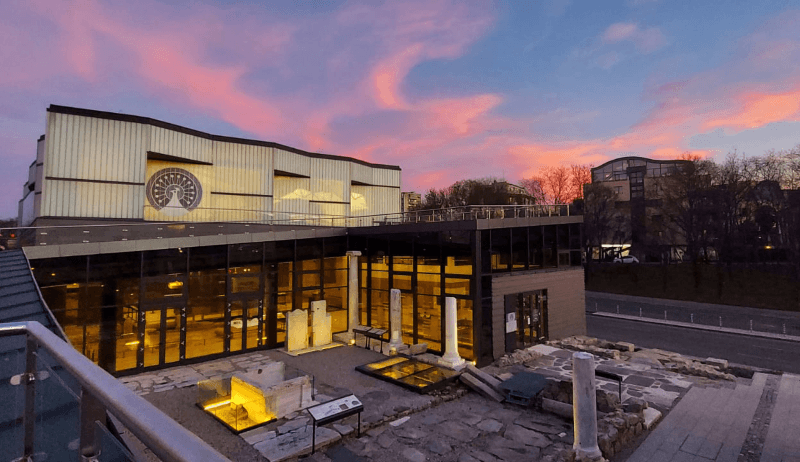
On May 16, the Bishop’s Basilica of Philippopolis in Plovdiv hosted a special celebration titled “Day of the Mosaics,” marking two major milestones: the 70th anniversary of Bulgaria’s accession to UNESCO and the fifth anniversary of the opening of the Basilica, home to some of the country’s most remarkable Roman and early Christian mosaics.
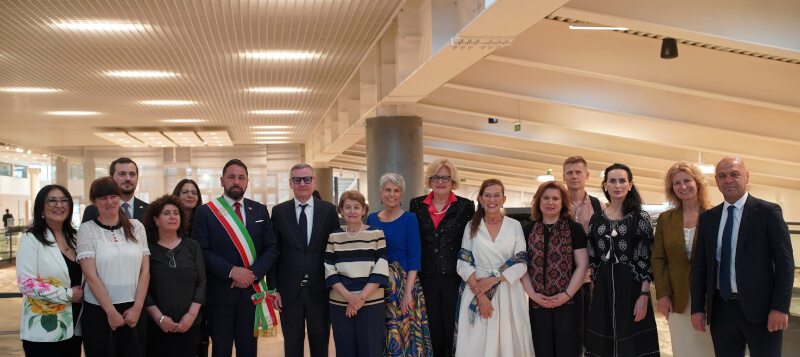
The initiative was held under the patronage of Bulgaria’s National Commission for UNESCO. The America for Bulgaria Foundation, the Municipality of Plovdiv, and the Old Plovdiv Municipal Institute organized the event in partnership with EVN Bulgaria and Lidl Bulgaria.
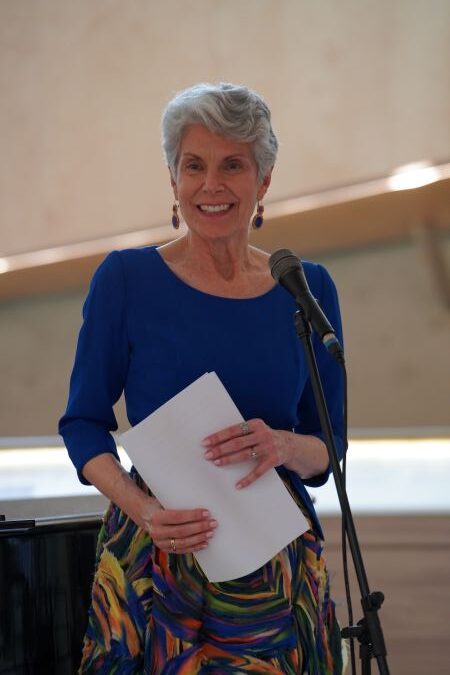
“These two anniversaries are not only a source of national pride, but also a valuable opportunity for Bulgaria to draw international attention to its extraordinary contribution to the world’s cultural heritage,” said Nancy Schiller, president of the America for Bulgaria Foundation, at the opening ceremony.
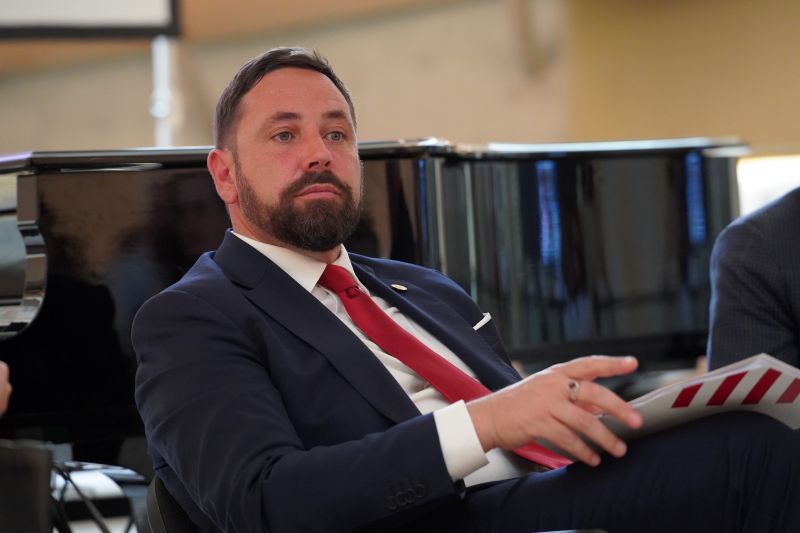
Minister of Culture Evtim Miloshev expressed confidence that, through the combined efforts of all involved, the site could soon become part of the UNESCO World Heritage List. He highlighted the collaborative model behind the project—the successful partnership among the America for Bulgaria Foundation, the Municipality of Plovdiv, the Ministry of Culture, restorers, archeologists, experts, institutions, businesses, and citizens.
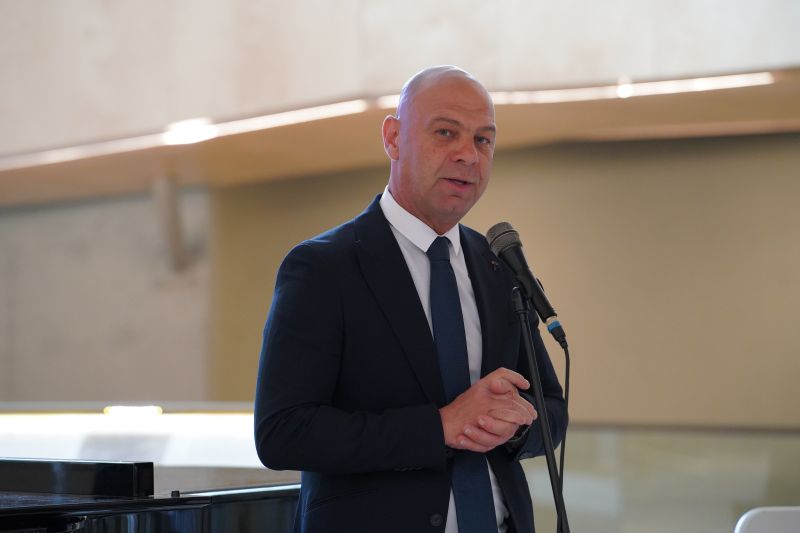
“Thanks to these efforts, a place that remained hidden and forgotten for decades now welcomes visitors from around the world,” said Plovdiv Mayor Kostadin Dimitrov. “Today is a celebration not only for our city, but for everyone who believes that cultural heritage is a bridge between generations, peoples, and civilizations.”
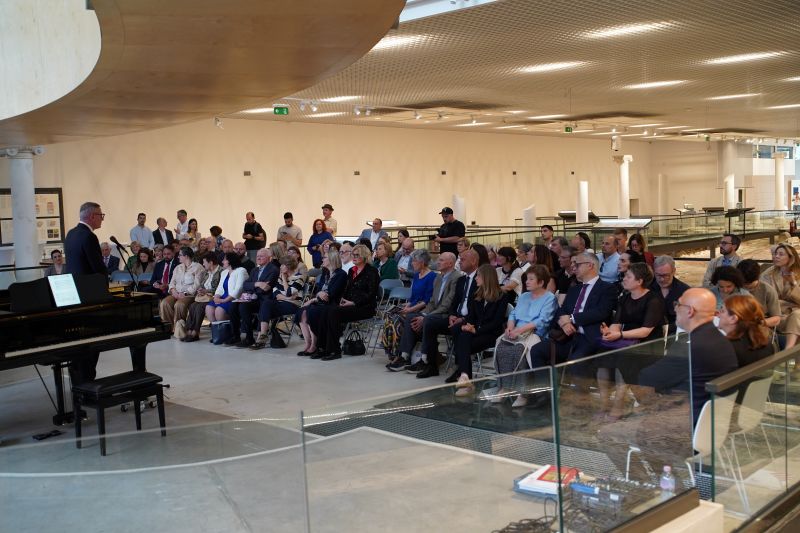
A centerpiece of the May 16 program was the international discussion “UNESCO and the Cultural Heritage of Plovdiv.”
The conversation focused on the next steps toward a potential UNESCO World Heritage nomination for the serial site “The Bishop’s Basilica and the Late Antique Mosaics of Philippopolis, Roman Province of Thrace.” International and Bulgarian experts, representatives of national and local institutions, and professionals from the cultural and museum sectors took part in the discussion. Particular attention was given to the benefits such recognition could bring for the preservation, promotion, and sustainable development of the cultural heritage of Plovdiv and Bulgaria.
Among the speakers were:
- Emanuele Zorino, mayor of Aquileia, Italy—a small town today, but once one of the most important cities of the Roman Empire and a UNESCO World Heritage Site since 1998. His presentation explored what happens when a site becomes part of UNESCO’s World Heritage List.
- Francesco Bandarin, former director of the UNESCO World Heritage Centre (2000–2010) and UNESCO assistant director-general for culture (2010–2018), who spoke about the path from a country’s tentative list to official inscription on the UNESCO World Heritage List.
- Prof. Dr. Elena Kantareva-Decheva, director of the Old Plovdiv Municipal Institute and chief restorer of the Basilica’s mosaics, who addressed the question: Is the Bishop’s Basilica of Philippopolis ready for the next step toward UNESCO recognition?
- Rosanna Binacchi, expert in cultural diplomacy, whose presentation focused on moving “beyond the UNESCO label” toward living and sustainable cultural heritage.
The discussion was opened by Irina Bokova, UNESCO director-general from 2009 to 2017. Speaking to journalists, she said the Bishop’s Basilica of Philippopolis could join the UNESCO World Heritage List within the next two to three years.
“The Roman mosaics of Philippopolis have all the qualities required for inscription on the World Heritage List. They have been studied and preserved in the best possible way,” she said.
A video message for the anniversaries was delivered by Lazare Eloundou Assomo, acting assistant director-general for culture at UNESCO. He emphasized that the Bishop’s Basilica of Philippopolis—“the largest Late Antique early Christian church discovered in your beautiful country—deserves to be known worldwide.”
Prof. Dr. Elena Kantareva-Decheva, director of both the Old Plovdiv Municipal Institute and the Bishop’s Basilica, as well as lead restorer of the mosaics, outlined the roadmap for the nomination of the serial site “The Bishop’s Basilica and the Late Antique Mosaics of Philippopolis, Roman Province of Thrace.”
The event also welcomed Emanuele Zorino, mayor of Aquileia, whose city is renowned for its extraordinary early Christian mosaics and rich Roman heritage—features that closely parallel those of the Bishop’s Basilica of Philippopolis. During the discussion, he shared Aquileia’s experience and offered concrete examples of how UNESCO status can strengthen cultural tourism, raise international visibility, and support sustainable development.
Later that evening, the Basilica hosted a classical concert conducted by internationally acclaimed composer and conductor Dobrinka Tabakova, who was born in Plovdiv. The event brought together members of the diplomatic corps and distinguished figures from international cultural, academic, and business circles.
Opening remarks before the concert were delivered by Plovdiv Mayor Kostadin Dimitrov, Minister of Culture Evtim Miloshev, America for Bulgaria Foundation President Nancy Schiller, and Milena Dragijska, CEO of Lidl Bulgaria.
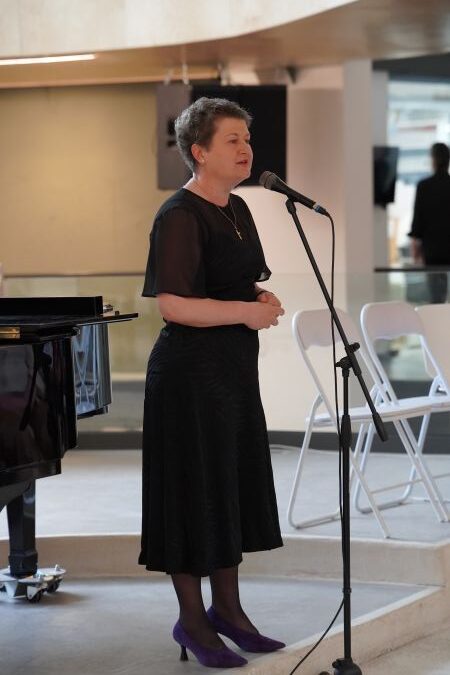
“I am delighted to announce a new initiative that aims to inspire a kind of marathon of giving and civic engagement among corporate organizations in support of one shared cause—that Bulgaria, after more than 40 years, once again gains a UNESCO-protected site,” said Dragijska.
Lidl Bulgaria will launch a dedicated fundraising campaign in July and August. All proceeds generated through returned plastic bottles and cans collected in Lidl recycling machines—funds the company typically donates to other charitable causes—will be directed entirely to the Basilica. The donations will support the management, preservation, promotion, and infrastructure development of the serial complex “so that, through focused work and united efforts over the next two years, we can celebrate its inclusion on UNESCO’s final list of protected sites,” Dragijska added.
The May 16 program also featured a festival component, including an open house at the Bishop’s Basilica, educational workshops for children and adults, exhibitions, live music, and an impressive 3D mapping show, turning the day into a vibrant celebration of culture and community.
Photos by Vasilena Spasova | Blue Rock Films