Listen to this story on Spotify:
It all began with a boy who would not stop asking “why,” a kitchen pot, and two and a half liters of flat beer. Today, Chiprovsko Pivo welcomes guests, creates livelihoods in Bulgaria’s Northwest, and shows why Chiprovtsi is worth the trip.
When the guests arrive
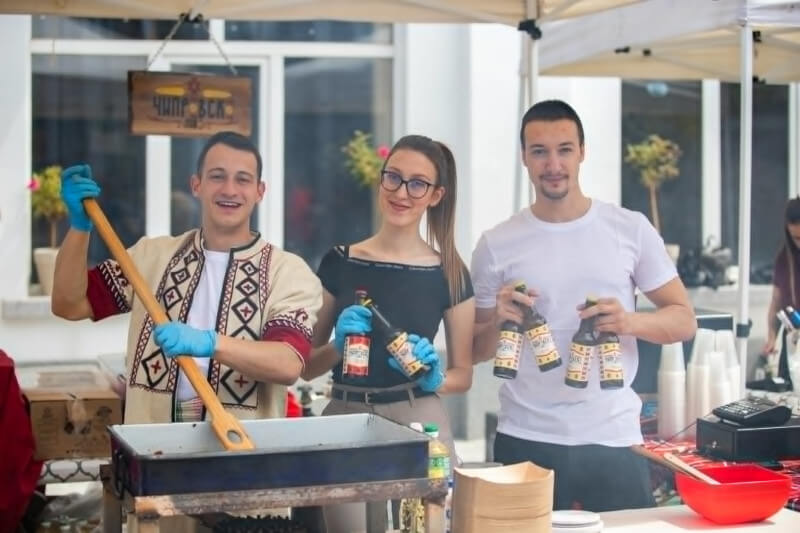
On Friday evening, Pavlovata House begins to stir before the guests have even crossed the threshold.
Someone is setting tables in the courtyard. The smell of homemade food drifts from the kitchen. Voices rise from the restaurant. The phone rings. Someone is looking for a room. Someone else wants to know whether they can sign up for a brewery tour.
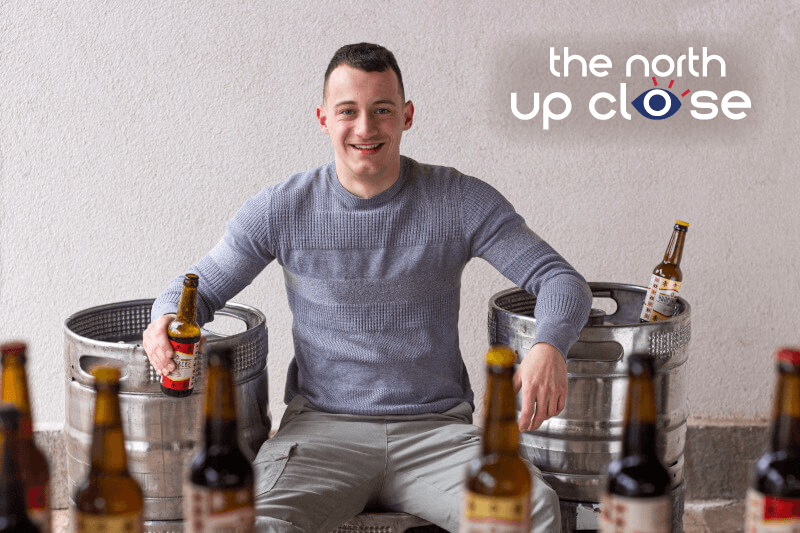
Tsvetomir Stefanov—Tsetsi to almost everyone—hurries across the yard. In a few minutes, he has to be at the brewery. Then he will be back with the guests. He travels between the two on a small scooter, one of those practical solutions entrepreneurs invent when the day simply refuses to have enough hours.
In this family business, everyone has a role. His father helps at the brewery. His mother joins in at the guesthouse and restaurant whenever she is free from her regular job. His sister and brother-in-law are now part of the team. Boryanka is not family, but she works like someone who has long since been folded into it.
A guest quickly understands that this is not an anonymous place to spend the night. It is a home where you will be fed, told a story, and most likely sent off with an invitation to come back.
This is Chiprovsko Pivo today: a business that has brought an entire family together around the idea of building something of their own. But only a few years ago, there were no brewers in the family. No entrepreneurs, either.
There was just one very curious boy.
The boy who wanted to know why
In Tsvetomir’s family, as in many Bulgarian homes, people made their own wine and rakia, the strong fruit brandy that appears at nearly every Bulgarian family table. It was done more by inherited instinct than by textbook.
But even as a child, Tsetsi was not satisfied with “that’s just how it’s done.” While the adults worked around the still, he kept asking questions. Why are we doing this? Why does the temperature have to be exactly this? Why is the still shaped this way?
At some point, his father’s patience began to run out. “Let us work. Go read about it online.”
That turned out to be life-changing advice.
Tsvetomir started reading. The more he read, the more questions he had. In an online rakia-making forum, he stumbled upon a section for homebrewers. Until then, he had assumed beer was made only in large factories, with specialized machines. In his mind, it was almost magical: put in the ingredients, drink beer that evening.
Then he learned the process takes about three weeks.
That did not discourage him. It made him even more determined.
Soon, he could think of little else. After school, instead of doing homework, he read about malt, hops, yeast, and fermentation. He planned. He took notes. Even chemistry homework suddenly became much more interesting.
Two and a half liters of hope
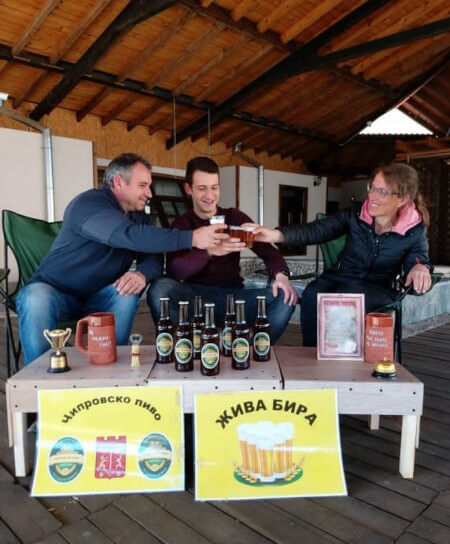
The first brew came in November 2018, when Tsvetomir was only 16. Together with his father and uncle, he made two and a half liters (0.7 gallons) of beer. Not twenty. Not two hundred. Two and a half.
The process looked less like production and more like a rescue operation. Running around the house. Panic. Checking forums. Looking back at notes. More checking. More panic.
They made that first batch in the family cooking pot, the one usually used for soups and stews. Blankets helped maintain the temperature. A flour sieve stood in for equipment that, one day, would be professional.
They opened the finished beer on Christmas Eve, because after that much effort, even two bottles deserved a special occasion.
The beer was drinkable. But there was one problem: it had not carbonated.
“That was the biggest disappointment,” Tsvetomir says, laughing.
Still, everyone sensed that somewhere in those two and a half liters, there was a beginning. No one yet knew how far the story would go.
The conversation that changed everything
More experiments followed. The family bought bigger pots, fixed up the backyard, built equipment, and shared beer with friends and acquaintances. Some batches worked. Others are probably best left undescribed. Gradually, though, the feedback became more encouraging.
By the end of that first year, Tsetsi had decided this was no longer just a hobby. He was 17, and he wanted a brewery. He wanted his own business. He also had a strategy.
“I knew the most important thing was what my father would say,” he recalls.
So he spoke to his mother first.
Once he had her blessing, the two went downstairs together to talk to his father. Tsvetomir made his pitch: “Let’s start a brewery.”
His father was not immediately thrilled. A small town. A business from scratch. Uncertainty. No political connections. All the usual fears were there. But entrepreneurs are not people without fear. They are people who refuse to let fear make the decision for them.
Little by little, the family said yes.
Dream Team
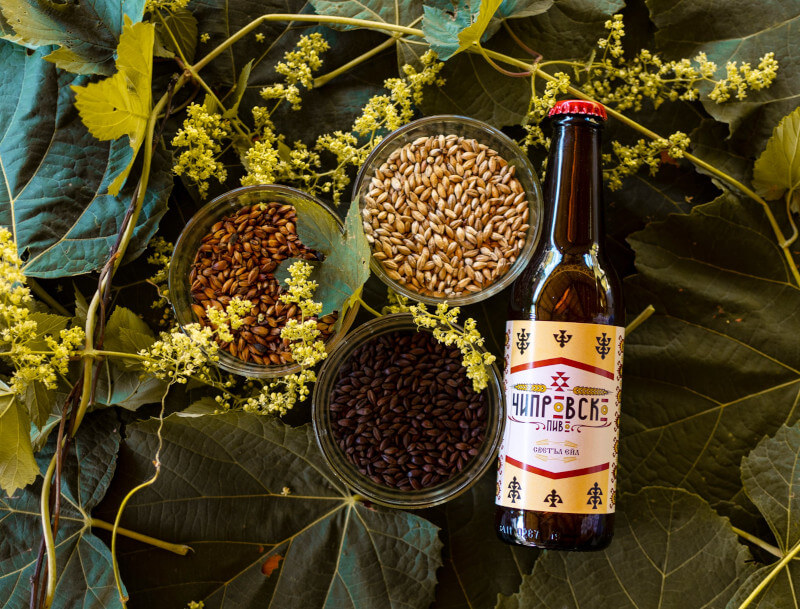
In 2019, Chiprovsko Pivo made its first public appearance at the Chiprovtsi Carpet Festival in May. The beer already had a name. Tsetsi never hesitated over what it should be called. If the point was to promote Chiprovtsi, the name could not be anything else.
The bottle labels were homemade in the most literal sense. The design came from a free online generator. They printed the labels at home, nine to a sheet of A4 paper. They bought six pairs of scissors, and the whole family cut labels late into the night. The slogan read: “Fresh as dew. A delight for the soul.”
It is hard not to smile.
They brought 500 beers to the festival. They were gone in three hours.
After a success like that, it is easy to think you understand the market. The next lesson came quickly and without mercy: for another event, they prepared 2,000 beers and went home with almost all of them.
“The market is king,” Tsetsi says. That is not a lesson you learn from textbooks.
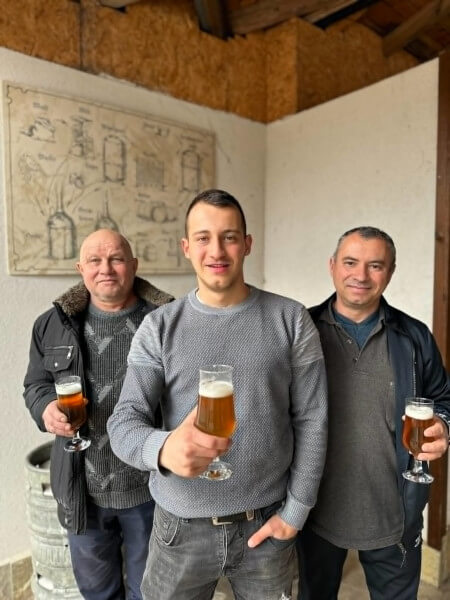
Meanwhile, the family kept improving the brewery. Tsvetomir likes to call the team the “Dream Team.” His father is an electrician. His uncle is a plumber. He is the recipe guy. Together, they built equipment that gradually turned the hobby into real production. It also became one of the favorite parts of the brewery tours: guests listen to how everything was put together and gasp.
From beer to destination
In 2020, Chiprovsko Pivo moved into the former municipal crafts center. The building had been created to welcome artisans and visitors, but over time it had emptied out. In a way, the brewery gave it back its purpose: once again, there was a craft inside, work done by hand, and people coming to see how something is made.
At first, Tsvetomir imagined that the beer would travel across Bulgaria. Then the family bought and developed Pavlovata House, which opened in late 2022, and the concept changed. Instead of the beer going out to people, people began coming to the beer. And because of it, they came to Chiprovtsi.
“That way, I promote not only myself, but Chiprovtsi as a destination,” Tsetsi says.
Gradually, that became the larger mission of the business. Today, the labels on the bottles carry motifs inspired by Chiprovtsi carpets, the town’s most famous craft tradition. The brewery tours are not only about fermentation. They are also about the town. And many people who arrive for a beer leave wanting to come back.
Giving something back
Today, Chiprovsko Pivo produces a pale ale, a red ale, and a dark beer. The family business is growing. In 2025, Tsvetomir’s sister and brother-in-law left their jobs and joined full-time. The old municipal building, which the family had rented for years, is now theirs. That gives them security and room to expand production.
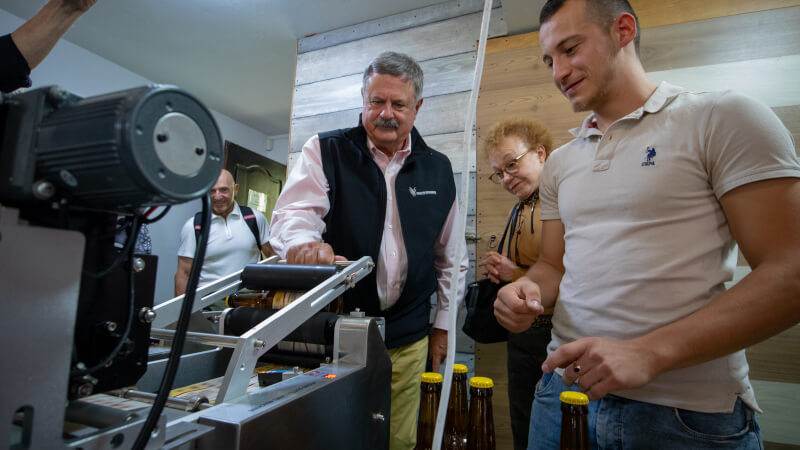
The old handmade equipment is gradually giving way to professional secondhand machinery, found through European Facebook groups for brewers and sometimes bought based only on photos. For a self-taught brewer whose education began in online forums, that feels almost like the natural next step.
The renovation is still underway, but guests keep coming. Part of the space will become a tasting room. The brewery tours will continue, now with a new story: professional equipment, expanded capacity, and the next chapter of a business that began with a kitchen pot, a blanket, and two and a half liters of beer.
Ask Tsvetomir whether it is worth it, and he does not need long to answer.
“This is my thing,” he says. “The question of whether it is worth it does not even exist for me. I have never thought about giving up. This town has given me a lot, and it is time for me to give something back.”
Perhaps that is why guests of Chiprovsko Pivo leave smiling.
Not only because the beer is good. But because behind it stands someone who decided that a small town is not a limitation, but a beginning. And that sometimes the best ideas are born when someone refuses to stop asking why.