🎧 Listen to this story on Spotify!
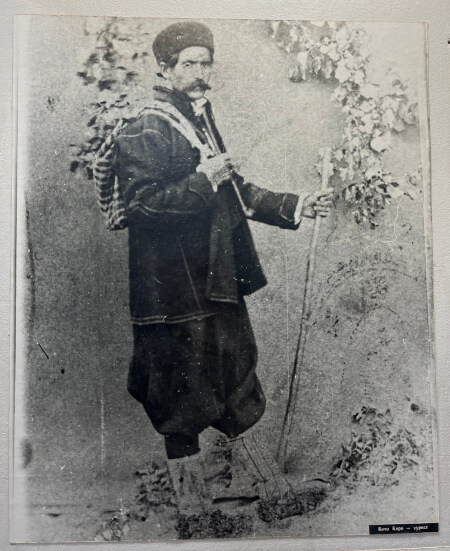
Long before the internet, newspapers, or push notifications, news from the wider world traveled slowly. In the nineteenth century, the residents of Byala Cherkva, a small town in north-central Bulgaria, pooled their money and sent the local schoolteacher abroad to see how other people lived.
The teacher was Bacho Kiro.
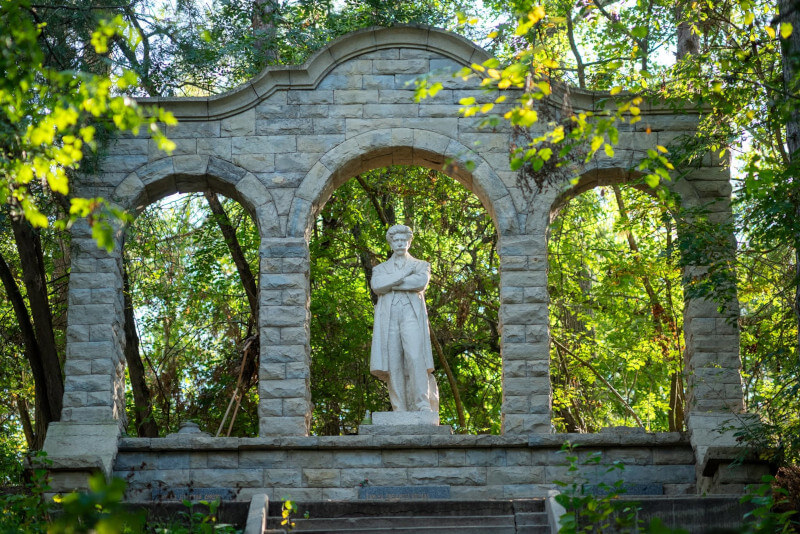
Today, Bulgarians remember him as a leading figure in the country’s nineteenth-century struggle for education, cultural independence, and freedom from Ottoman rule. He was a teacher, writer, and revolutionary who eventually gave his life for that cause. But before he entered the history books, he walked across borders, looked closely at the world, and returned home to tell his neighbors what he had seen.
In verse, no less.
In one travelogue, he explains how a planned journey to Vienna ended sooner than expected:
I set out from my village for Vienna,
but my money had other plans.
I wanted badly to keep going—
but empty pockets do not travel far.
The money lasted as far as Belgrade. Rather than disguise the failure with heroic language, Bacho Kiro turned it into a self-deprecating poem.
His neighbors had been waiting for news of the world. He brought them observations, adventure stories, and a remarkably honest account of his travel budget.
Behind the familiar Bulgarian image of the schoolmaster and revolutionary, another Bacho Kiro comes into view: a curious traveler who paid attention, shared what he saw, and did not mind making himself the punchline.
Something of him seems to have remained in his native land.
The people in this story are not revolutionaries, and most would probably laugh at the comparison. Their work is quieter. Across Pavlikeni Municipality—a part of north-central Bulgaria made up of the town of Pavlikeni and the surrounding towns and villages—they look beyond their immediate surroundings and bring useful ideas home.
They keep local museums alive, clear neglected trails, restore public fountains, or revive a village winery and put “made with maximum intervention” on the label. They look for allies and learn from people who have managed to breathe life back into their own communities. Then they put what they have learned to work at home.
They take the work seriously. Themselves, less so.
Come with us through the Pavlikeni region, along newly cleared paths and past fountains flowing again. We will visit places kept alive by people who refuse to give up on them.
We begin in Byala Cherkva.
The family album of a town
How often do you get to meet history face to face?
Not only through artifacts, display cases, and explanatory plaques, but through people who can point to an ancestor who took part in the April Uprising of 1876, Bulgaria’s failed revolt against Ottoman rule. In Byala Cherkva, that is not unusual. Anastasia Georgieva, director of the local history museum, is a descendant of Bacho Kiro himself.
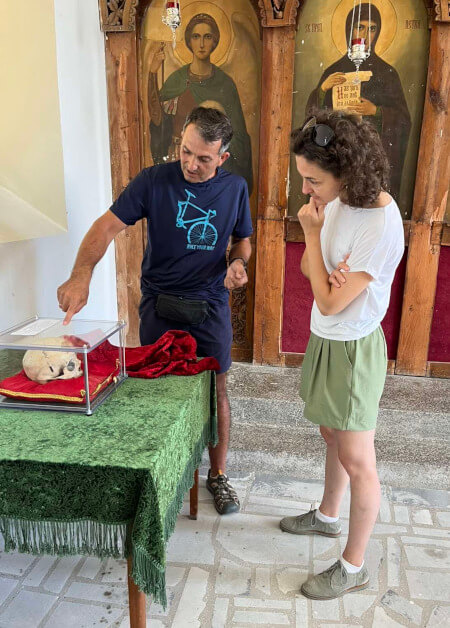
Asya, as everyone calls her, has spent her professional life at the museum. When she shows you around the hometown of her famous great-great-great-grandfather, or through the house of writer and politician Tsanko Tserkovski, you do not feel like a visitor checking off another historic site. It feels more like sitting with a family over old photo albums when someone suddenly remembers one more story.
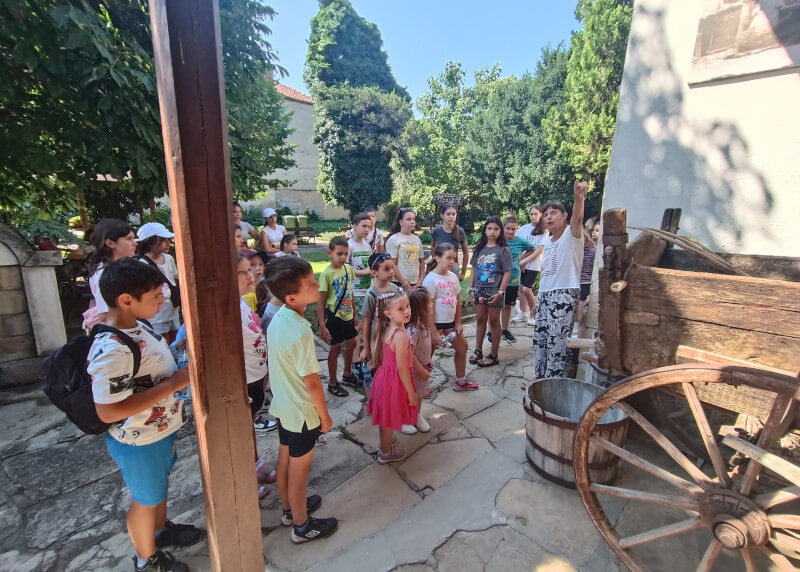
And there are plenty of stories to tell. Byala Cherkva was also the birthplace of Tsanko Tserkovski and Rayko Daskalov, two important figures in Bulgaria’s early twentieth-century agrarian movement, which grew into a major political force in a country where most people still made their living from the land.
In Tserkovski’s house, you can see photographs from his fiftieth birthday celebration, attended by some of the country’s most prominent public figures. His letters offer far more private admissions, including why he decided to be practical about marriage rather than marry for love. History rarely lets us into the official celebration and the family calculations at the same time.
Asya and her small team have worked hard to keep these people from becoming little more than names on plaques. With limited funds, donations from local families, and considerable ingenuity, they have turned the museum into far more than a collection of historic houses and exhibits.
When the team began assembling an ethnographic collection in the old community-center building in the early 2000s, families in Byala Cherkva entrusted them with objects preserved for generations. Instead of selling them to collectors, they gave them to the museum. Household items, clothing, and family heirlooms gradually came together to form a portrait of the town in another era.
The team also created a natural-history collection that much larger museums might envy. Local plants and animals share the space with sea turtles and fossils millions of years old. Visitors can follow cotton’s journey from plant to fabric as well: an entire world arranged with little money and plenty of imagination.
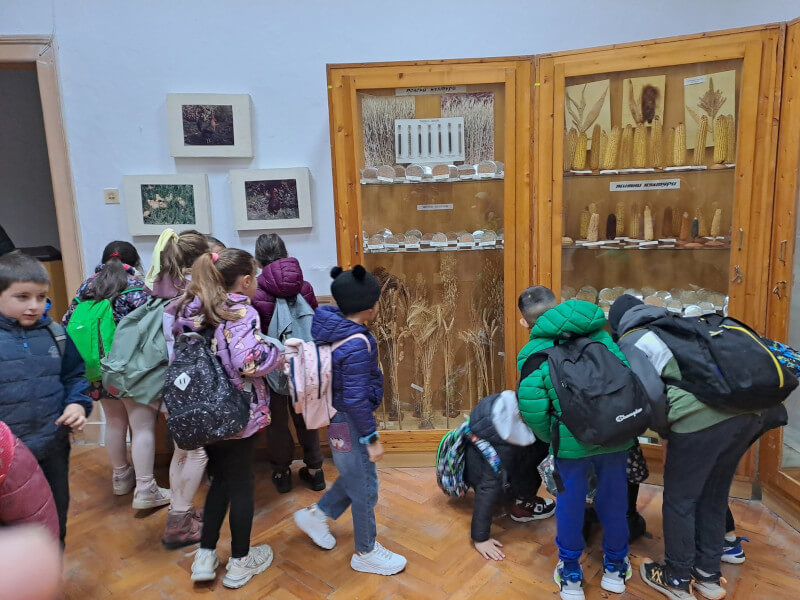
Most important, the museum is not sealed off from the present. In the shaded courtyard of Tsanko Tserkovski’s house, residents gather for film screenings, readings, and talks. In summer, children hunt for exhibits, learn the games their grandparents played, and discover more about the nature around them. In 2018, this work received the America for Bulgaria Foundation’s #ATTHEMUSEUM award.
And when the floor began to rot, Asya and her colleagues did not wait for someone else to save the museum. They paid for emergency repairs themselves.
That is how history is preserved in Byala Cherkva: through constant care, imagination, and the stubborn belief that it should remain part of the town’s life.
Wine with maximum intervention
Tsanko Tserkovski’s interests extended well beyond literature and politics. As a farmer and public figure, he also helped advance modern viticulture in Bulgaria. So, from his house in Byala Cherkva, we continue to the nearby village of Varbovka, where an old winery still carries on the area’s winemaking tradition.
The winery was founded as a cooperative in 1934. Winemakers Plamen and Svetlana Penevi bought it in 1999, and today Svetlana and their children continue the family business.
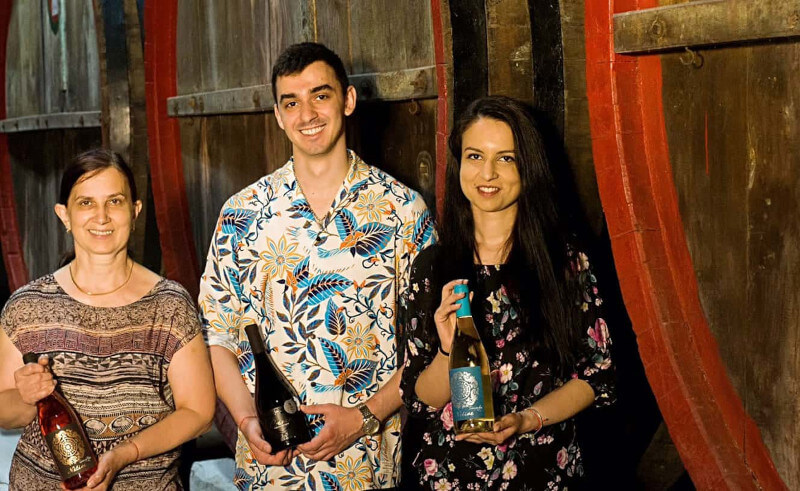
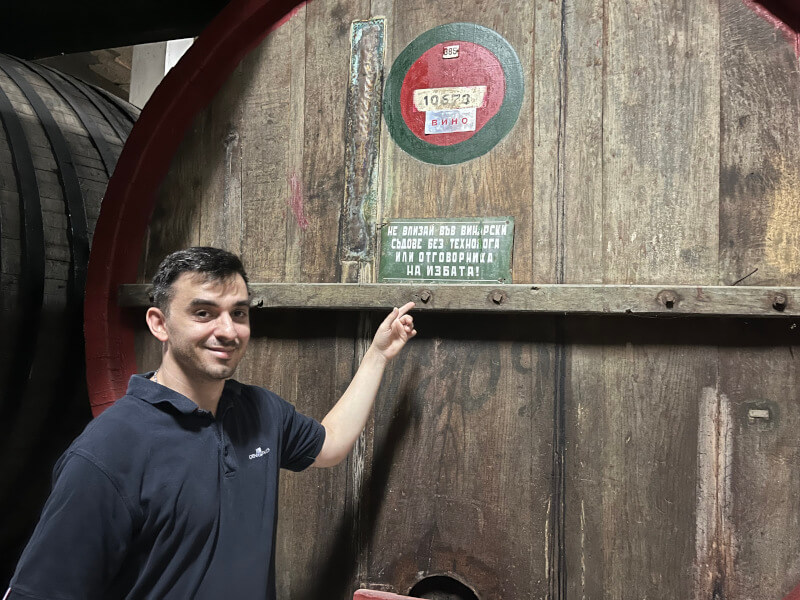
Their son Kaloyan joined the winery as soon as he graduated from university. He had planned to gain experience abroad first, but after his father died, he stayed in Varbovka. Since then, he has carried on his parents’ work, serious about the wine, refreshingly unserious about himself.
The best proof is Oranzhada, a dry orange wine whose label says it was “made with maximum intervention.” The phrase is a wink at the fashionable language of minimal-intervention winemaking. At Varbovka Winery, they know exactly how much labor goes into a bottle and see no reason to pretend the wine made itself.
The label shows that the joke works. The quality of the wine has been confirmed much farther from Pavlikeni: a Swiss firefighters’ association selected Varbovka wines for its annual charity ball.
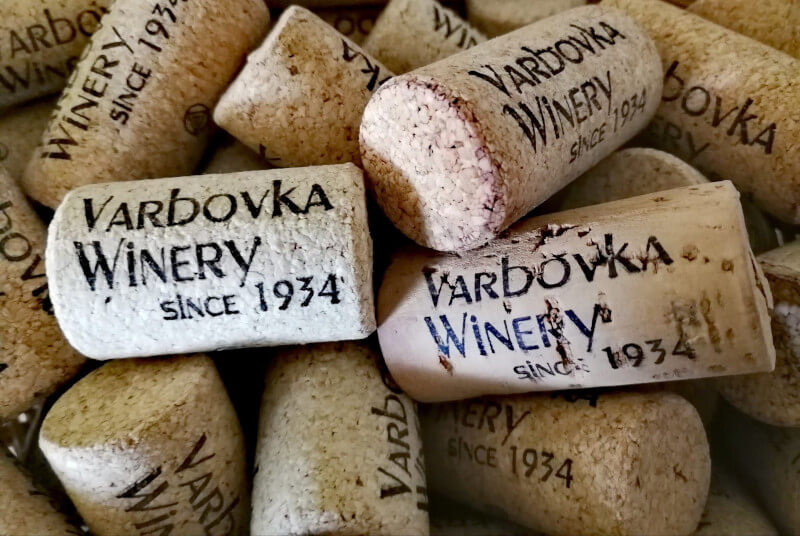
The winery works mainly with grapes grown in the area and produces small batches of fine bottled wine. Most of its income, however, still comes from wine sold directly from the winery in larger containers. “This is our gesture to the people who support us: good wine at a good price,” Kaloyan says.
His commitment to the Pavlikeni area does not end at the winery gate. As president of the local Rotary club, he supports initiatives for young people and believes in bringing people together around projects that benefit the wider municipality. The club is developing a tourism app that will gather local attractions in one place and connect visitors with the people behind them.
“Together, we can create more value for a place,” Kaloyan says.
Emen, off the grid
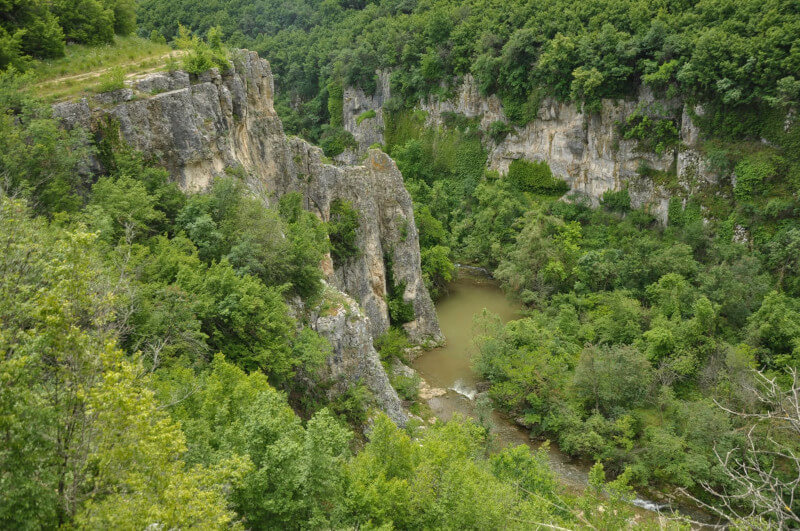
As you drive from Varbovka toward Emen, your phone signal gradually fades. The village lies beside Emen Canyon, one of the area’s best-known natural attractions, and here the terrain often defeats the cell towers.
This is one of those times when the lack of technology does you a favor.
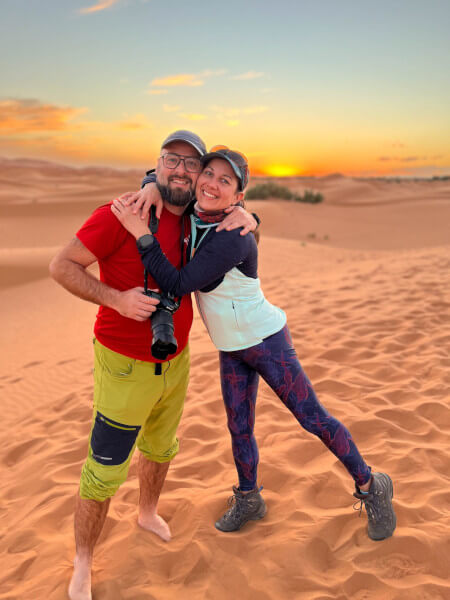
At the far end of the village, Vili Blagoeva and Iliyan Nikolov have created an adventure center with guesthouses. She is from Plovdiv, in southern Bulgaria; he is from the Black Sea city of Varna. About a decade ago, they chose Emen as their home and have been showing visitors ever since why the journey is worth making.
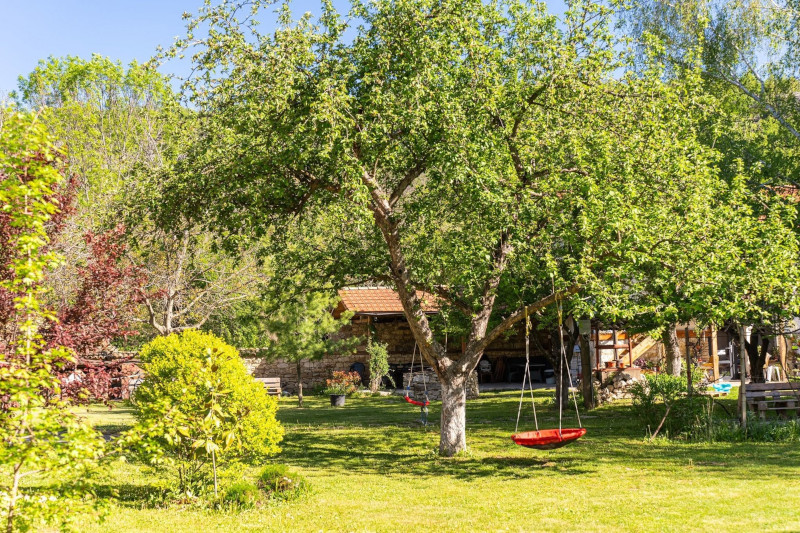
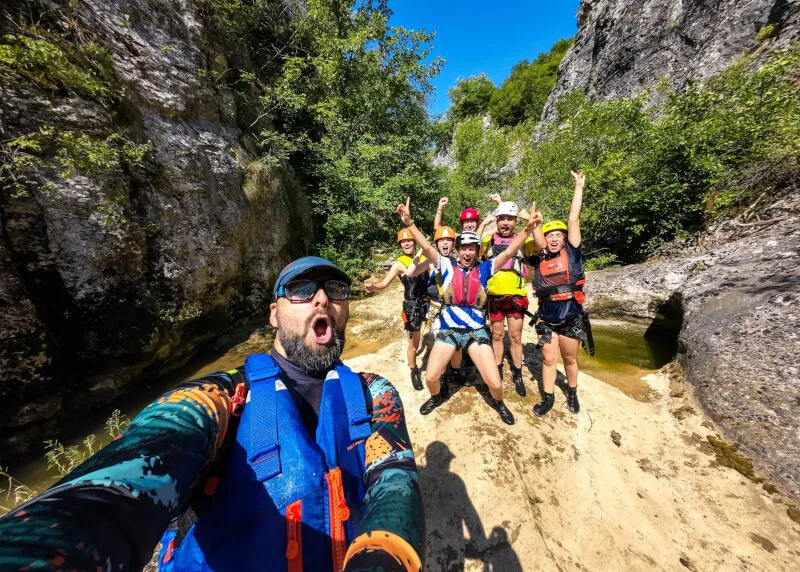
Vili studied business administration and human resources, but her career quickly took a more adventurous turn. Today she is a ski, diving, and canyoning instructor. She will fuss over you like your own mother and, five minutes later, lower you by rope into a canyon.
Iliyan works in IT and has the rare gift of saying something so funny that everyone around him doubles over laughing while he remains completely deadpan. Their daughter, Emma, could inspire a new edition of Pippi Longstocking—this time with her parents nearby, although that does not appear to interfere with the mischief.
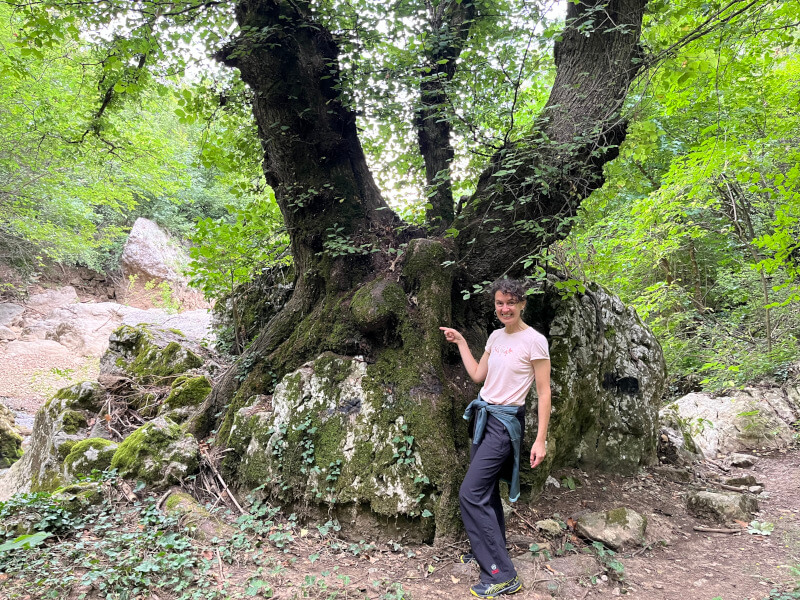
When the family arrived in Emen, they did not retreat behind the adventure center’s fence. Vili and Iliyan clear trails, develop routes, and lead people to places they might otherwise miss. Their work builds on that of the Bulgarian Association for Rural and Ecological Tourism, which has marked and maintained trails in the area for years.
They also try to involve local residents. Sometimes people join in; sometimes they do not. Either way, Vili and Iliyan head out again with paint and tools.
An adventure with them may begin as a treasure hunt. Vili spots wooden trolls where everyone else sees a crooked branch. At the table, you may be served Imam Bayildi, a stuffed eggplant dish whose name literally means “the imam fainted.” In Bulgarian, it sounds a little like a brief dispatch from the emergency room.
You may think you have been on a corporate teambuilding retreat. You probably have not been to Vili and Iliyan’s. Only after a coworker has kept your head above water during a canyoning trip can you confidently write in their performance review that they are a good team player.
In recent years, other newcomers have chosen Emen and brought their own ideas. Engineer Daniel Trankov founded Shkoloto Gnezdo, a school for ecological construction and restoration using traditional methods. At Emena Guesthouse, sculptor Gergana Penova and psychologist Dr. Ivan Stoyanov welcome visitors among her two-sided sculptures, figures that change depending on where you stand.
Gradually, people have begun to look beyond the boundaries of their own village. Vili and Iliyan want to connect the villages of Emen and Musina with a marked trail. From the Musina side, they are joined by Monika Frencheva from the village community center and Mayor Hristo Ivanov.
Not your typical village mayor
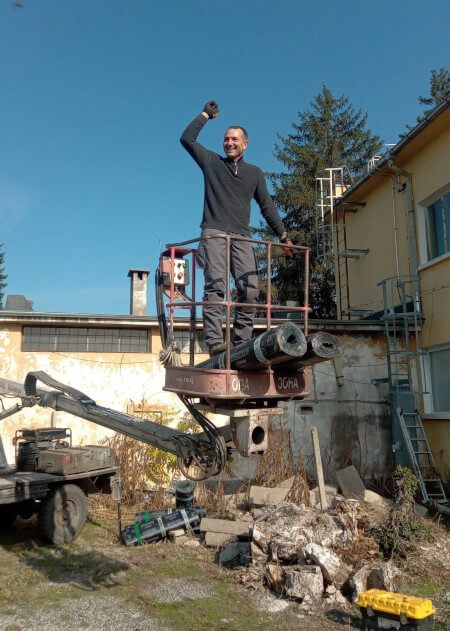
Hristo Ivanov was born in Musina and has served as the village mayor since 2004, but you are more likely to find him with a weed trimmer or shovel than behind a desk.
He does not say much and dislikes drawing attention to what he has done.
It is a substantial list.
When Hristo became mayor, Musina was the only village in Pavlikeni Municipality without a chitalishte. This distinctly Bulgarian institution usually combines the functions of a library, cultural center, meeting place, and local archive.
Today, Musina has one.
People, ideas, and old village photographs have gradually gathered around it, with residents tracking down and sharing images from family collections. Donations and municipal funding have also helped equip a small medical office, which Hristo shows with particular pride.
His example draws others in. People born in Musina take part in the shared work, as do foreigners who have chosen the village as their home. Everyone contributes what they can.
Musina also has small businesses: a facility producing organic snack bars, local beekeepers, and two stores. They bring people into the village and connect it with nearby communities.
Hristo rarely confines himself to the boundaries of the mayor’s office or even the village. In 2017, he helped clear the Roman water catchment near Musina, part of the system that once supplied Nicopolis ad Istrum, one of the major Roman cities in this part of the Balkans, about twelve miles away.
He also helps with archeological digs in neighboring villages and with clearing the area around the Lesicheri Column, the tallest surviving Roman monument in Bulgaria.
Around Musina, history is everywhere: underground, among the rocks of the Propastite (“The Chasms”) geological complex, and beside the roads. But before anyone can see it, someone else has to cut the grass, haul away the trash, and clear a way in.
Hristo puts it more simply: “When you do what needs to be done, things happen.”
The Roman everything factory
Around Pavlikeni, archeology has a habit of surfacing beneath plows and surprising tractor drivers.
That is how, in 2016, tractor driver Valentin Savov came across the enormous tombstone of Gaius Ursidius Senecio, his wife Julia Valentina, and their children. The discovery gave historians the name of the man behind one of the largest ceramic-production centers in the Roman provinces of the Balkans.
About 1,800 years ago, Gaius, a former legionary, settled in the fertile valley of the Rositsa River. He built a large villa with a courtyard, bath, and underfloor heating, then turned nearby deposits of fine clay into a profitable family business.
His workshops produced almost everything a Roman household needed, from roof tiles and tableware to lamps and children’s toys. The goods traveled as far as Crimea and Asia Minor.
There were products for more private needs as well.
Among the finds are intimate accessories and ceramic stamps bearing erotic scenes. Some were connected with fertility rituals or served as good-luck charms. The ancient Romans clearly did not divide life into subjects suitable and unsuitable for a museum display case.
Gaius did not reach old age. The inscription on his tombstone says he died at forty and “deserved well.” In those four decades, he served in the legion, raised a family, and built a manufacturing operation that supplied a large stretch of the Roman world.
At the same age, many of us are still wondering whether we chose the right career.
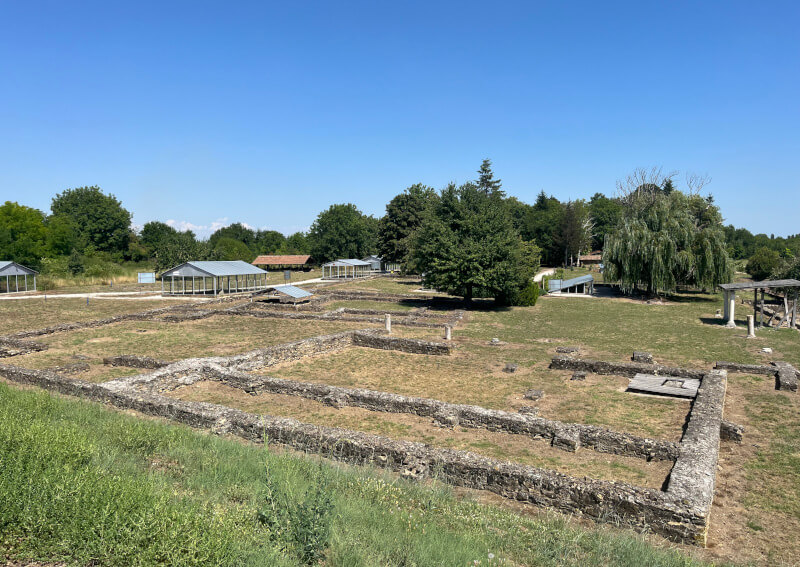
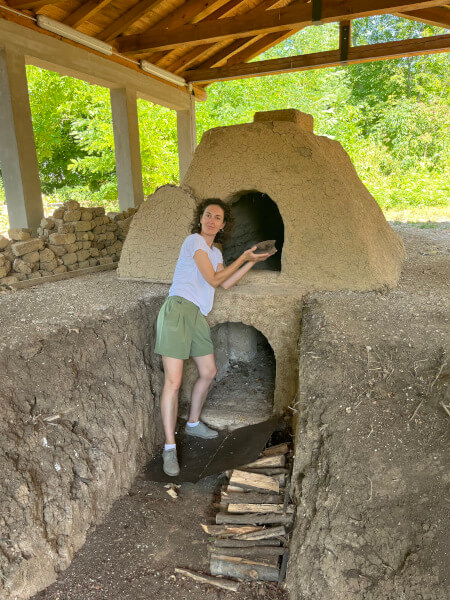
The remains of the villa and ceramic kilns were uncovered during twentieth-century excavations, but the site was neglected for years. Since 2014, the Ancient Ceramic Center has welcomed visitors again, thanks to support from the America for Bulgaria Foundation.
Today, the kilns and villa foundations can be explored in the open air. Ceramic fragments found nearby have been worked into the walls of small buildings, as though, nearly two thousand years later, Gaius’s production line is still contributing to the construction.
The politics of rolling up your sleeves
Back in Byala Cherkva, we meet Nikola Nikolov, a man whose résumé is difficult to fit on a business card.
He studied in Varna. He worked on one of Bulgaria’s first online business portals, modeled on Bloomberg, and once showed Prime Minister Ivan Kostov how it worked. He has worked in software, e-commerce, and vegetable delivery. He also ran a dairy farm.
Today, he tends his own vineyard and operates the Second Kilometer restaurant near Byala Cherkva.
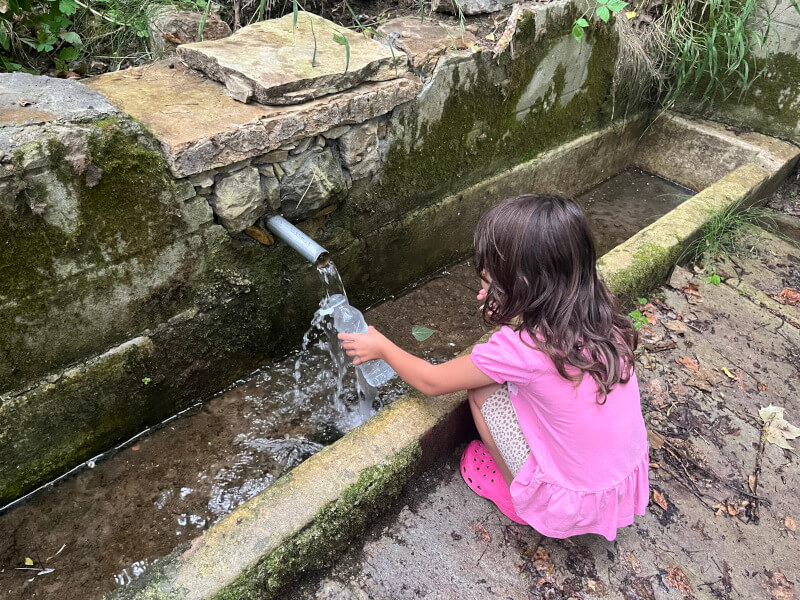
His grandfather, who lived to 102, taught him that “politics is in the hoe.” The phrase means that real public service begins with doing the work rather than talking about it. Nikola has followed the advice. When Kapakliyka Fountain in the Slaveevi Gori area ran dry, he did not organize a roundtable discussion. He rolled up his sleeves and helped the water flow again.
The fountain stands near Tsanko Tserkovski’s favorite place, where the politician and writer is buried. The water is believed to have healing properties. Nikola invested his own money and brought in donors and volunteers. Restoring old public fountains gradually became one of the main activities of Destination Pavlikeni, the association he founded.
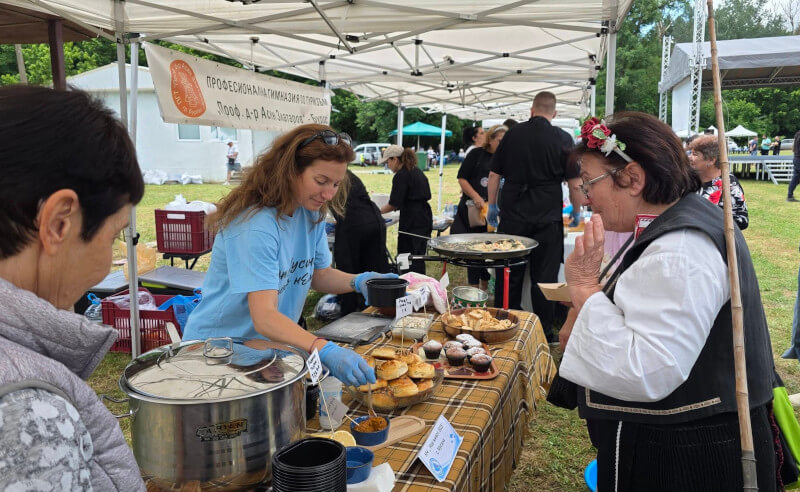
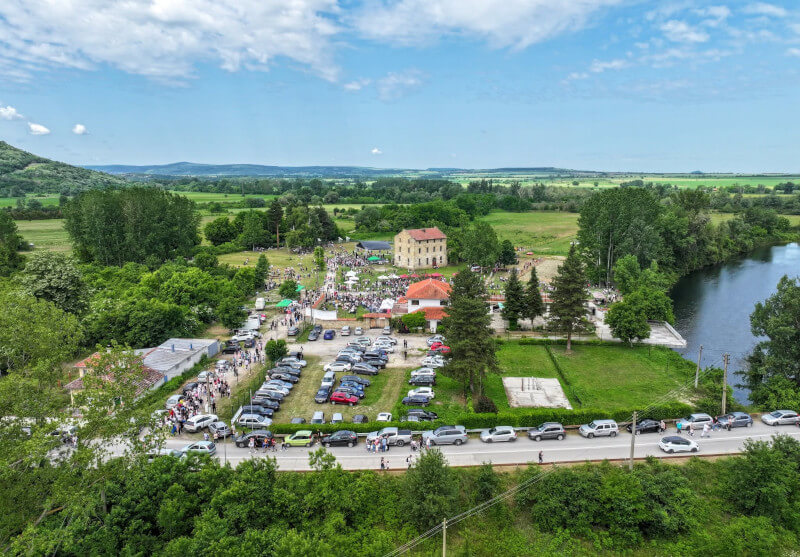
The association organizes a national food festival, a June 1 children’s celebration, and a rock festival beside the Rositsa River. One rule applies at every event: “No politician gets onstage.”
Nikola, however, takes his place beside the cooking pots. His goal is to make Pavlikeni known as a culinary destination. “We are hospitable, and we cook well,” he says.
He wants people to know that here they can try topalak soup, a local broth with small meatballs, and real homemade pitka, the soft, round bread traditionally served for holidays and family gatherings.
If you believe good fish soup belongs only along the Danube, the Pavlikeni area is prepared to argue. The best place to settle the matter is at the table.
The town that caught the train
For our final stop, we return to a museum, this time in the town of Pavlikeni.
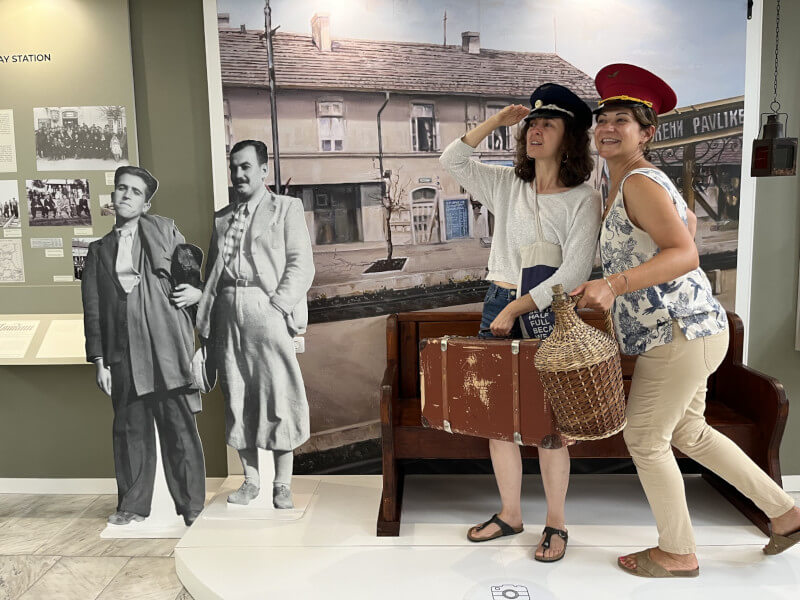
The renovated exhibition at the History Museum tells how a small settlement gradually overtook the much more developed Byala Cherkva and became the municipal center.
The railroad made the difference.
When a new rail line was planned through the area, landowners in Byala Cherkva refused to provide land. In Pavlikeni, craftsman and civic leader Atanas Hadzhislavchev recognized the opportunity, bought property, and made it available for the railway.
Byala Cherkva had revolutionaries, writers, and a lively civic culture. Pavlikeni caught the train.
Today, one of the town’s main streets bears Hadzhislavchev’s name, and the museum tells the story without unnecessary drama. Even so, you may find yourself there for hours.
Go upstairs to the art gallery as well. Light falls in broad shafts through the tall windows, and the prints deserve more attention than we usually reserve for “one more floor.”
Then step outside.
Head toward Byala Cherkva, Musina, or Emen. Look for the Roman water catchment. See the ceramic kilns. Drink from a restored fountain. Try wine made with maximum intervention and topalak soup prepared by a man who once explained the internet economy to a prime minister.
Bacho Kiro never reached Vienna, but that did not ruin his journey. On the contrary, it gave him more time to get to know the place he did reach.
Perhaps that is useful advice for travelers today. You do not have to go far; you only have to look closely and come home with something worth telling.
And if Bacho Kiro had summed up the trip, perhaps he might have written something like this:
Reader, if travel is your delight,
set off for Pavlikeni at first light.
But should your legs reject the plan,
take the car. No shame in that.
In Byala Cherkva, history talks,
then follows you on all your walks.
Asya opens every door—
and somehow always has one story more.
In Varbovka, they pour the wine
and make it with maximum intervention.
Those who talk too much of minimal methods
should taste first and argue later.
In Emen, trolls peer from the trees,
while your phone gives up with surprising ease.
Vili feeds you, Iliyan jokes—
then down the canyon everyone goes.
In Musina, the mayor leaves his chair
to cut the grass and clear the air.
If Roman ruins need a hand,
he is already on the land.
Gaius made tiles, lamps, and toys,
useful things for girls and boys.
He also made—let’s leave it there—
some items not for public prayer.
Nikola cooks and fountains flow;
he has no time for a political show.
If talk gets loud and work gets thin,
he brings the hoe and gets stuck in.
Then eat your soup and tear the bread,
with maximum intervention well fed.
You may decide, before you’re through:
Vienna can wait. There’s more to do.
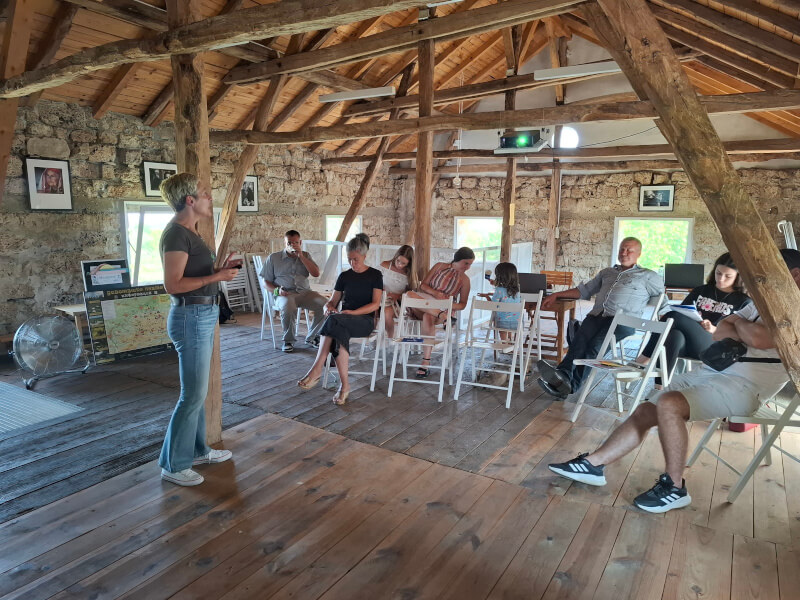
We met some of the people in this story through the Rural Business Academy and the Academy for Active Communities and Sustainable Tourism Destinations, both run by the Devetaki Plateau Association. In these programs, participants exchange experience with people who are bringing new life to their villages through tourism, events, and community initiatives. The America for Bulgaria Foundation supports both academies as part of its work to develop tourism in Northern Bulgaria and along the Danube.