Rod Moore knows Bulgarian well enough to surprise even native speakers with words they rarely hear. But as he takes the helm of the America for Bulgaria Foundation, he is quick to acknowledge how much he still has to learn.
He’s no stranger to starting over or finding himself in unfamiliar situations. During three diplomatic postings in Bulgaria, he’s learned that knowing a country well doesn’t mean having all the answers. And that listening is often the best place to start.
As the Foundation begins a new chapter, we sat down with its new president and CEO to talk about the experiences that shaped him, the Bulgaria he has come to love, and what he hopes to learn from the people he’ll be working with.
America for Bulgaria Foundation: At this stage of your life, what has to be true of an opportunity for you to say, “Yes, I’m willing to uproot my life for this”?
Rod Moore: First of all, and most importantly, I think everyone has to have a purpose. When you get out of bed in the morning, what is it that I want to be working towards or achieving?
When the prospect of applying for this job as president of the America for Bulgaria Foundation came up, I thought to myself: it really brings together a lot of things that really motivate me. One is my great and abiding affection for this country, where I’ve spent a lot of time. I’ve lived in Bulgaria for six years in total, over three different assignments with the US government. Another is the opportunity to work with some pretty great people that I like and admire and respect, both inside the organization and outside.
ABF: You have described coming back to Bulgaria as a homecoming. What is it about Bulgaria and Bulgarians that has kept drawing you back?
RM: There’s no place in the world I’ve spent more time living outside of the United States than Bulgaria. And over time, I developed this great love for this country. But there’s something more than that in my mind. I feel, because of fate, I first landed here professionally at the beginning of the changes in Bulgaria, and even though I was an outside observer—а guest and а witness—I still feel like I’ve been experiencing this transition alongside a generation of Bulgarians, many of whom I still see when I come back.
ABF: Your relationship with Bulgaria, however, began almost by accident. Tell us more about this.
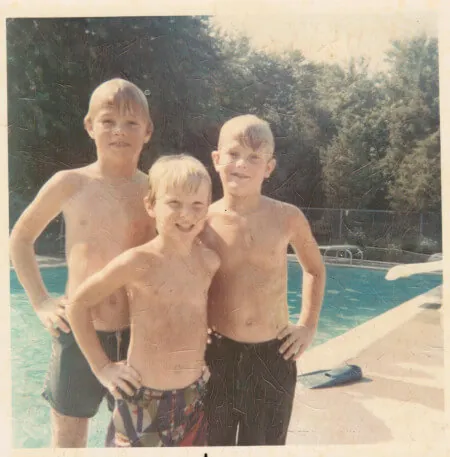
RM: One day my older brother, who never ever gave me any advice whatsoever—we were sitting in front of our house, in our driveway—he says, “Rod, I’ve been thinking. You really like languages. There’s this Cold War going on. We’re in this adversarial relationship with the Soviet Union. Why don’t you study Russian? Learn a little bit more about it.”
I was so enamored of the education in my Russian studies degree, I thought I’d like to learn more about this part of the world, and I learned I could do a master’s degree in Slavic linguistics, but to do so, I had to take two additional Slavic languages.
Well, again fate intervened: there were only two Slavic languages being taught at my university at that time, Czech and Bulgarian. I signed up for Bulgarian—I was the only student in the class—but I thought it was pretty cool because it was so unique. Then one thing led to another, and here I am talking to you.
ABF: What happens when you learn someone’s language that doesn’t happen when you communicate with them in English
RM: It gives you an amazingly different entrée into society if you can chat with people in their local language, regardless of whether it’s a formal conversation or you’re in the market. Just the other day I was filling up my gas tank, and I ended up chatting with a 70-year-old gentleman for about half an hour about Alaska and so forth. These are the sorts of things, if I hadn’t studied Bulgarian, I would have missed. And you learn a lot about culture that way. It’s a lot more fun as well.
ABF: You have now encountered Bulgaria at very different moments. What’s different today that the young diplomat who arrived here decades ago would find hardest to believe?
RM: During my first tour here, we had electricity rationing. Frequently we would have to travel to Greece to buy green vegetables and so forth. There were very few cars on the streets, and the ones here tended to be Trabants and Ladas, a few Volgas here and there.
Obviously, this country has changed enormously economically. The GDP has expanded enormously, and the living standard has improved tremendously. I would say, in that area, the vibrancy, breadth, and variety of the economy is something I never could have believed or imagined arriving as a young diplomat in 1990.
Also, as I’ve said to other people, when I first got here, Bulgaria was still under the Bulgarian Communist Party, at least for the first couple of months of my time here. There had been no democratic multi-party elections, at least in many decades. The country was still a member of the Warsaw Pact and the Comecon.
I remember, at the time, a young member of parliament named Solomon Passy—I read it in a newspaper—was asking about NATO membership. I asked my boss, “Should I go meet this guy?” I went over and met with him, and of course he asked what would happen if Bulgaria applied to join NATO. I said, “I don’t know. Bulgaria is still a member of the Warsaw Pact.” So we sent a telegram back to Washington, and we got this terse answer back: “NATO enlargement is not on the agenda.”
But zoom ahead: it was only 13 years later, 14 years later, that Bulgaria became a full-fledged member of NATO. Three years after that, a member of the European Union. So much has transpired.
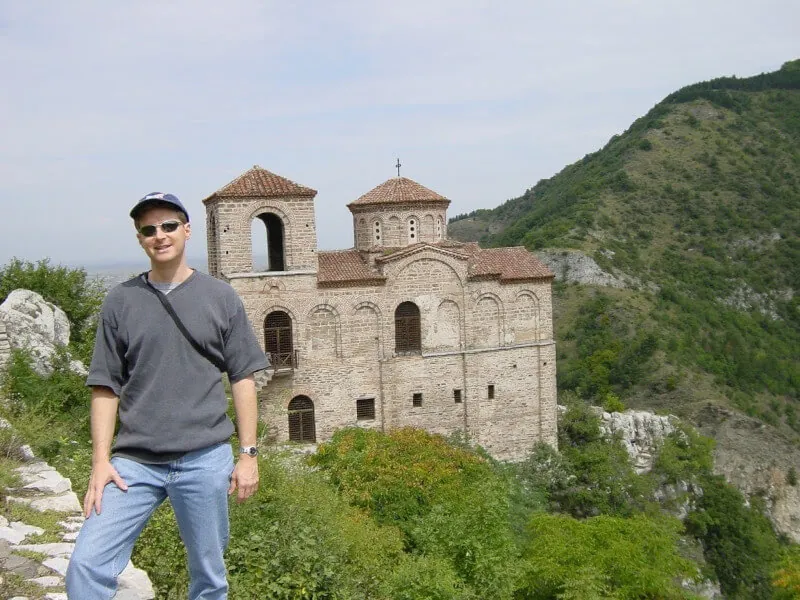
ABF: You spent 31 years in the State Department and held some senior positions. Titles aside, what did those 31 years teach you about people that you think will help you in this job?
RM: What I learned is that, in every society, there are political leaders, captains of industry, movers and shakers, influence leaders, and so forth, and those people obviously have an important role to play. But in every society, like this one, it’s the large majority of just ordinary people going about their daily lives who ultimately are the most important decision makers. I think it’s so important to get beyond that bubble and to meet people on their own terms, on their own turf, and to really understand what it’s like to be a Bulgarian living in this country in 2026, and to get that kind of unvarnished view. I also really enjoy doing that.
ABF: Going from diplomacy to leading a private foundation looks like a major career change. Does it feel that way to you?
RM: Yes, it does. I’ve never run a foundation before. So why am I possibly qualified to do this job? It’s a great question. I ask myself that every day.
However, I would say that, in the diplomatic service, every three years we go to a new job, and frequently we know very little about the job we’re going into. It’s baptism by fire. So that gives me some comfort that I’ve learned how to adapt and to adjust.
Also, during my last job before this one, I was also wholly unqualified to hold that job. I was director of a master’s program, an academic program in international affairs. I had never done that before.
And in those previous jobs and in that job, what I learned is: don’t come in thinking that you know it all. Listen, admit when you don’t know what you’re doing or how to do something, and trust your staff, listen to your staff, and then just figure things out, and don’t be afraid to make mistakes. And if you make a mistake, own up to it and try not to repeat it. So I hope that the same pattern will apply here.
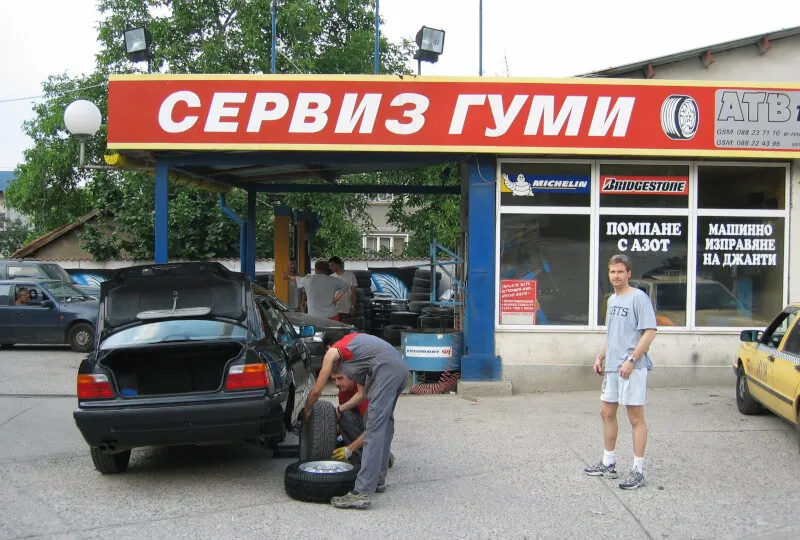
ABF: You have quoted Colin Powell saying that the essence of leadership is trust. You’re taking over a team that has worked together for years and knows the organization from the inside far better than you do. How does a new leader earn trust?
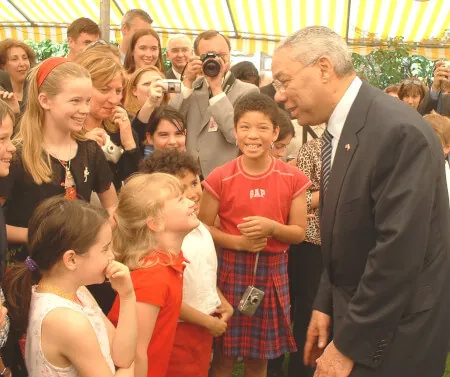
RM: Colin Powell to me was an inspirational leader. I remember well when he came to Bulgaria to celebrate the 100th anniversary of US–Bulgarian relations. And one of the things he did, he gathered all of the embassy staff in the backyard of what will now be the ABF headquarters. And he not only gave some remarks, but he “pressed the flesh”—he went around and met with people. And he didn’t have to do this. He was Secretary of State, had a very tight schedule, but he showed that he cared about the troops. That made me curious about his leadership style.
Trust is multidirectional in an organization. It’s not unidirectional. It’s not as if the team needs to trust the leader, and that’s it. The leader needs to trust the team, and the team needs to have trust among themselves to truly be able to reach its potential.
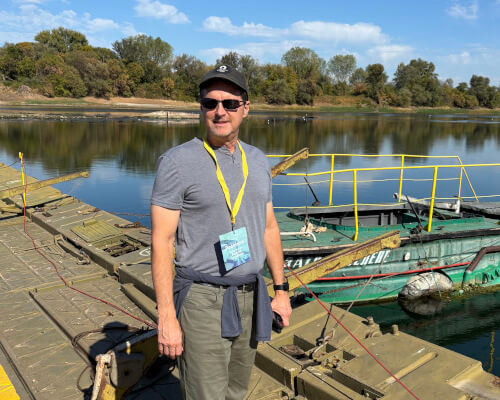
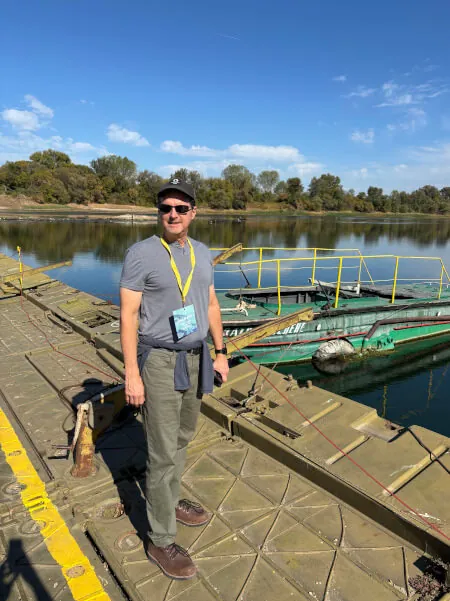
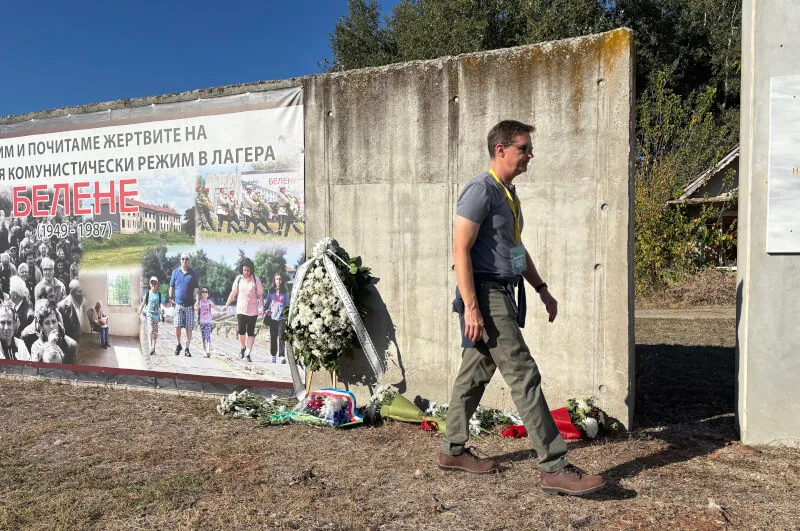
ABF: One of your first trips in this new chapter took you to Belene. Did being there change or sharpen your thinking about the kind of work a foundation like ours should support?
RM: That was a really sobering trip. When I was up there, what really struck me was what a contradiction Belene is. It’s this beautiful, peaceful, tranquil place, but a place where untold human suffering took place as well. Boy, is that kind of a wake-up call! I’d heard about Belene, but to see that camp with your own eyes and to read some of the testimony—it really kind of shakes you to the core.
We met a survivor of the assimilation campaign against the Turkish population. Obviously I had known about that; I had heard about it. I arrived to start my first job in Bulgaria at the embassy in 1990, but it struck me that when I came here as a tourist in 1986, with my backpack on, I was completely oblivious to what was happening to the Turkish population of Bulgaria at that time. The so-called “Revival Process” was underway.
Civic education is important in any society, any democratic society, certainly. That’s one of the takeaways. And just the amazing work that some of our grantees—not only our grantees, but other people—are doing to keep these memories alive is so inspiring, so commendable.
ABF: You have inherited an organization that isn’t looking for someone to invent it from scratch. What do you think the Foundation already does well, and where do you think you can add something?
RM: Our vision for Bulgaria is something I think everyone should be able to get around: “Bulgaria’s dynamic economy and its thriving democracy ensure fair and ample opportunities for all its people to flourish.” I mean, who could possibly argue against that? It’s such a wonderful, forward-looking vision.
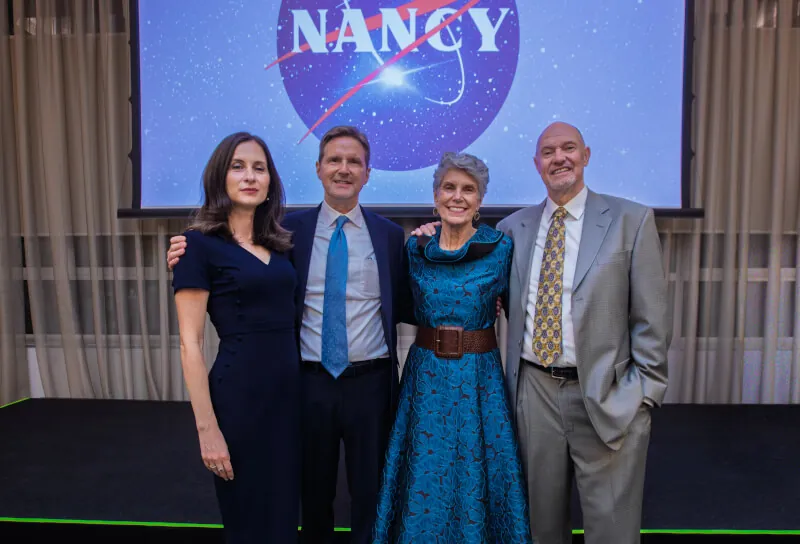
I can provide, I suppose, a new perspective, or a different perspective. I think it’s healthy in any organization to have new perspectives come in. It’s one of the reasons I have such great respect for Nancy Schiller, who, of her own accord, decided, “Well, I’ve been doing this job for a long time. Maybe it’s time, at a high point, to move on and do other things.”
You know, it’s very humbling and daunting to follow Nancy Schiller because she is such an amazing woman who has accomplished so much. I have enormous admiration and respect for her. So I don’t expect to replace Nancy Schiller; I’m succeeding Nancy Schiller.
Some of the things that I’ve seen her do, which I respect and admire the most: her ability to build relationships, to be visionary, to bring people together, and to solve problems. She’s a consummate problem solver, and I think those are just incredible qualities that she has. I’d like to be able to try to emulate some of those in my own work here.
ABF: Imagine we are having this conversation three years from now. What would need to have happened for you to think, uprooting my family was worth it?
RM: Feedback from my family, I’m sure, will be an important element. But me personally, if I’m sitting in my office or in a staff meeting, or if I’m out on a drive, and I feel that the work that our team and I are doing is impacting lives in a positive way, that would be incredibly rewarding. It would make me feel that—when I look at the pros and cons of making this move—it was definitely a pro.
Prefer to watch and listen? Here’s the video interview: