How you use the time you are given
After a 40-year career, most people slow down. Sonya Demireva, a former banker with a résumé long enough to use as a doorstop, does the opposite. She reaches for her next challenge with the same energy that carried her through four decades in some of Bulgaria’s most demanding economic fields.
She spent twenty of those years in senior leadership at a major international bank—managing thousands of employees, overseeing projects worth hundreds of millions. She could very reasonably say, “I’ve done my part.” Instead, she gathered everything she’d learned—how to read a business plan, how to develop people, how to think in systems—and redirected it toward something new.
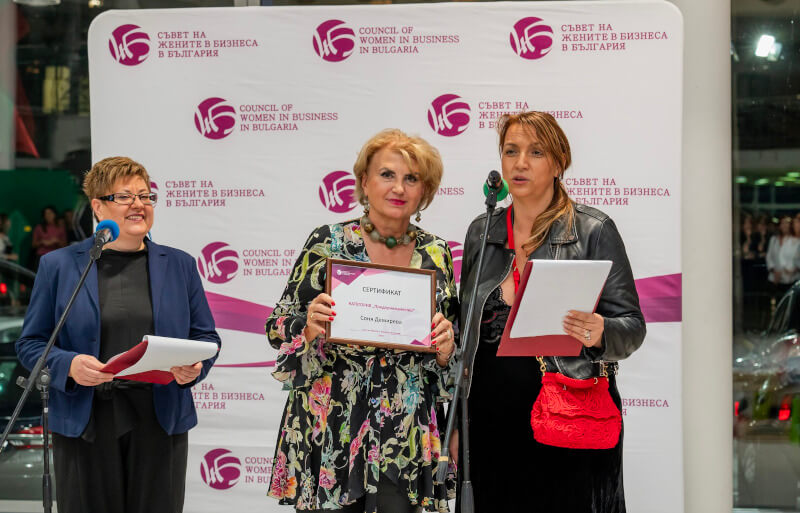
In 2020, she took on the leadership of BASE, Business Academy for Starting Entrepreneurs, as part of the Council of Women in Business in Bulgaria. Her mission was to support people taking their first, shaky, hopeful steps into entrepreneurship.
“God gives us one life,” she likes to say. “The difference comes from how we use our time.” Her own choice is simple: “I want to help people who use their time to succeed.”
BASE attracts all kinds of aspiring founders: some reviving an old family business, others discovering that a hobby can pay the bills, still others determined to support their families with honest craft. Some arrive after a life-altering setback; some arrive with a cause rather than a product.
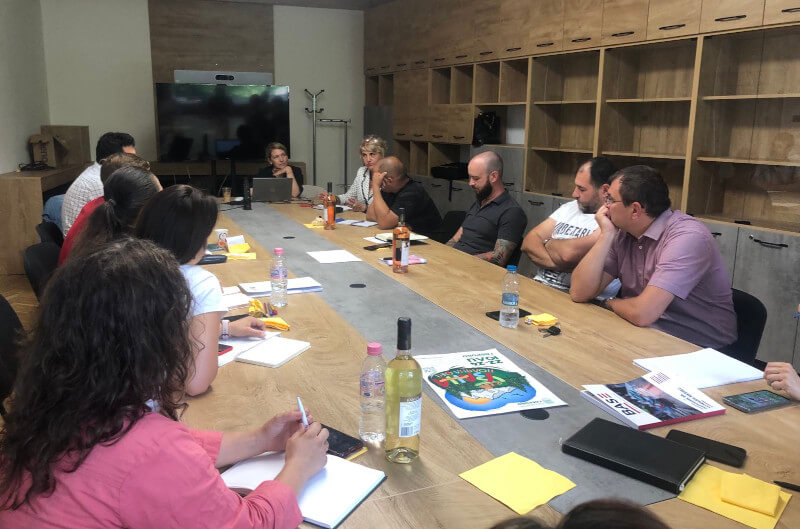
Sonya doesn’t just lecture them on finance. She listens. She reviews business plans, asks the uncomfortable questions, and sometimes does the hardest thing of all—helps someone realize that their idea simply won’t sustain them.
“I help some succeed,” she says, “and I also help others—by talking them out of the wrong idea.”
That’s where her decades of experience speak the loudest. After years in accounting and banking, Sonya’s instinct for business is razor-sharp, and she uses that clarity not to shut people down but to help them walk forward more confidently.
The girl from Haskovo who trusted her instincts
Sonya grew up in a small Bulgarian town, in a family of architects. Her grandfather had been Haskovo’s chief architect in the early 20th century, and her parents hoped she would follow the tradition. At fourteen she was sent alone to Sofia, the capital, to attend a vocational high school in interior architecture. She rented a tiny room, woke before dawn, studied late into the night.
She was hardworking and clear-eyed: she knew that getting into the university architecture program was nearly impossible—only a handful of girls from the entire country were admitted each year, and coming from a “bourgeois” family considered politically undesirable didn’t help her chances. She also knew that drawing wasn’t her strongest suit.
In her final year she made a decision: she would study economics. Not because it was easy, but because she saw where her discipline could actually take her. She was accepted to the Karl Marx Economic Institute and threw herself into the work with the rhythm she set for herself: steady, persistent, no excuses.
By the time she graduated in 1982, she was already a mother. Her husband was still at university, there was no one to watch the baby, and in those years living in Sofia wasn’t a right; it was a privilege. The only way to stay was to find a job. So she searched with the baby in her arms, knocking on institutional doors, relying only on what she knew: economics, pedagogy, stenography, typing, and the neat, architect-like handwriting she had picked up in high school. Eventually she was hired as an accountant at the Mining and Geological Institute.
The work pulled her in. She took a banking course, read after hours, studied at night, and cared for her child during the day. The pace was brutal, but she kept it without complaint.
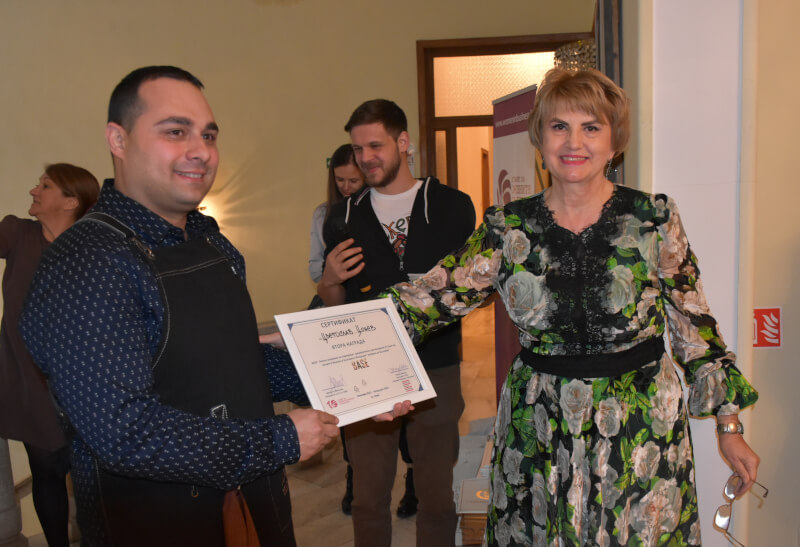
Gradually, the numbers began to speak. “Accounting is a science close to mathematics and not far from black magic,” she laughs, quoting an old textbook. Then she added her own line: “Money moves through a business the way blood moves through the body. If you understand the flow of money, you understand everything.”
Three years later, back in Haskovo, that understanding paid off. She became chief accountant of the region’s only foreign-trade enterprise—a job where precision mattered more than anything. She spent hours studying new regulations, kept immaculate records, and her diligence helped the company earn enough to give all employees year-end bonuses.
“I became known as the best chief accountant in town,” she says with a smile. The reputation she earned there—for rigor, fairness, trustworthiness—opened many doors later in her career.
Knowing the client’s business better than they do
Sonya entered Bulgaria’s banking sector during its wildest years. She worked at one of the country’s first private banks and lived through its collapse during the banking crisis of 1996–97, when almost every bank in the country went under.
But her reputation mattered. Within months, she won the competition to lead the newly opened branch of Bulbank in Haskovo. In just three years, she turned it into one of the most successful branches in Bulgaria.
The reason was straightforward. A banker in the 1990s had to know far more than balance sheets. You had to understand the business itself: how production worked, how trade worked, how agriculture worked. “You couldn’t finance something unless you were convinced it would work,” she says.
So she studied. When a client applied for a loan to build a nitrogen-fertilizer plant, she read up on the chemical processes. When she financed agriculture, she learned what made wheat good enough for flour. She read about cement production, visited factories, construction sites, and fields.
“If I walked into a factory today—any factory—I could tell you quickly whether it was making money,” she said. “Give me ten or fifteen minutes in a restaurant, the menu, and three questions to the waiter, and I will know how the business is doing.”
This isn’t bravado. It is experience. Banking, for her, was not a desk job. It was a way of understanding how the real economy breathed.
Thousands of people, one reputation
When UniCredit acquired the bank in 2000, Sonya was already among its highest-rated managers. She was invited to Sofia to lead the major branch by Sveta Nedelya Cathedral—100,000 clients, 220 staff. She later became a regional director and eventually oversaw the entire branch network: hundreds of branches, nearly 2,000 employees.
How did she manage an empire like that? With relentless work—and with a memory for people.
For years she woke up at three or four in the morning so she could be in a different town’s branch by eight. She read balance sheets in the back seat of a moving car, pored over local economic data, and firmly believed you couldn’t lead people if you didn’t know their names.
“People are like a basket of walnuts,” she says. “You have to crack each one to know whether the nut inside is sound.”
Integrity came first, then professionalism. Early in her career a cashier taught her a lesson she never forgot: “The danger isn’t in someone taking fifty thousand. It starts with five. The moment a person reaches for those five, they’re already capable of reaching for fifty thousand.”
Over time her colleagues learned that she was both demanding and fair. When she retired, the Sales Department created a book for her—The Path of a Legend in UniCredit Bulbank—and wrote her a poem that read:
You are a remarkable woman, a master of your art,
A top contender, year by year, in skill and heart.
A presence that inspires, a style all your own,
A talent for business and people, clearly shown…
They say no one is truly irreplaceable—
But the void you leave behind proves that’s debatable.
For her, that was the highest recognition. “Success is when I look people in the eye and they look back with trust and respect,” Sonya said.
And through all those years, she never spoke about her achievements as her own alone. “Everything I’ve accomplished, I accomplished with my teams,” she said. “The people I worked with are my greatest wealth.”
Learning has no age limit
Somewhere between mergers, budgets, and endless travel, Sonya decided she couldn’t keep relying on hand gestures and translators in meetings with foreign executives. At forty-two, she started learning English the serious way—waking at four, studying from six to seven-thirty, and keeping at it for five or six years. Today she just shrugs: “I manage.” Behind that understatement lie thousands of handwritten vocabulary pages and a spine of steel.
At fifty-five, she got her driver’s license: no more company driver, and no desire to depend on anyone.
During the pandemic, instead of curling up with daytime TV, she enrolled in a part-time master’s program in psychology. “I needed to fill the time with substance,” she said. She isn’t sure she will ever graduate. “I’m vain. I like how ‘psychology student’ sounds,” she jokes. The student ID also gets her a discount on the ski lift in Bansko, which she finds delightfully practical.

BASE: when experience turns into support
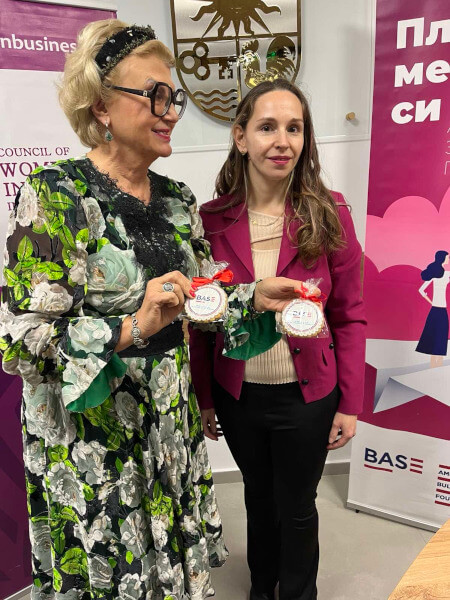
Today Sonya leads the BASE program on behalf of the Council of Women in Business in Bulgaria. She calls the Council “a group of women with big, generous hearts who give their time so that others can succeed.” Their mission: helping young people build meaningful futures in Bulgaria.
In BASE, she sees every kind of idea: from a Pilates studio to a mobile specialty-coffee bar. Any favorites? “I’m touched by the people who are truly determined to succeed,” she says. She can tell by how they prepare, how they listen, how they work.
Take Tsvetoslav Tsonev from the town of Lovech, founder of Joker Specialty Coffee. He works two jobs to grow his business, travels from festival to festival with a coffee motorbike, and never once complains. People like him push her to give even more—to show them which steps are realistic, what they can improve right away, and where not to waste their strength.
Then there are the entrepreneurs with a mission. She lights up when she talks about Ralitsa Petkova from Blagoevgrad, who not only produces honey but visits schools to teach kids why bees matter. Or Tanya Parvanova from Pernik, who makes clothes from textile waste. Or architect Eva Tosseva, who creates “healing paintings” from flowers. And, again, people like Tsvetoslav, for whom quality isn’t a slogan; it’s a habit.
Others need a reality check. When someone proposes launching an outdoor swimming pool as their very first business, Sonya doesn’t crush the dream, but she doesn’t sugarcoat it either. She explains, calmly, that such a project costs millions, works only a few months a year, and is fit for someone with an established business, not a beginner.
“In banking and now in BASE, I do the same thing,” she says. “I show people what’s truly good for them.” The difference is simple: as a banker, her decisions brought profit to the institution; in BASE, she has no stake in anyone’s earnings—only the pleasure of seeing them move ahead.
The question she hears most often is how to negotiate, with clients, with suppliers, and, most importantly, for the worth of their own labor. Many have never counted their own work as a real cost. So she returns to her simple formula: success comes from pairing confidence with daily discipline and an openness to learn.
And does she learn from them? “Meeting a new person is like opening a new book,” she says. Every participant adds a chapter to her ongoing story of what it means to live with dignity and purpose. That, she says, is why she keeps nurturing their ideas with the same care she once gave to bank branches and teams.
 A call to the next generation of entrepreneurs
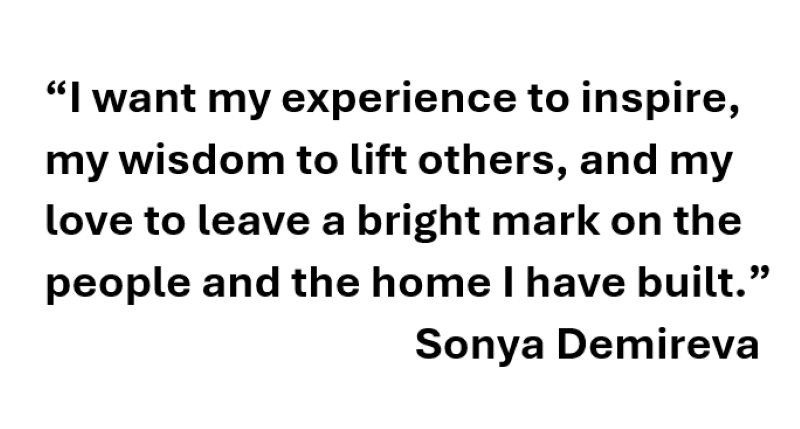
Sonya Demireva could have remained a legend in banking. Instead, she chose the harder, better path—to share what she knows so others can step more confidently. To pass on knowledge, but also courage. To make complicated things understandable and doable.
If you have an idea that won’t leave you alone and you’re wondering where to begin—if you need someone to tell you honestly, “This works,” or “Think again”—the Business Academy for Starting Entrepreneurs (BASE) is your place.
The program is free, and there you meet people like Sonya—professionals who understand how money moves, but are far more invested in something bigger: helping you find the momentum to move your own life forward.