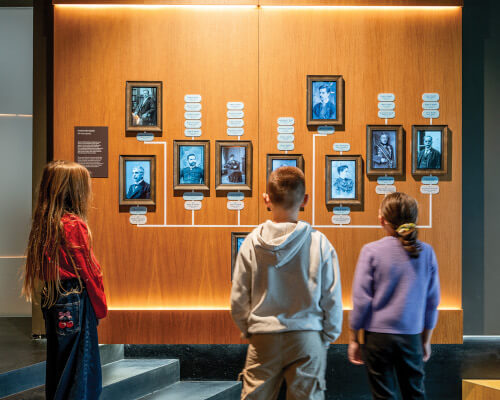
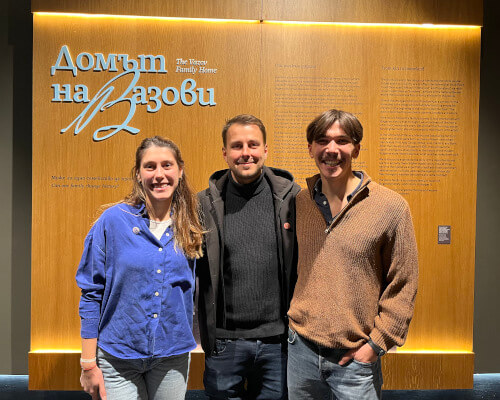
A new permanent exhibition in Sopot, Bulgaria, brings a remarkable family together and reveals the bonds behind a celebrated name.
Don’t have time to read? Listen to this story on Spotify:
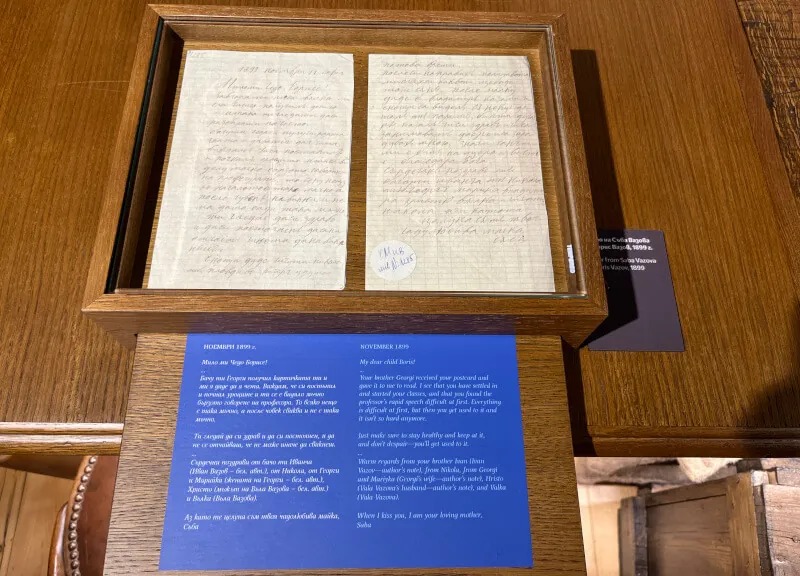
The professor speaks too quickly. The lessons are difficult. Boris has gone to Paris to study, and he is clearly struggling to settle in. Back home, his mother receives the news and sits down to write.
“Everything is difficult at first, but then you get used to it, and it isn’t so difficult anymore,” she reassures him. And adds: “Just take care of your health and keep at it.”
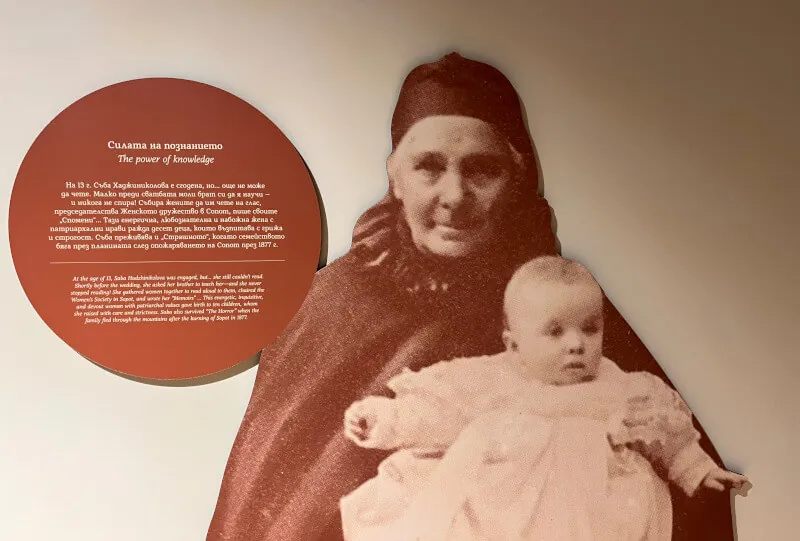
The letter is dated November 1899. The mother is Saba Vazova. She herself learned to read only as a teenager, at home, with her brother’s help. Yet reading became a lifelong passion. Decades after her own first encounters with the written word, she is urging her youngest son not to give up on his education.
Toward the end, she passes along greetings from the family. Among them is “your big brother Ivan”—Ivan Vazov, the man Bulgarians know as the patriarch of their national literature. To Boris, he is an older brother sending his love through Mom.
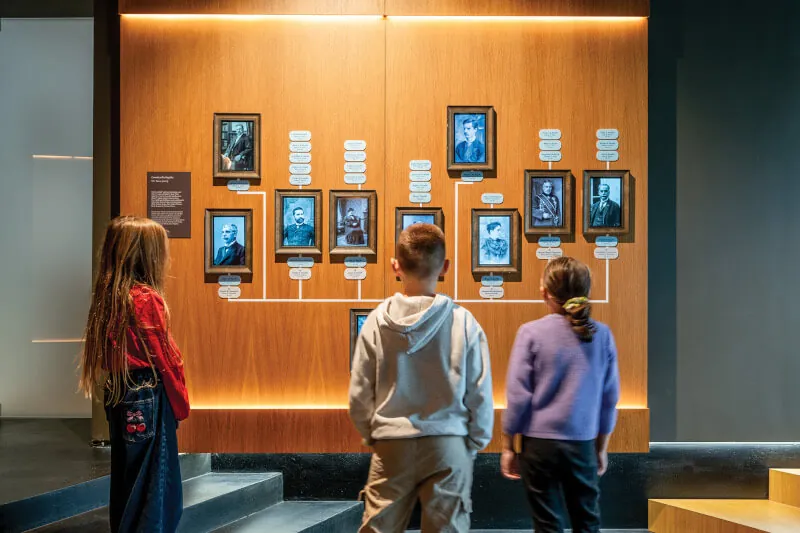
The letter is part of The Vazov Family Home, a new permanent exhibition at the Ivan Vazov House-Museum in Sopot, the family’s hometown in central Bulgaria. It offers a glimpse of the encounter awaiting visitors. Around the celebrated writer gather his parents, siblings, and their families. Letters, photographs, and personal stories reveal the relationships connecting lives usually told separately.
“We brought a family back together,” says museum director Borislava Petrova.
And what a family! Among the children were Bulgaria’s first professional writer, two generals, a physician, and a lawyer with a doctorate. Their sister Vala graduated from high school in 1885, a considerable achievement for a girl of her time. Their parents had far fewer opportunities for schooling but nurtured their children’s curiosity and encouraged them to reach further.
What was it about this home that helped them go so far?
The exhibition takes us into a household where curiosity was encouraged, education was worth the effort, and difficulties were met with support. That care endured long after the children had families, careers, and public reputations of their own.
Here, fame never quite displaces the names used at home. The literary giant is still bacho, an affectionate Bulgarian word for an older brother. The general signs off as Dad. And their mother continues to worry about their health and offer encouragement when life gets difficult.
You smile. You could hear much the same at home.
A place on the bench
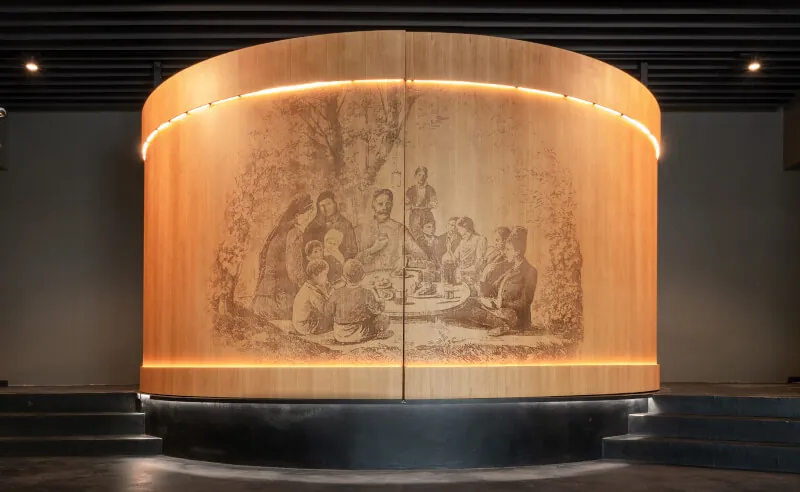
No photograph survives of the whole Vazov family together with their father, Mincho. So the exhibition opens with an illustration by artist Josef Oberbauer for Under the Yoke, Ivan Vazov’s best-known novel. It shows Marko, the father of a large household, having supper with his children—a scene inspired by the writer’s own family life.
Further along, a bench draped with a woven rug invites us to sit. Soft lighting and books make the space feel welcoming and familiar. The bench recalls Saba reading to her children. The woman who had once needed help learning her letters was opening new worlds for them through books.
Knowing who these children would become makes this ordinary family scene especially moving. There is no national poet yet, no general—just children listening. One of them will write the books that generations of Bulgarian children will grow up with.
In her memoirs, Saba also describes the destruction of that world during the events remembered locally as “the Terror”: the burning of Sopot in 1877, the family’s flight, and the killing of her husband, Mincho. The home the exhibition helps us imagine was lost. The children’s lives took different paths, but they continued to reach for one another through letters, sharing worries and sending photographs and news.
Honors and reversals
“We must win or… die. There is no other choice.”
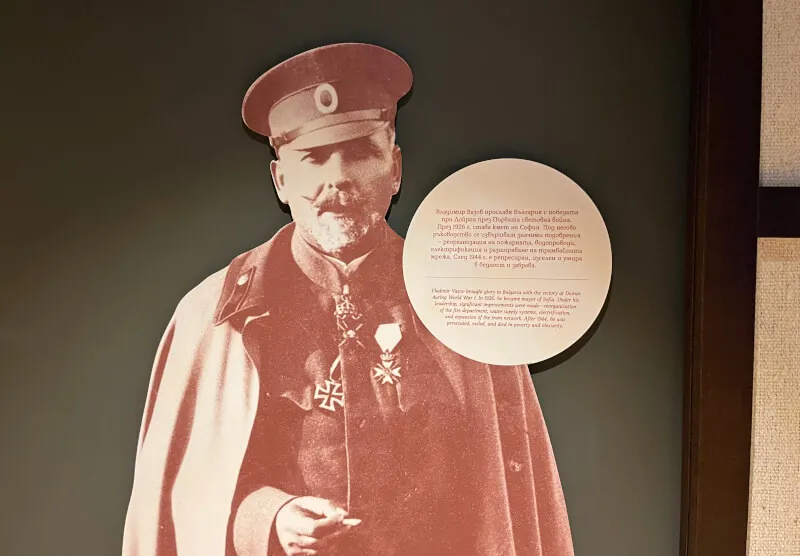
Vladimir Vazov wrote those words in his diary in September 1918. At Doiran, on the Balkan front of World War I, everything he and his soldiers had prepared was about to be tested: their fortifications, their defenses, their ability to withstand the assault. A much larger British and Greek force attacked, but the Bulgarian positions held.
The family already had a war hero. Five years earlier, during the First Balkan War, Georgi Vazov had commanded the troops that broke through the defenses of the Ottoman fortress of Adrianople, now Edirne in Turkey. After a prolonged siege, that breakthrough opened the way to victory.
Two sons of Saba and Mincho had helped secure two of the most celebrated victories in Bulgarian military history.
Among the family letters and photographs in the exhibition is a clipping from an English newspaper. It reports on General Vladimir Vazov’s visit to London in 1936, when the British Legion, a veterans’ organization, welcomed him with honors. His former adversaries remembered a worthy opponent.
Just eight years separated that welcome from his forced removal from Bulgaria’s capital. After taking power on September 9, 1944, the new communist authorities did not spare even the hero of Doiran.
The home we come to know in this exhibition raised people who devoted their lives to Bulgaria. History did not always repay them with gratitude.
Between two sentences
By now, you linger a little longer before the family portraits near the exit. Technology has brought the Vazovs together again, animating their faces—with perhaps a faint echo of the enchanted portraits at Hogwarts. Saba is with a grandchild. Mincho is here too. Vala seems to glance your way. You feel you’ve met. You know who wrote to whom, who worried about whom, what they lived through.
You remember the words above the entrance, the opening sentence of Under the Yoke: “On that cool May evening, Marko, bareheaded and in his dressing gown, was having supper with his family in the courtyard.”
After the story of the Vazovs, there is something especially precious about this meal: the family is together, at home, before the trials to come.
Above the door as you leave is the novel’s final sentence: “This madman was the only person who dared to protest.”
An entire novel unfolds between a family supper and a solitary act of defiance. In the exhibition, those same two sentences give us room to get to know the family in which its author grew up. For Bulgarians, the words are familiar from school. For visitors discovering Vazov for the first time, they offer an intriguing introduction.
Perhaps it is time to open the book—again, or for the first time.
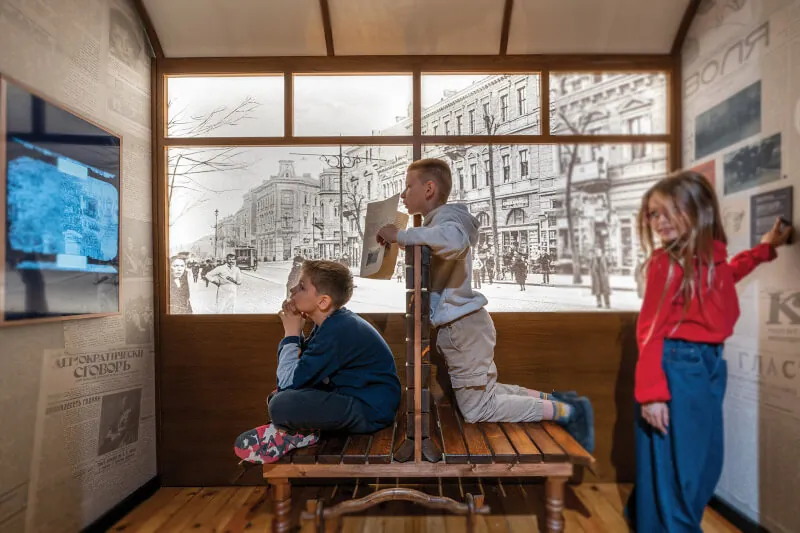
Come spend some time with the Vazovs. At the Ivan Vazov House-Museum in Sopot, you can get to know a remarkable family up close, where a life of great achievements still leaves room for kisses from Dad.
***
The people and partners behind The Vazov Family Home
The permanent exhibition was renewed in 2024–2026 with the support of the America for Bulgaria Foundation, Sopot Municipality, and the Ivan Vazov House Museum in Sopot.
Lead contractor — Studio HORA: architects Andrey Hodkevich, Tsveta Nistorova, and Plamen Genchev; Sabin Sabinov; Vessela Gertcheva; Vayana Simeonova; Martina Venkova; Denis Gachev; and Alexander Krasnocharov.
Exhibition curator: Totyo Hristov.
Scholarly advisers: Dr. Borislava Petrova, Veselina Bozhkova, Viktor Topalov, Associate Professor Vladimir Stanev, Professor Milena Kirova, and Totyo Hristov.
Exhibition texts: Dr. Borislava Petrova, Veselina Bozhkova, and Zornitsa Hristova.
Graphic design: punkt.studio — Krassimir Stavrev, Nadezhda Karidova, and Nikol Decheva.
3D animation: ANIMAJOR — Kalina Atanasova and Yavor Bonev.
Mural restoration: Boyka Raychanova.
Audio performances: Momchil Stepanov, Petar Varbanov, Stefka Yanorova, Belcanto Quartet, and Dr. Boyan Tsvetkov.
Construction, fabrication, and installation
- Construction: BULSTROY & CO LTD.
- Furniture: Furnit.
- Heating and ventilation: TULIPS.
- Building materials: Flügger, Polaris Product, and Baustoff + Metall.
- Lighting: Polaris Lighting.
- Sound systems: Dynacord Bulgaria.
- Printing: KOZIROG.
- Exhibition elements: Mar Mebeli and PiXL Factory.
- Electrical installation: EL TOP 2000.
- Landscaping: Green Gardens Ltd.
Materials donated by
Polaris Product, Dynacord Bulgaria, ETEM, Furnit, JAF, KNAUF, Knauf Insulation, Kourasanit, NIDO, Polaris Lighting, Rollplast, and TULIPS.
Images and footage supplied by and belonging to
Bulgarian Historical Archive, Sts. Cyril and Methodius National Library; Bulgarian National Television; Archives State Agency; Veliko Tarnovo State Archives; Kinoclub Super 8; Ivan Vazov House Museum, Sopot; National Literary Museum; Artistic Archive of the Ivan Vazov National Theatre.
Thank you to everyone who helped make this exhibition possible.