A young creative team and a determined museum director have created a world-class exhibition in Sopot, Bulgaria, bringing visitors closer to a remarkable family and the lives behind its achievements.
Don’t feel like reading? Listen to this story on Spotify instead:
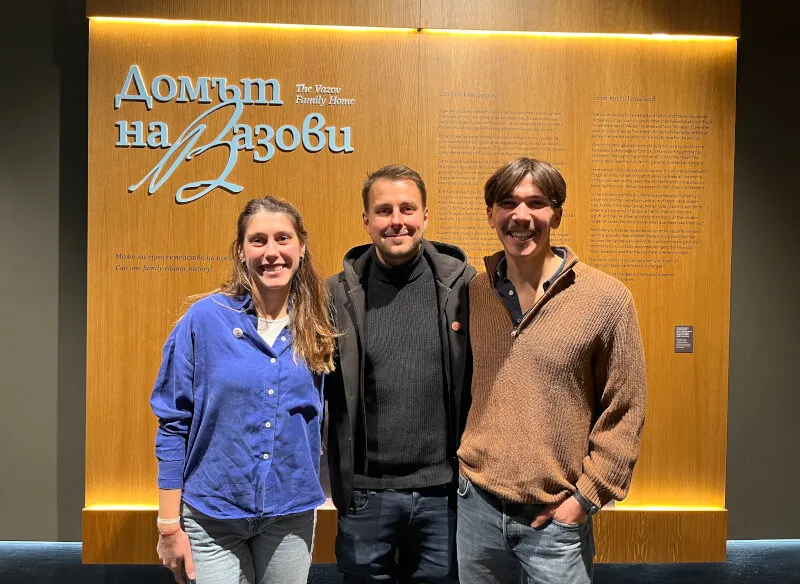
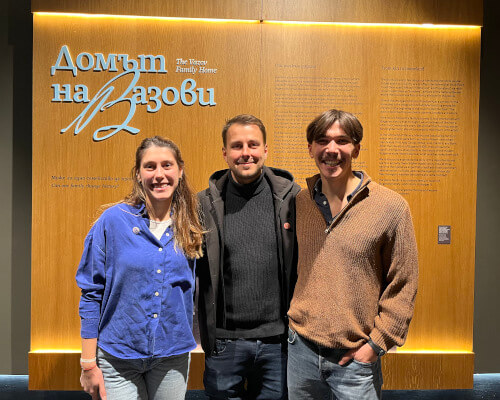
After work, Tsveta Nistorova and Totyo Hristov go home and keep talking about the Vazovs. She is an architect; he is an ethnologist and curator. They are partners in life, too, but for the past two years, another family’s joys and worries have taken over their days.
Totyo searches library collections, reads letters, gathers biographies and archival footage, and traces who lived where and when. Before the project, his knowledge of the family centered largely on Ivan Vazov, the writer revered as the patriarch of Bulgarian literature. Then the discoveries begin to multiply.
“A family of superstars,” he sums up.
Tsveta gradually gets drawn in. Historical dates usually elude her, yet she now talks about the Vazovs with a precision and wealth of detail that surprise even her. Her own family hears about them, too. Daily.
“We literally lived with this exhibition for two years,” she says. “We’re passionate about this story.”
Visitors, though, won’t spend two years with the Vazovs. How can a single visit convey just how extraordinary this family was, and how ordinary, too?
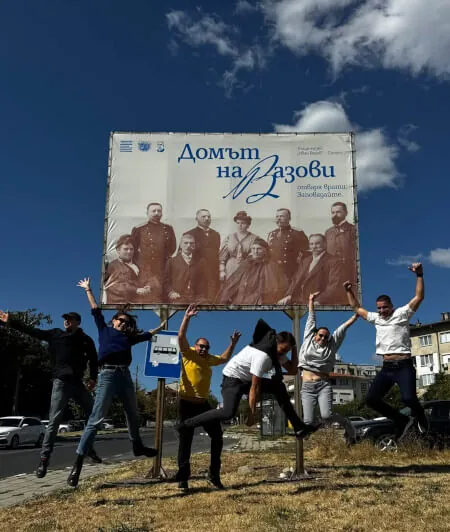
Together with Andrey Hodkevich, architect and founder of Studio HORA, they took on that challenge. The result is The Vazov Family Home, the new permanent exhibition at the Ivan Vazov House Museum in Sopot, the writer’s hometown in central Bulgaria.
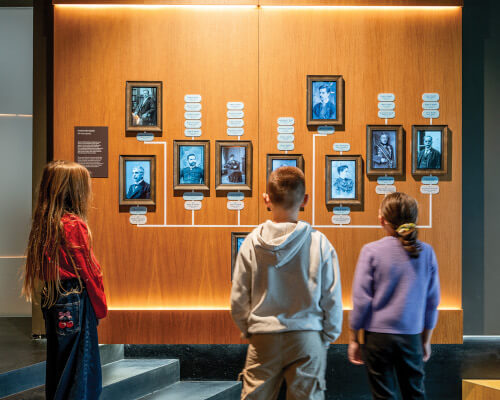
The exhibition takes visitors back to where those celebrated lives began: a home where parents encouraged their children to learn, and brothers and sisters grew up with shared values and the knowledge that they could count on one another. These children would go on to change Bulgaria. What helped shape them? The exhibition invites us to look for answers in their family life.
“Both the Vazovs and Sopot deserve a place like this”
Before there was a new exhibition, there was a leaking roof.
Museum director Borislava Petrova watched the building deteriorate as damp damaged its murals. She and the town’s mayor at the time wrote letters asking for help. A television report drew attention to the museum’s condition. According to Borislava, no one responded.
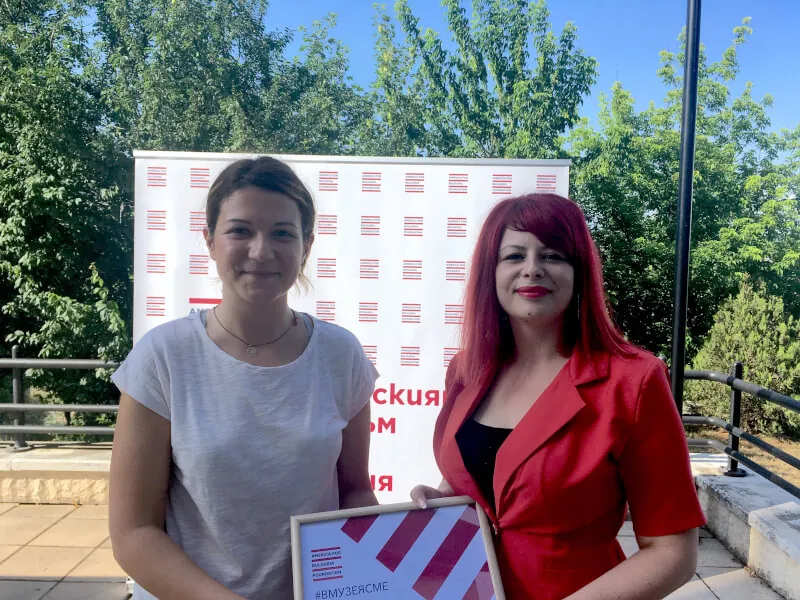
She kept trying. She invited the America for Bulgaria Foundation’s team to Sopot to see the museum for themselves. The Foundation offered support for its renovation.
But Borislava wanted much more than a sound roof. For years, she and her colleagues had been developing activities for children, from exploring traditional crafts to writing letters to a favorite nineteenth-century buditel—one of the writers, teachers, and other figures celebrated for keeping Bulgarian culture and learning alive. She wanted to hear the children’s questions, too, and find out what mattered to them.
A particular favorite is the museum’s Vazov’s Bulgaria competition, open to children across the country and at Bulgarian schools abroad. They can paint, perform, or write something of their own. One child even created a video game about the Bulgarian volunteers who defended Shipka Pass in 1877, during the war that led to Bulgaria’s liberation from Ottoman rule.
“We need to adapt to them, not the other way around,” Borislava says of her young visitors.
It is easy to scold children for showing little enthusiasm for the historical figures they study at school. Giving them a reason to care takes more effort. Borislava believes that responsibility belongs to us, the adults: to help children discover what those lives might have to do with their own.
The new exhibition now gives the whole museum a chance to work toward that goal. You come with your class and then end up wanting to bring your family.
Finding yourself in the Vazovs
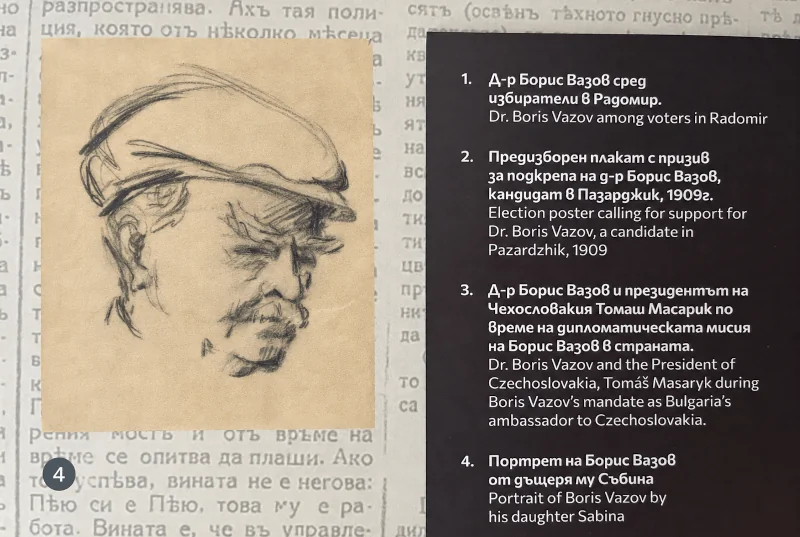
As Totyo explored the family archives, he became particularly interested in Ivan’s brother Boris and Boris’s wife, the painter Elisaveta Konsulova-Vazova. Their ideas appealed to him, while their letters revealed them as spouses, parents, and members of the wider family. He read about their worries and noticed how they addressed each other. Gradually, he grew fond of them.
Tsveta read the memoirs of Saba Vazova, Ivan’s mother, describing the burning of Sopot in 1877. Saba’s account of fleeing the town and losing her husband shook her. When Tsveta talks about it, she sounds as though she is speaking about her own family.
That sense of closeness is what they wanted to share. Andrey knows the responsibility that comes with working on historic sites. Studio HORA has contributed to the restoration of Sofia’s Central Market Hall and developed concepts for other heritage buildings. In Sopot, he also thought about what visitors would take away.
“We’re used to falling silent when we enter a museum,” he says. And to leaving, he explains, with the feeling that the past was greater than any future could possibly be. Here, the team looked for something in the Vazovs’ lives that could speak to people today.
The answers emerged within the family, in the values the children grew up with and carried into adulthood. A mother encouraged her son when he struggled with his studies. Brothers and sisters exchanged advice and looked after one another. Gifts arrived from abroad, along with news of the latest fashions; the world was wide, and there was so much to share! In the letters, the team found the curiosity and mutual support that shaped the Vazovs. In their actions, they saw a belief that knowledge and ability come with opportunities to serve others.
They want children today to see this, too. Behind the famous names are years of study, hard work, and setbacks. And qualities that aren’t reserved for great historical figures. Curiosity can be encouraged. Perseverance can be learned. None of these children was born with a place in the history books.
Borislava hopes a young visitor will recognize those qualities and think, “Then perhaps I could be like them, too.”
Making room for the stories
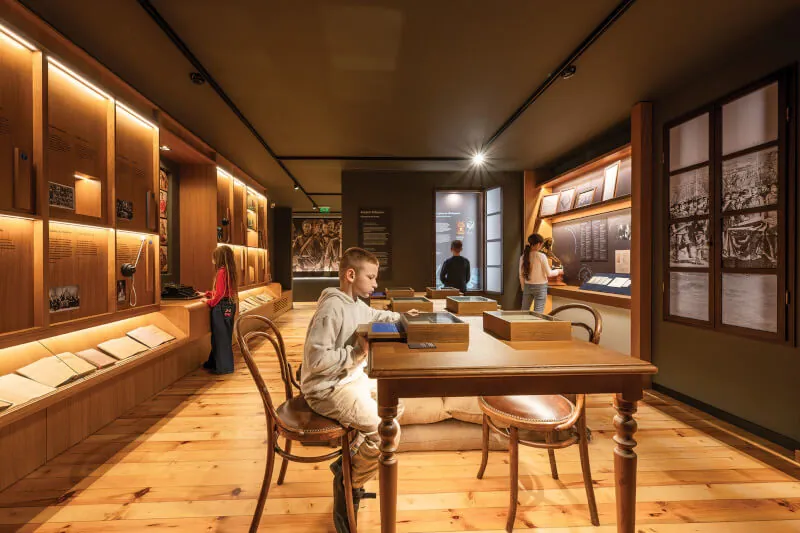
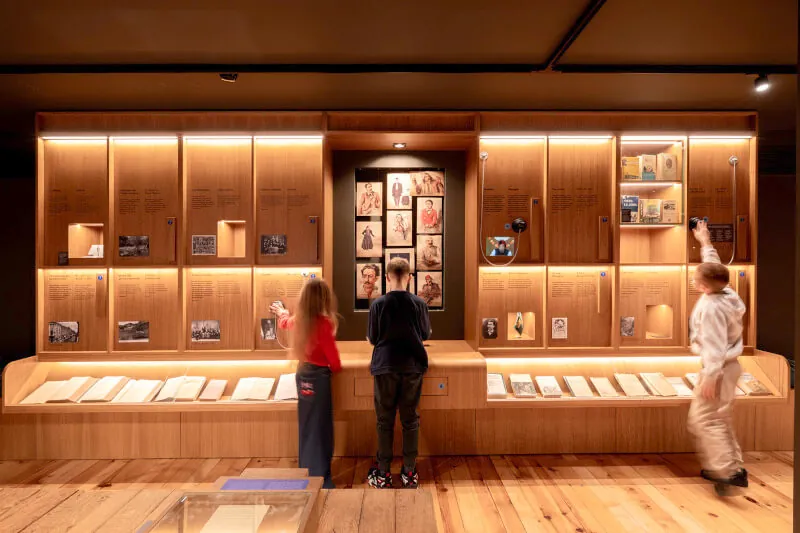
Today, visitors can sit on a bench draped with a woven rug, read a mother’s letter, or watch faces stir in animated family portraits (Harry Potter fans may think of Hogwarts!). The lighting is soft, the exhibition spaces suggest rooms, and the atmosphere feels homelike.
But how do you create that warmth in a museum while leaving room for an entire family’s stories? For the team, almost every decision involved a long conversation.
Tsveta gave particular thought to the library. Books were essential to the story, but how could she draw in a child who associated Vazov with a required summer reading list? What would make that child come closer? How much text would they read before their attention wandered?
Meanwhile, Totyo kept finding more stories, photographs, connections. The small space could not hold everything. Deciding what to leave out became part of looking after the visitor.
Even the words they chose to describe the family’s values prompted debate. Everyone returned to the sources and came back with evidence. Andrey recalls discussions in which they became so absorbed in the meaning of a word that architecture briefly took a back seat.
“Those debates were incredibly inspiring,” he says.
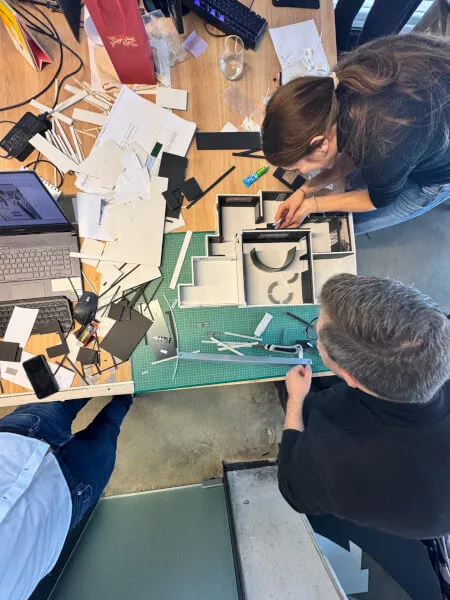
Tsveta and Totyo had also encountered this collaborative approach at the America for Bulgaria Foundation’s Muse Academy, which helps museums turn knowledge into experiences that stay with their visitors. For Tsveta, an important lesson as an architect was to work alongside the people who know the subject. In Sopot, that conversation with Andrey, the museum staff, and the scholarly advisers continued throughout the project: the stories reshaped the space, and the space made them reconsider how to tell the stories.
A dream worth sharing
As work progressed, rising prices put pressure on the budget. Businesses began adding their support to the Foundation’s funding.
One provided building materials; another donated the windows. A third helped secure a better climate-control system than originally planned. A special discount put more chairs for visitors within reach. Andrey still gets emotional recalling calls from partners offering extra help.
Their contributions allowed the team to complete what they had set out to do. There is a new education center, too, where children can take part in activities while other visitors explore the exhibition.
After the opening, Borislava began to recognize returning faces. Local children came back several times, bringing a parent or grandparent. Visitors hugged her and promised to bring friends.
“For me, this really was a dream I wanted so much to see come true,” she says.
Of all the responses, the one that moved her most came from a child at the opening:
“Will this still be here tomorrow?”
It will. The Vazov Family Home is a permanent exhibition at the Ivan Vazov House Museum in Sopot. Come and see it. You may find yourself wanting to return the very next day.
***
The people and partners behind The Vazov Family Home
The permanent exhibition was renewed in 2024–2026 with the support of the America for Bulgaria Foundation, Sopot Municipality, and the Ivan Vazov House Museum in Sopot.
Lead contractor — Studio HORA: architects Andrey Hodkevich, Tsveta Nistorova, and Plamen Genchev; Sabin Sabinov; Vessela Gertcheva; Vayana Simeonova; Martina Venkova; Denis Gachev; and Alexander Krasnocharov.
Exhibition curator: Totyo Hristov.
Scholarly advisers: Dr. Borislava Petrova, Veselina Bozhkova, Viktor Topalov, Associate Professor Vladimir Stanev, Professor Milena Kirova, and Totyo Hristov.
Exhibition texts: Dr. Borislava Petrova, Veselina Bozhkova, and Zornitsa Hristova.
Graphic design: punkt.studio — Krassimir Stavrev, Nadezhda Karidova, and Nikol Decheva.
3D animation: ANIMAJOR — Kalina Atanasova and Yavor Bonev.
Mural restoration: Boyka Raychanova.
Audio performances: Momchil Stepanov, Petar Varbanov, Stefka Yanorova, Belcanto Quartet, and Dr. Boyan Tsvetkov.
Construction, fabrication, and installation
- Construction: BULSTROY & CO LTD.
- Furniture: Furnit.
- Heating and ventilation: TULIPS.
- Building materials: Flügger, Polaris Product, and Baustoff + Metall.
- Lighting: Polaris Lighting.
- Sound systems: Dynacord Bulgaria.
- Printing: KOZIROG.
- Exhibition elements: Mar Mebeli and PiXL Factory.
- Electrical installation: EL TOP 2000.
- Landscaping: Green Gardens Ltd.
Materials donated by
Polaris Product, Dynacord Bulgaria, ETEM, Furnit, JAF, KNAUF, Knauf Insulation, Kourasanit, NIDO, Polaris Lighting, Rollplast, and TULIPS.
Images and footage supplied by and belonging to
Bulgarian Historical Archive, Sts. Cyril and Methodius National Library; Bulgarian National Television; Archives State Agency; Veliko Tarnovo State Archives; Kinoclub Super 8; Ivan Vazov House Museum, Sopot; National Literary Museum; Artistic Archive of the Ivan Vazov National Theatre.
Thank you to everyone who helped make this exhibition possible.For two years, architect Tsveta Nistorova and ethnologist Totyo Hristov lived with another family’s letters, losses, and disagreements. The Vazovs began to feel like their own relatives. Together with architect Andrey Hodkevich and the Studio Hora team, they faced a harder task: making visitors feel that closeness, too.