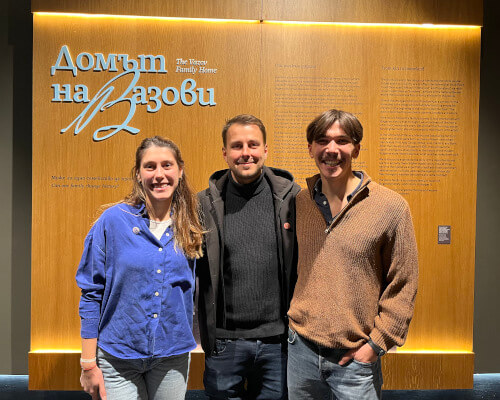
Christina Ferwerda and Paul Orselli help museum professionals in Bulgaria turn ideas into experiences worth coming back for. Their Bulgarian colleagues keep giving them reasons to return, too.
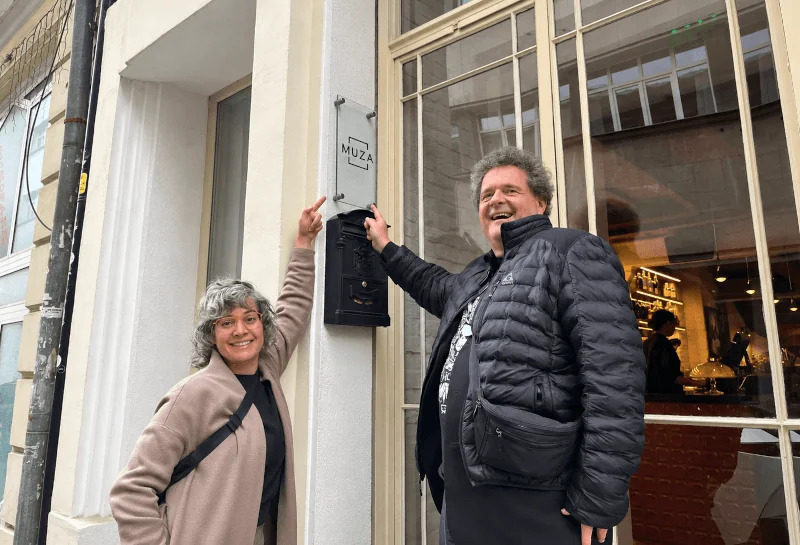
At the first Muse Academy, in 2023, Christina Ferwerda remembers the crossed arms, the palpable skepticism. Participants had come to learn, but they also knew what awaited them back at work: small budgets, people set in their ways, familiar reasons an exciting idea might never leave the room.
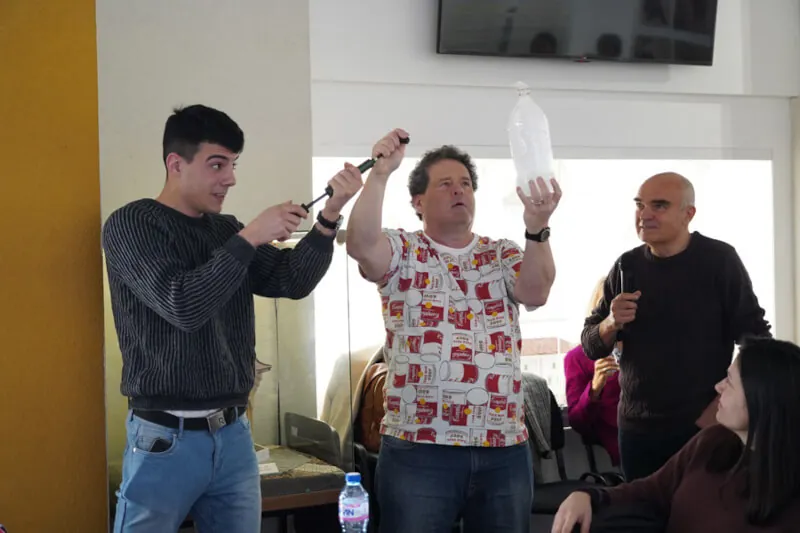
Midway through the week, they were building things with paper and tape that they hadn’t thought they could make.
For fellow instructor Paul Orselli, watching that change never gets old. “All these participants had this inside them the whole time,” he says. “They just didn’t know it.”
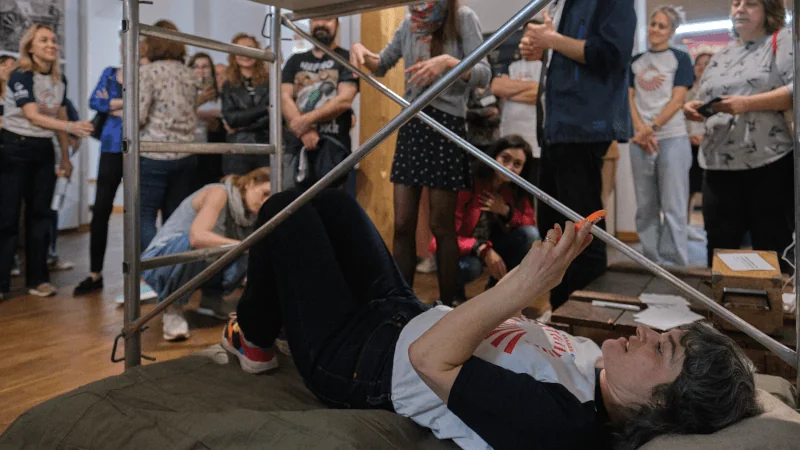
In a later edition, in Pleven, one group built a bed in a day—a way to bring visitors closer to the loneliness of soldiers in the trenches of World War I. The presentation moved people to tears, then applause, and the idea helped shape The Soldier in Human Uniform, an exhibition at the city’s Regional History Museum. Watching the group turn an idea into something that could move a roomful of people remains, for Christina, “a peak life experience.”
Christina and Paul first met while working on Muzeiko, the children’s science center in Sofia and one of the America for Bulgaria Foundation’s early museum projects. They later helped launch the Foundation’s Muse Academy with Jamie Lawyer, the third of what Paul calls the “original Three MUZketeers.” Isabella Bruno has also contributed to the teaching team. Paul and Christina have remained regulars; the latest edition, in Balchik, on Bulgaria’s Black Sea coast, brought the two of them back to lead the week.
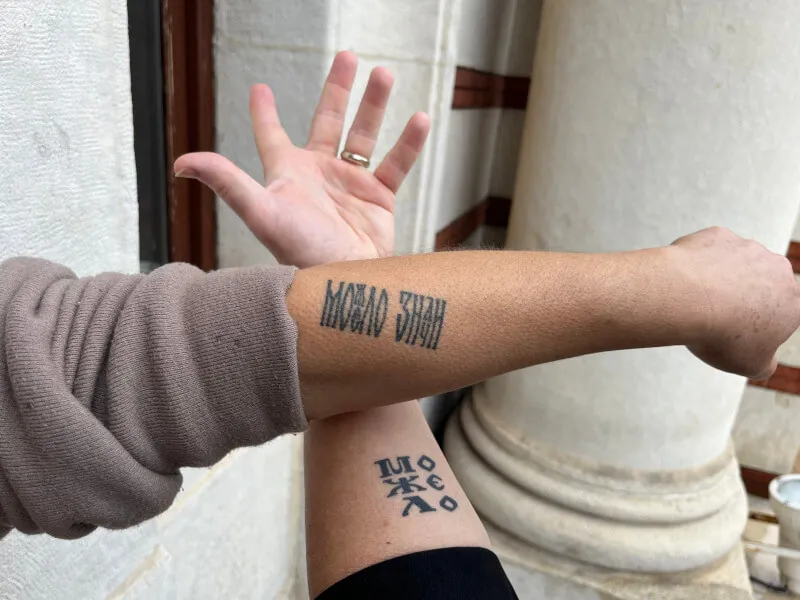
Paul calls the program Muza, using the Bulgarian word for “muse,” and peppers his conversation with other Bulgarian expressions. One has made it onto his arm. Both he and Christina have tattoos celebrating “Можело”: the discovery that something can, after all, be done.
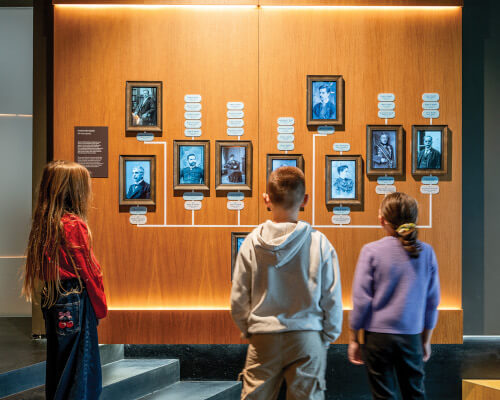
Their commitment also takes less visible forms. Christina has regular Friday-morning Zoom calls with two alumni, exchanging ideas about their projects and her own. Paul encourages participants to get in touch when they need help and means it. Exhibitions shaped by those continuing conversations include The Vazov Family Home in Sopot, the Fantasy Non-Museum of Plovdiv, and a prehistoric exhibition in the village of Chavdar.
We spoke with them about finding a way into an unfamiliar subject, helping people trust their ideas, and the Bulgarian word they take back to work in the US.
The following conversation has been edited and condensed.
America for Bulgaria Foundation: Paul, you’ve worked on exhibitions about everything from a historic dairy to an insect zoo. Where do you start?
Paul: I have to fall in love with the subject. I have to become sincerely interested in it. Otherwise, why do I think visitors will be interested?
So I ask: what’s the way into this for me? And what’s the way in for visitors?
People get annoyed because I ask “Who cares?” so much. A nicer way to put it is: why should the people we’re engaging with care?
When you ask visitors that, it disarms them. They realize you want the real answer, not the polite answer they think you want to hear. Adults are often too polite. Even during a boring talk, we sit there while our minds drift. Kids get up and walk away.
ABF: Christina, how do you make an exhibition sound like someone worth listening to?
Christina: For every exhibit, as much as possible, I try to create a personality that I’m channeling when I write. Is it a fifth-grade teacher? For an exhibition in Kentucky, the voice was an older cousin from Kentucky. Somebody a little older and more knowledgeable, but still excited, speaking with some of the local vernacular.
I want people to hear it. I want it to feel like a real person.
For a nature museum, we used a chorus of voices from the community: scholars, artists, scientists, and other people, with their quotes throughout. All those perspectives helped create a connection.
ABF: What do you say to someone who tells you, “That sounds wonderful, but it could never work in our museum”?
Paul: Can you find one thing, even a small thing, that you feel you can change and move forward with?
Sometimes we start with the idea that we’re going to change the whole museum or the whole exhibition. That does seem impossible. You need to break it down into manageable chunks.
Christina: We don’t have the same lived experience. Understanding what is true about Bulgaria feels really important to me. How can we work within someone’s comfort zone, then get them to the edge of it and try one thing a little beyond it?
The program is designed so that you walk away with something you can do immediately that will have an impact.
ABF: And how did “Можело” end up on your arms?
Paul: During my early work in Bulgaria, I encountered a lot of “This is not possible.” Later, I asked Vessela Gertcheva [who worked with the Foundation on children’s corners, Muzeiko, and other museum projects, Ed.] for a Bulgarian word that could be the antidote—the pushback to that. She gave me “Можело.”
After a couple of editions of the Academy, Christina and I started saying we should get tattoos. People thought we were just talking, but we asked Bulgarian participants who were graphic artists for design ideas.
We went to a tattoo parlor in Brooklyn. Jamie came with us, and afterward we all went out for a drink. When we sent pictures to Nadia and Yuliana at the Foundation, at first they thought the tattoos were temporary.
ABF: You also seem willing to disagree with each other. What does that bring to the work?
Paul: When you have creative partners who are willing to have honest and robust conversations with you, the result is richer than anything you would have arrived at by yourself.
Christina’s thinking and mine overlap, but not completely. That’s where the interesting things happen. Even in the middle of Muza, we might say, “I don’t know if I agree with that completely.” It’s useful for participants to see that. There isn’t just one right answer.
Christina: I’m definitely an overthinker. From day one, I’m worrying about the details: is this going to be okay? How are we going to do it? Paul is the “няма проблем” guy. We’re going to figure it out.
I’ve learned to relax a little more in the process. You don’t have to have every detail worked out before you can move forward.
ABF: What happens when participants go home and start working on their own exhibitions?
Christina: Two former participants made a real effort to stay in touch after the Academy. Whenever we came to Bulgaria, they would come to events, ask us for coffee, and ask for feedback. Now we have a regular Friday-morning Zoom, roughly every six weeks.
We talk about their projects, and they ask about mine. It’s professional, collegial encouragement.
It takes very little to get on the phone and offer encouragement or constructive feedback that helps someone move forward. Then you see where they’ve taken it: they have a whole exhibition running.
Paul: Working in a smaller museum or a remote place can feel lonely. It’s different when you know you can reach out to a colleague.
We tell participants: if you have a question, we really will respond. We want to respond.
ABF: At the latest edition in Balchik, what surprised you about the participants and their ideas?
Christina: This group came in with more openness and excitement. Many had heard about the Academy from previous participants, so they already had a sense of what they were getting into.
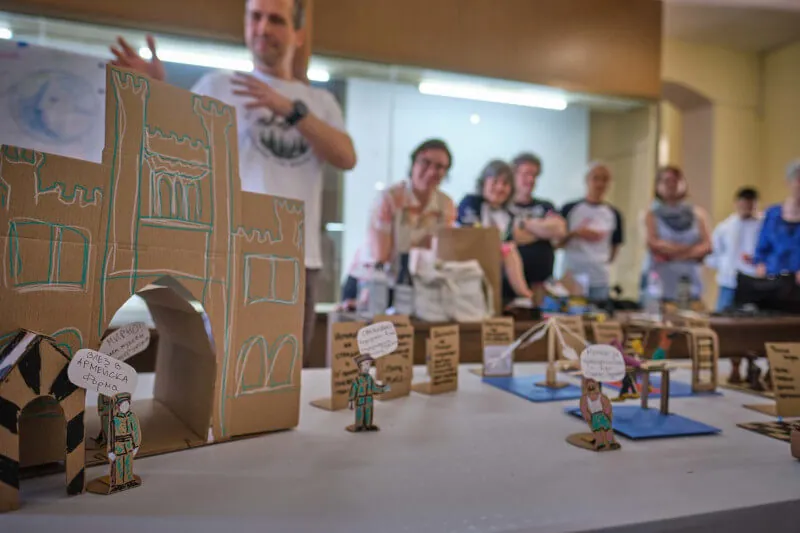
One group was developing an idea for a border museum, exploring how attitudes toward borders have shifted: who controlled them, what they meant during communism, what they mean now. They made a wonderful prototype that asked people to reflect on the Black Sea as a border, then connected that to contemporary Russian aggression in the region.
I’m learning, too. There’s a freshness of perspective in these projects that challenges my own assumptions. The rules have to be different because it’s a different country with different circumstances.
ABF: The team behind The Vazov Family Home in Sopot credits those conversations with helping shape the concept behind the exhibition. What caught your interest there?
Paul: I asked them to imagine I was an American who knew nothing about their national heroes. What struck me was the family. You don’t have just one national hero in this household. You have several, in different fields.
What was happening in that home? What made it different? It was a laboratory for national heroes!
That’s a story I want to know more about.
ABF: You also worked together at Mount Vernon, George Washington’s home. Do museum teams in the US face some of the same challenges?
Christina: Even in the US, it isn’t easy to get a museum to do something new. People may have been in the same role for a long time, proposing ideas and hearing over and over: “No, that’s not possible. That’s not what we do here.”
Mount Vernon has incredible, rigorous scholarship. They wanted to strengthen their staff’s skills and create more hands-on experiences for children and families. We were brought in to help with both: training the team and developing activities they could use.
How could visitors discover things for themselves? They could explore Washington’s work as a surveyor, become a spy, or design a garden and learn about his interest in plants.
Paul: It was almost like Muza for Mount Vernon. The education staff worked with us throughout: narrowing down ideas, developing prototypes, and testing them. They were part of creating the activities, so they also learned how to develop new ones or change them later.
That’s an important part of my work. I’m helping you produce something, but I’m also leaving you with tools and skills you can use yourself.
People sometimes ask me, “Why would you do that as a consultant? Aren’t you putting yourself out of a job?”
I’m putting myself out of that job. The next time we work together, we can start at the next level.
ABF: What do you take home from Bulgaria?
Paul: It’s completely reciprocal. I get ideas. When you visit a museum or talk with a colleague and see a thoughtful, clever way of doing something, you store it in the back of your head like a squirrel storing a nut: I can use that.
That happens in Bulgaria, and wherever I work with other museum people. I’m like a sponge absorbing new ideas!
I keep coming back because I’m giving something, but I’m also taking something away. When Vessela introduced herself after a presentation I gave in Chicago all those years ago, I had no idea where it would lead. Sometimes life turns out better than we could ever have expected.
Christina: I come back to the US with more Можело. More like: I know you’re saying we can’t do this, but actually, maybe we can. I’ve seen it done. I saw this thing happen, and I know you’re telling me it can’t happen, but I know it can be done. So let’s just give it a try.
Paul Orselli brings more than 40 years of experience in science and children’s museums to his exhibition design and consulting practice, Paul Orselli Workshop (POW!), and shares ideas and practical resources on his ExhibiTricks blog.
Christina Ferwerda develops exhibitions and educational experiences for museums internationally, combining storytelling, audience research, and hands-on learning; explore her work at Ferwerda Creative Services.