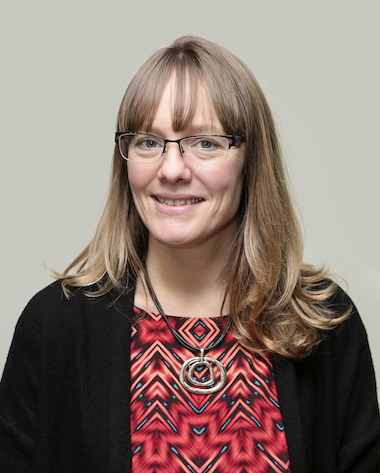
 In the aftermath of World War Two, US Senator James William Fulbright conceived of a cultural and educational exchange program whose aim was “to erode the culturally rooted mistrust that sets nations against one another… [and] turn nations into people, contributing as no other form of communication can to the humanizing of international relations.” The program would come to bear Senator Fulbright’s name, and he didn’t know it at the time, but when he spoke about the humanizing power of cultural exchange, he had people like Angela Rodel in mind.
An American who has lived in Bulgaria for the past fifteen years but whose ties to the country go back three decades, Angela lives and breathes cultural exchange. And it goes beyond the fact that she bids “good morning” and “good night” in both Bulgarian and English every day and switches between the two with astounding rapidity. Through her translation work, she has done more than anyone to convey to English speakers the inverted structures, clunky rhymes, and other playful idiosyncrasies of modern Bulgarian and acquaint the West with the realities of life in twenty-first-century Bulgaria. A regular on the cultural and social scene in Bulgaria, she has also done her bit to put a human face to Bulgarians’ idea of America and Americans. Her midwestern English accent (Angela grew up in Minnesota) and Sofia-inflected Bulgarian, friendly approachability, and preference for casual wear also help bust myths about what a modern female intellectual should sound and be like.
Angela first lived in Bulgaria in 1996–1997 thanks to a Fulbright fellowship; perhaps aptly, she would come to head the Bulgarian-American Commission for Educational Exchange (Bulgarian Fulbright Commission) almost twenty years later. Today, you can hardly find a more enthusiastic ambassador as well as a better advertisement for Fulbright exchange programs (see available programs below). After all, her Fulbright fellowship allowed her to turn a favorite hobby into a lifelong occupation, and her work to improve cultural links between the two countries has earned her international recognition.
 Angela’s Bulgarian story started 27 years ago, in her freshman year at Yale University. Thinking her course load insufficient (a general pattern in her life), she scouted around for activities to do after class and came across flyers for the Slavic Chorus. It was at one of the chorus’s meetings that she first listened to Filip Kutev’s choral arrangements of Bulgarian folk songs. And it was love at first hearing. “I didn’t know a woman’s voice could sound so amazing,” Angela says. “Bulgarian singing is so unique that when I heard it, I told myself, ‘This is my music. I have to learn to sing this way.’ I was smitten.” Thereafter, she took every opportunity she could to practice the open-voiced technique typical of Bulgarian singing. She made a trip to Bulgaria in 1995 to attend the Koprivshtitsa Folk Festival, where she heard some of her favorite performers.
Her passion for Bulgarian music grew into a larger love for the country’s language and culture, so in 1996 she moved to Sofia on a year-long Fulbright scholarship to study Bulgarian literature, music, and folklore. Her love was immediately put to the test. The winter of 1996–1997 was a difficult time to be in Bulgaria as the country went through a deep economic and political crisis. Mass protests erupted all over the country, and angry mobs stormed the parliament building in the capital. Angela remembers how rough people had it at the time: a full month’s salary could purchase very little by pay day, and the savings of a lifetime became worthless in a matter of weeks. “This was a really good lesson for a young American. This is when I first realized how fragile and valuable civil society is. When you grow up with a high standard of living, you take it for granted. Then I saw how quickly it could all disappear,” she says.
 Any other takeaways? “It wasn’t easy and it wasn’t what I expected, but it was interesting. This is when I understood what contemporary Bulgaria is like, what kind of people Bulgarians are. They weren’t just old ladies in traditional costumes. After this year, I had a real idea of Bulgaria, beyond my fantasies about pastoral, folk experiences.”
She spent the next seven years in the States, completing an MA in linguistics and ethnomusicology at UCLA. But Bulgaria was always at the back of her mind, so she returned to Sofia in 2004, this time to stay. What followed was a productive decade and a half both personally and professionally. Angela married and became a mother, and alongside her musical pursuits, she translated into English some of the most celebrated contemporary Bulgarian novels including Ivaylo Petrov’s Wolf Hunt, Georgi Gospodinov’s The Physics of Sorrow, Zachary Karabashliev’s 18% Gray, Milen Ruskov’s Thrown into Nature, and the stage adaptation of Ruskov’s novel Chamkoria by theater director Javor Gardev.
In 2016, Angela’s translation of The Physics of Sorrow was shortlisted for a PEN Translation Prize, one of the highest honors a translated work can achieve in the United States. That it was nominated alongside a translation of Dostoyevsky’s Crime and Punishment, and that all other translations on the shortlist were from major languages, is even more impressive. The Physics of Sorrow translation received multiple other nominations and won the National Book Center’s 2015 Peroto Prize for best translation from Bulgarian and the 2016 AATSEEL Prize for Best Book of Literary Translation.
Her other translations include Angel Igov’s A Short Tale of Shame, Georgi Tenev’s Party Headquarters (2015), and Virginia Zaharieva’s Nine Rabbits. Her translation of Ivan Dimitrov’s play The Eyes of Others was performed at the Ohio Theater in New York City in September 2012. Her poetry and prose translations have also appeared in numerous literary magazines and anthologies. In 2014, she was awarded Bulgarian citizenship for her translation work and contribution to Bulgarian culture.
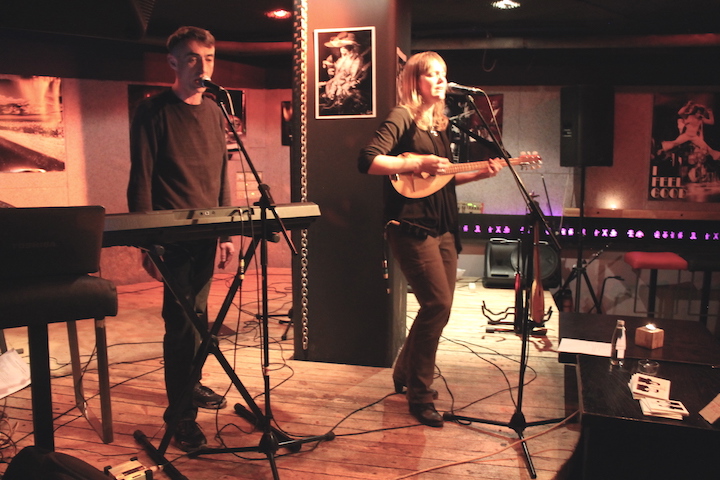
 In 2015 Angela was appointed executive director of the Bulgarian-American Fulbright Commission, a position that has allowed her to support the work of young scholars on both sides of the Atlantic. Angela has also appeared in Bulgarian films such as The Goat and together with her husband works on experimental music featuring a mix of indie pop rock and Bulgarian folk. She sings and plays the tamboura, a traditional Bulgarian instrument. Angela is currently translating four novellas by Bulgarian writer Georgi Markov, which will be published by Penguin Random House in 2020 alongside a biography of Markov by Bulgarian journalist Dimiter Kenarov. She also teaches a translation class at Sofia University.
How does she manage her enormous workload?
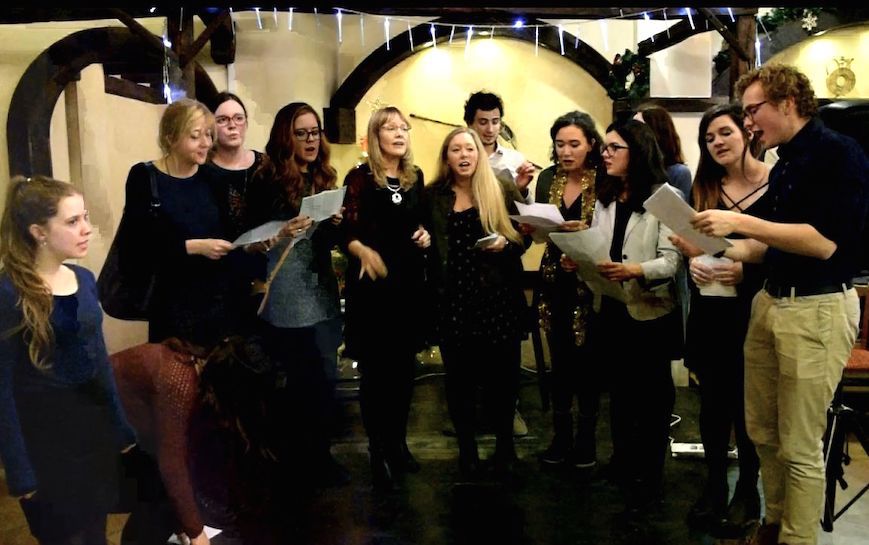
She resorts to her old love—Bulgarian folk music. She and a former Fulbright scholar friend of hers get together once a month and sing folk songs for fun. “We drink a glass of wine and sing some shopski duets,” she laughs. An informal Fulbright choir has also morphed together through Angela’s passion. “I try to teach a few Bulgarian songs to all Americans who are interested in singing.”
Bulgarian-American Fulbright Commission Programs
Bulgarian and American scholars, university students, and professionals can take advantage of a number of scholarships and grants to pursue study or complete short research projects in the United States and Bulgaria, respectively.
Scholarships and grants for Bulgarian citizens
Visiting scholar grants: Bulgarian scholars and professionals can take advantage of up to five-month-long grants to teach and do research in the United States.
Graduate study grants: Six to eight grants are awarded annually to Bulgarians wishing to pursue master’s or doctoral degree programs at US universities.
Research grants for doctoral students: One or two six-month research grants are available to Bulgarian doctoral students.
Civil society scholarship: Bulgarian civil society leaders can spend up to five months participating in the work of an American nonprofit in their field.
Hubert H. Humphrey Fellowship: Mid-career professionals can take advantage of ten-month academic or professional training fellowships in the United States.
Fulbright-Schuman Program: The program supports the study of EU policy, EU-US relations, and EU institutions.
Scholarships and grants for US citizens
Grants for US scholars and professionals: These grants allow American nationals to teach and conduct research at Bulgarian institutions.
Grants for US students: Grants are available to US students, MA/PhD candidates, young professionals, and artists for year-long study in Bulgaria.
Grants for US specialists: US faculty and professionals can engage in short-term collaborative projects with partners at Bulgarian institutions.
Fulbright – America for Bulgaria Foundation English teaching assistantships: US college graduates can spend a year teaching English at Bulgarian high schools. This opportunity is extended through the financial support of the America for Bulgaria Foundation.
Corporate-sponsored Fulbright teaching assistantships: Corporate partners help bring quality English teaching to their communities.
You can find more information about these opportunities at http://www.fulbright.bg.
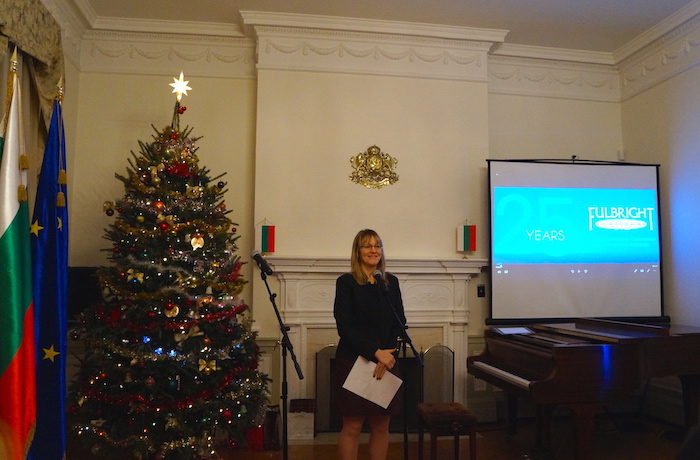
Photo 3. Presentation marking the 25th anniversary of Fulbright Bulgaria. Photo 4. The Fulbright choir