A Bulgarian village with no mountain views, ancient ruins, or spa resorts proves that tourism thrives not where the brochures say, but where people take things into their own hands.
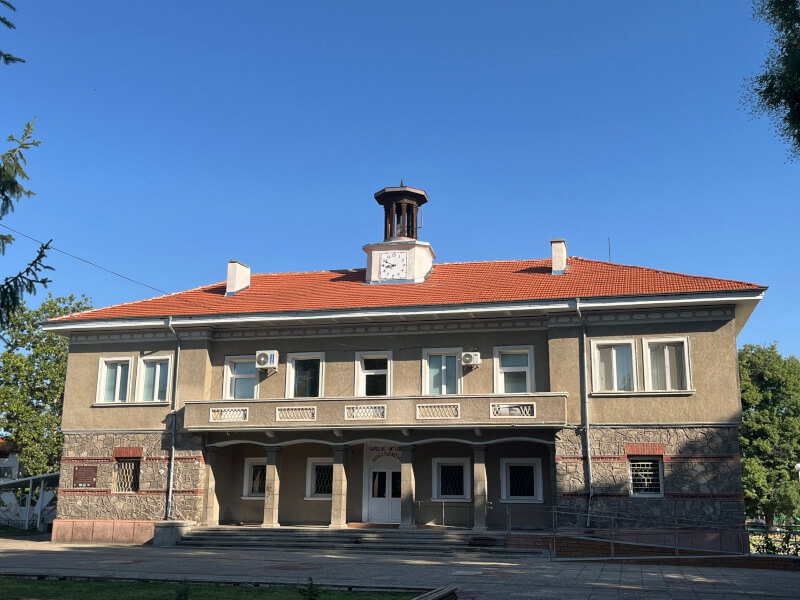
Some twenty years ago, a regional development strategy concluded that the village of Kurtovo Konare and the surrounding area had no potential for tourism. No dramatic landscapes, no hot springs, no archeological reserves. Just a big village in the lowlands with a large gray building at its center—the local community center “Lyuben Karavelov – 1897.”
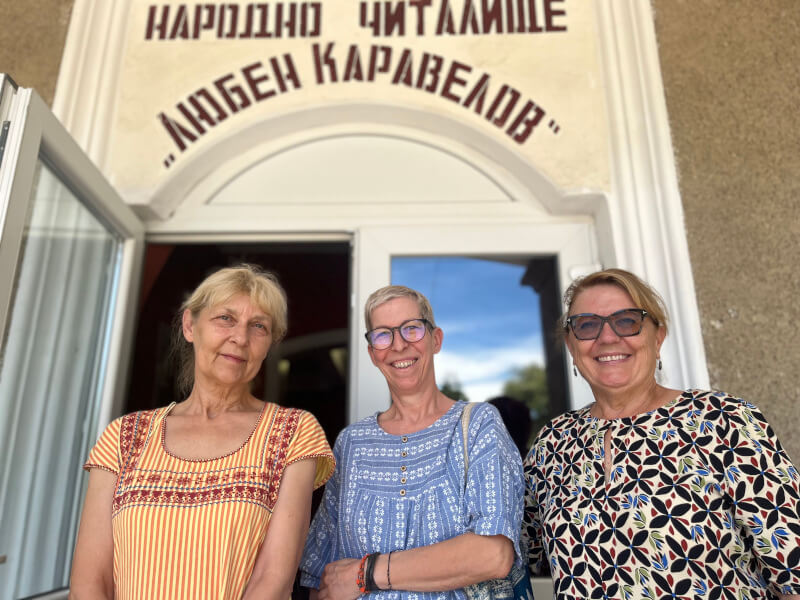
Anyone who accepted that verdict clearly hadn’t met Emilia Shusharova, Radka Stefanova, Zdravka Wildgoose, or the many others who believe that traditions only stay alive if you pass them on. That a village becomes a treasure when you care for it. And that you can open your doors to the world—even if the world hasn’t come knocking.
Turning heritage into momentum
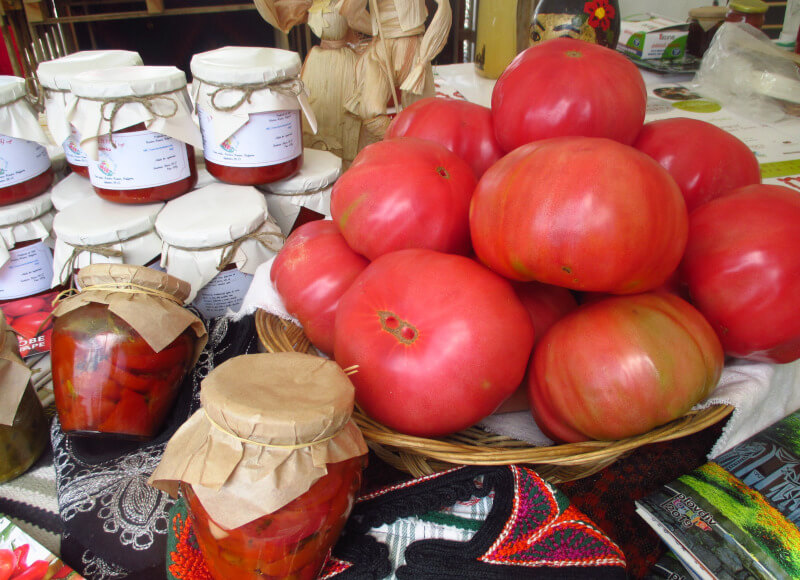
Kurtovo Konare has always been a step ahead. In the 19th century, the village became home to one of the first agricultural schools in Bulgaria. In 1894, the first kilo of ground red pepper in the country was milled here by a local entrepreneur and farmer, the legendary Grandpa Alexander (Alexander Dimitrov). The village introduced Bulgaria to its first peppers, early tomatoes, peanuts, and persimmons. The famous Kurtovo kapia—a sweet local variety of red pepper and a key ingredient in Bulgaria’s most famous dip, lyutenitsa—was born here. The land is generous, the people inventive. Ideas take root.
The community center “Lyuben Karavelov – 1897” is a direct heir to that energy. Its motto today is “Traditions with a Future,” and for good reason. In this village, tradition isn’t decoration. It’s a starting point. A call to act. A place where words like initiative, volunteerism, and participation are part of daily life.
One small festival changes everything
In 2009, something small but bold happened. Frustrated by institutional indifference, the local team, with support from the AGORA Platform and the America for Bulgaria Foundation, launched the first Festival of Peppers, Tomatoes, Traditional Foods, and Crafts. It wasn’t about putting on a show. It was about saying: Look at us! We’re here, and we have something to offer.
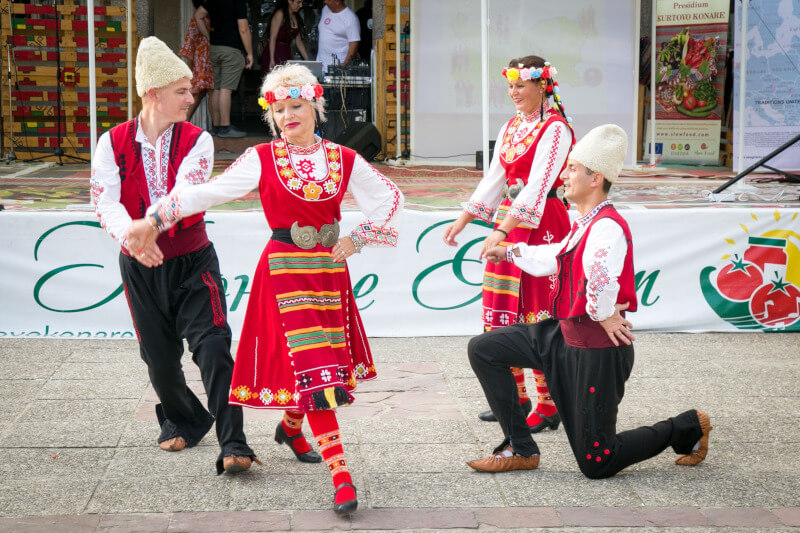
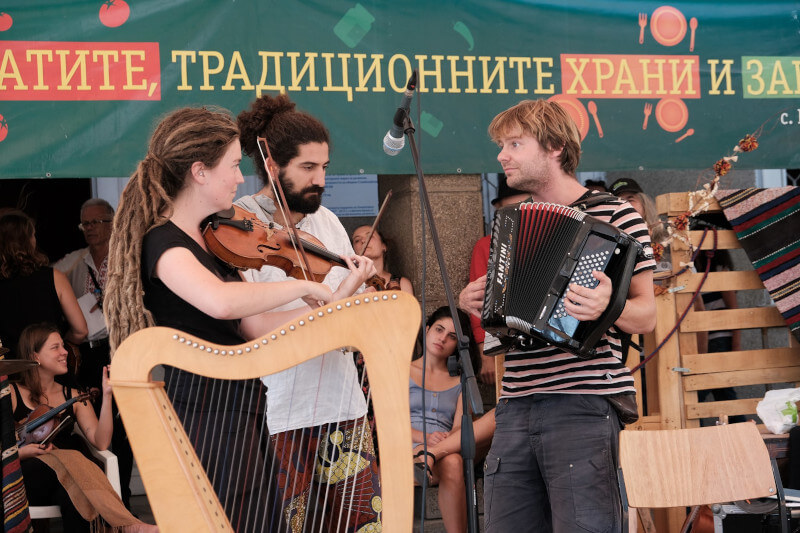
And people came. From nearby villages and from abroad. Gradually, the festival—now widely known as Kurtovo Konare Fest—became part of Bulgaria’s national cultural calendar and began welcoming guests from dozens of countries. Local producers joined the international Slow Food network. But the festival’s soul remains personal: the preserves are homemade, the crafts are real, the stage is open to everyone. This isn’t a tourism product; it’s a community in motion.
The thread that ties past and future
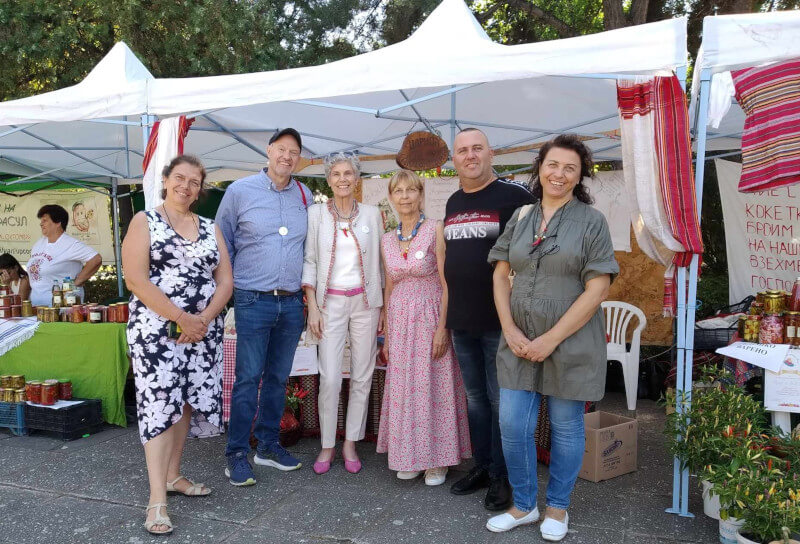
At the heart of it all are the people of Kurtovo Konare—not just today, and not just three of them. But in recent years, Emilia Shusharova, Radka Stefanova, and Zdravka Wildgoose have become the driving force and steady hands behind the village’s many efforts.
Emilia, a cultural studies expert and the community center’s secretary, brings vision and builds partnerships. Radka, chair of the center’s board and conductor of the local women’s choir, is the heart of artistic life—from village celebrations to international performances. Zdravka, the center’s administrative assistant, is the person behind every detail—from craft workshops to exhibitions and the warm welcome visitors always receive.
Kurtovo Konare Fest may be the community’s most recognizable event, but it’s far from the only thing happening here. The village is alive year-round—with dance and music groups, arts classes, gardening courses, environmental initiatives, national competitions, summer academies, and intergenerational gatherings. The community center and local groups have won dozens of national awards and have presented Kurtovo Konare’s culture at forums across Europe. “We work on many fronts: culture, education, green projects, civic engagement,” Emilia says proudly.
And it’s not just the three of them: the whole community is behind them, including the mayor’s office. “We have incredibly strong local support. People pitch in—with time, donations, and work,” Emilia adds.
Where tradition lives—and grows
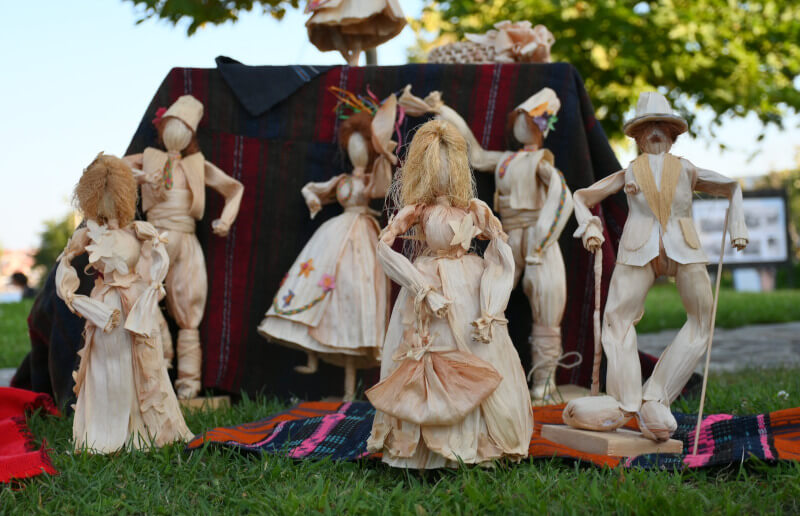
Visitors are invited to get involved, too: to stir a pot of homemade pepper spread (the famous lyutenitsa), learn a local folk song, or make a doll from dried corn husks—a nearly forgotten tradition revived at the community center by artist and teacher Margarita Momchilova and honored with Bulgaria’s 2012 national award for intangible cultural heritage The Wonders of Bulgaria.
Nature lovers have something to discover, too. Since 2019, the former royal hunting lodge at Krichim Palace, just two kilometers from the village, has been open to visitors. The estate includes over 300 acres of parkland and forest, where guests can explore rare plants, century-old trees, and dozens of bird and animal species.
A village of ten nationalities, open to the world
When the festival first launched in 2009, no one imagined just how much it would change the village. What began as a way to showcase food and crafts brought Kurtovo Konare back on the map.
Slowly, young families began to return. Others, drawn by the spirit of the place, decided to stay. Today, the village is home to people from ten different countries, along with Bulgarians from all over the country. There are no houses left for sale. And in the streets, you might hear the local dialect alongside English, Italian, Greek, or Spanish.
Kurtovo Konare is open to the world—and not just in name. Local grandmothers attend opera and theater performances in Plovdiv and take yoga classes. The younger generation talks about environmental protection. The community center is part of the European Union’s conversation on “smart villages”—reimagining the future of small places through innovation. The village doesn’t fear the new; it welcomes it, adapts it, and makes it its own.
Anyone who once dismissed this as “just another village in the fields” would see something very different today: a vibrant, colorful, confident place that looks ahead without losing sight of where it began.
A home for memory—and for the future
In Kurtovo Konare, heritage isn’t something to preserve behind glass. It’s lived—in the peppers and tomatoes grown with care for generations, in the songs sung in the town square, in the handmade corn-husk dolls passed from grandparent to child. Farming, craftsmanship, celebrations, and care for one another—these are the village’s living memory.
And that memory needs a home.
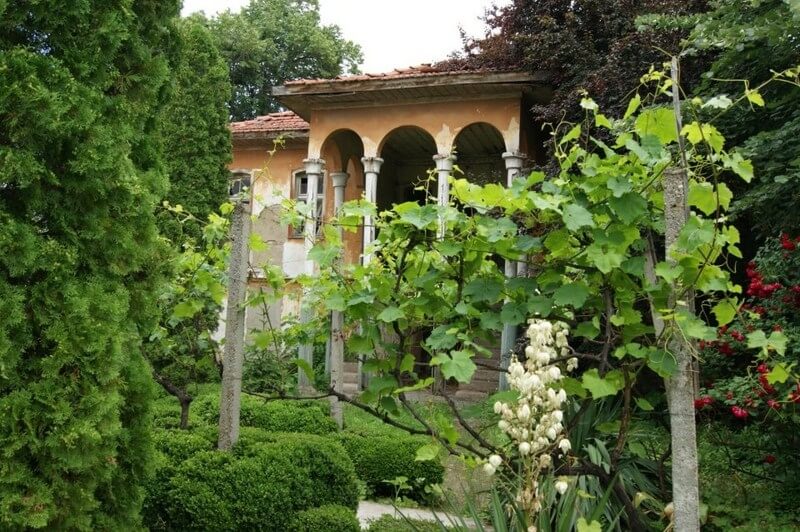
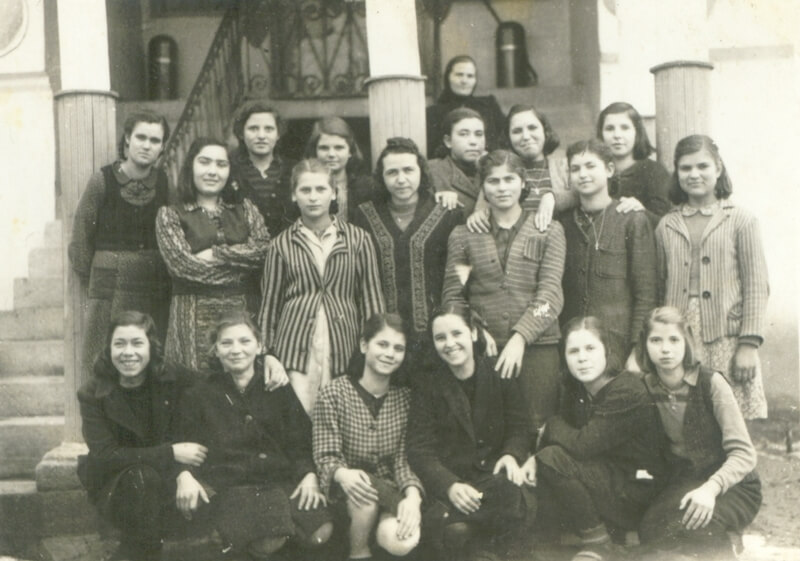
The dream is to create a space that gathers all of this—a place where traditions are practiced, generations meet, and new knowledge grows from deep roots. The ideal space already exists: the village’s former agricultural school—the oldest building in the municipality and a cornerstone of community life. Generations studied there. Young couples said their vows there. The first library once lived there. It has housed doctors’ offices, shops, classrooms, and club meetings. The entire life of the village has passed through its doors.
Now, the people of Kurtovo Konare want to bring it back to life, not just as a monument, but as a living place.
With support from the AGORA Platform, the America for Bulgaria Foundation, a forward-thinking architect, and local donations, the community is working on a project to restore the school and the former kindergarten next door. The kindergarten’s large courtyard could host future gardening classes, craft workshops, and community events for locals and guests alike.
This won’t be a museum. It will be a home—for everything that makes this place real.
A home not just for the heritage of Kurtovo Konare, but for something much larger—the feeling we often call “Bulgarian”: gathering around a fire, singing together, caring for the land and for each other.
And if you ever find yourself wondering what Bulgaria truly is—not on a map, not in a textbook, but in spirit—look to this village. Without the sweet, red Kurtovo pepper, there’s no real lyutenitsa. And without lyutenitsa, let’s be honest, Bulgaria just wouldn’t taste the same.
Want to follow this inspiring community and see what they grow next, on the land and in spirit? Join them here: facebook.com/chitalishtekurtovokonare