Two twins, one shop window, many surprises
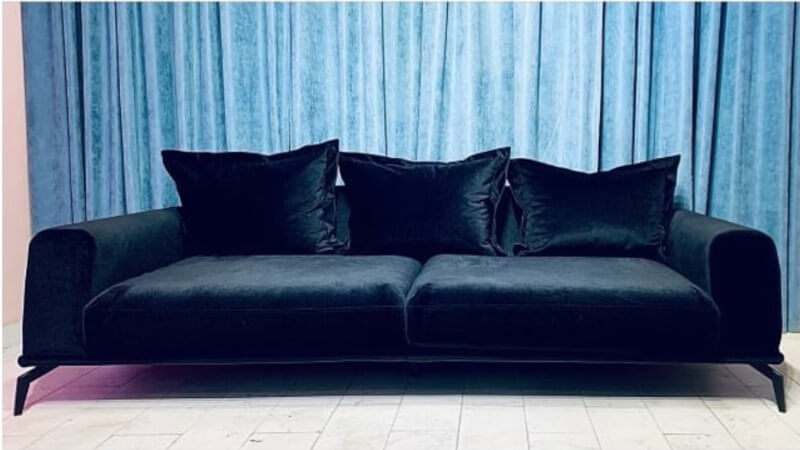
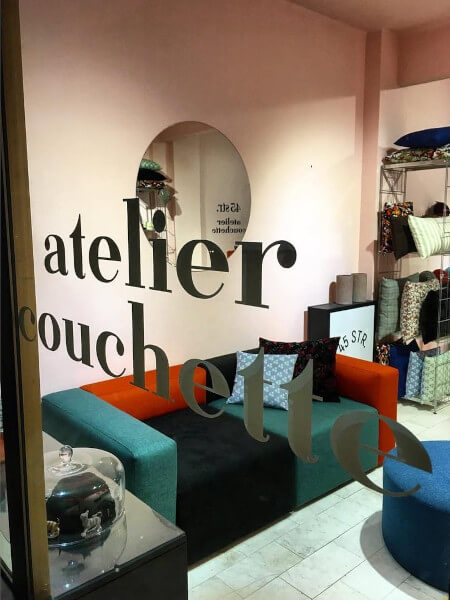
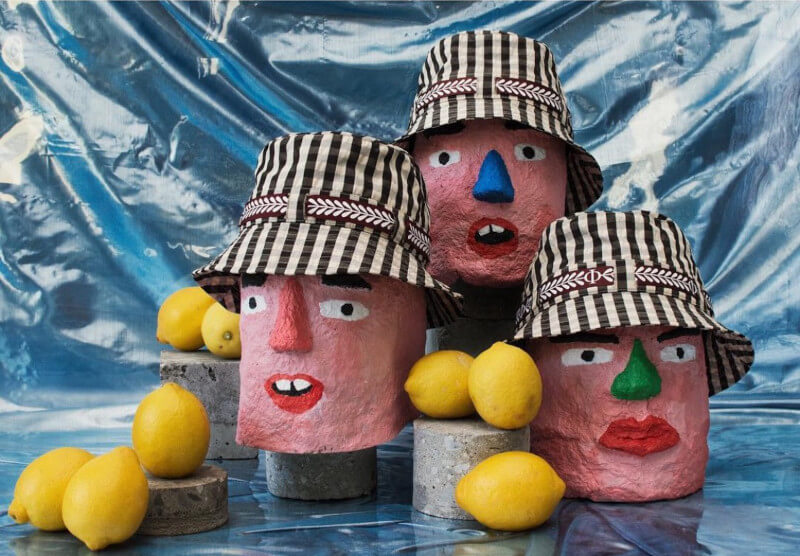
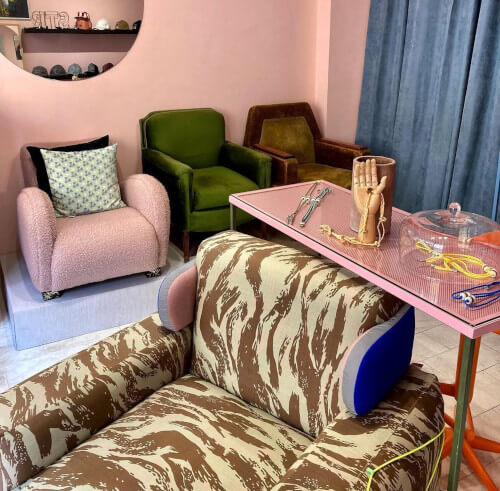
On Serdika Street 30, in one of Sofia’s liveliest neighborhoods, there’s a shop window that makes passersby stop twice. First, to take in the hats—wild, joyful collisions of fabrics and colors. And then to do a double take: Why is there a rose-and-blue sofa next to them? And a stool with origami-like pockets? And a headboard that looks more like a sculpture than furniture?
It’s a place where fashion and interior design swap roles for the day.
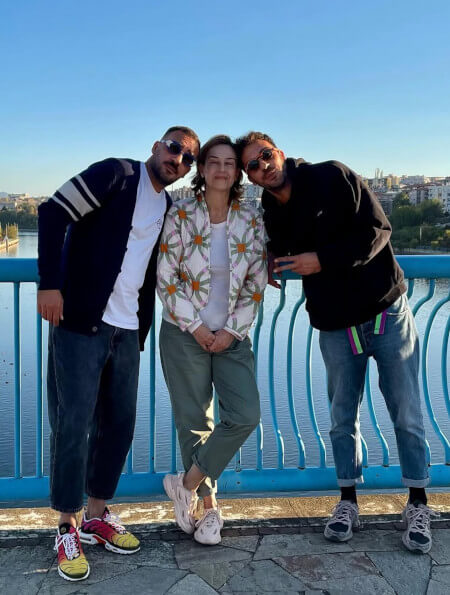
Behind the window stand two almost identical men: tall, steady, and unmistakably in sync, though their gestures give them away. They are Dimitar and Georgi Stoilov — the twin brothers behind 45 Street, a streetwear brand, and Atelier Couchette, their furniture studio.
Their CVs couldn’t be more different: one studied golf and sports journalism; the other studied fashion. On paper, they should be continents apart.
Instead, they share the same space every day. Up front is the snug little showroom where people try on hats; behind the curtain lies the workshop, where the brothers build and “dress” furniture, ideas spilling across the tables like cloth.
The making gene: a family story and a mother who started it all
It all began with their mother. A psychologist and pedagogue by training, she launched a small upholstery business more than twenty years ago, at a time when “designer furniture” in Bulgaria mostly meant replicas or “whatever’s available.” She worked with office and built-in furniture, learning the craft from people who brought know-how from abroad.
The twins grew up helping her, very much in the Greek family tradition on her side, where kids spend their time in the shop or workshop, not just in the yard. Later, she moved to the United States and the business closed, but the craft stayed.
Today she is the third partner again. Since 2020, the three of them have been working side by side; she brings the technical skill you don’t find in textbooks, and her sons build, upholster, and refine pieces until they carry the family’s unmistakable signature.
From cheap hats to 45 Street
The story of 45 Street starts not in Sofia but in London. The twins queued for what they thought were amazing hats, only to watch the last ones sell out before their turn. A cousin later sent them the same models; they survived exactly one summer before falling apart.
Disappointment turned into a plan: if they were going to make streetwear, it needed real quality and character. Georgi already had a student fashion project, won the OFF Fashion competition in Warsaw, and later presented at a street-fashion forum during Warsaw Fashion Week. That’s when 45 Street was born—first as a clothing idea, then as a full-blown hat obsession.
A chance encounter with a German-Danish designer opened the door to a small Bulgarian hat factory. Prototypes were born in Sofia, production in a small town the brothers prefer to keep secret. Fabrics came from Bulgarian manufacturers and leftovers from big fashion houses; what the industry calls waste became their limited editions.
Over the years, their hats reached stores in Spain and Switzerland, landed in curated buyer selections in France, and appeared at trade shows in Berlin and Copenhagen. Yet their real magic is at Serdika 30, the tiny shop they opened in 2019, where people try things on, laugh, browse, and later leave Google reviews calling 45 Street their favorite Bulgarian brand, the kind whose pieces always attract compliments.
When the sofa becomes the main character
Atelier Couchette is the other half of the operation. The name comes from the old couché train cars—Georgi’s great love. For him, trains are the most beautiful way to watch the world in motion, and that idea of comfort in movement became the seed of his furniture inspiration.
The first orders Dimitar ever did were in a literal garage. A friend asked for a bed and a sofa; Dimitar’s biggest worry wasn’t the upholstery but the wooden frame: Would it hold? It did. Then came a few more commissions from friends, then from friends of friends, and soon the garage felt too small.
In a market with names like Belcaro and Valiyan, the Stoilov family took another path: small series, handcraft, authorship, and a personality you can’t mistake.
Today, at Atelier Couchette, the brothers design together. Dimitar handles the “skeleton”—the structure that must be strong and logical. Georgi shapes silhouettes, fabrics, and prints. He creates his own patterns: like a motif of Black Sea shells, drawn digitally and printed on plush to look like watercolor. The furniture legs come from a Bulgarian manufacturer that also works for major European brands; everything else happens in the workshop. Materials are mostly sustainable: recycled fabrics, natural fillers, local wood.
They still take on restoration and reupholstery, but the dream has shifted: fewer “can you redo this sofa,” more original pieces from scratch. Sofia is full of furniture from global chains; they want to offer an alternative for people who want a home with personality, not a catalog spread.
How BASE helped them connect the dots
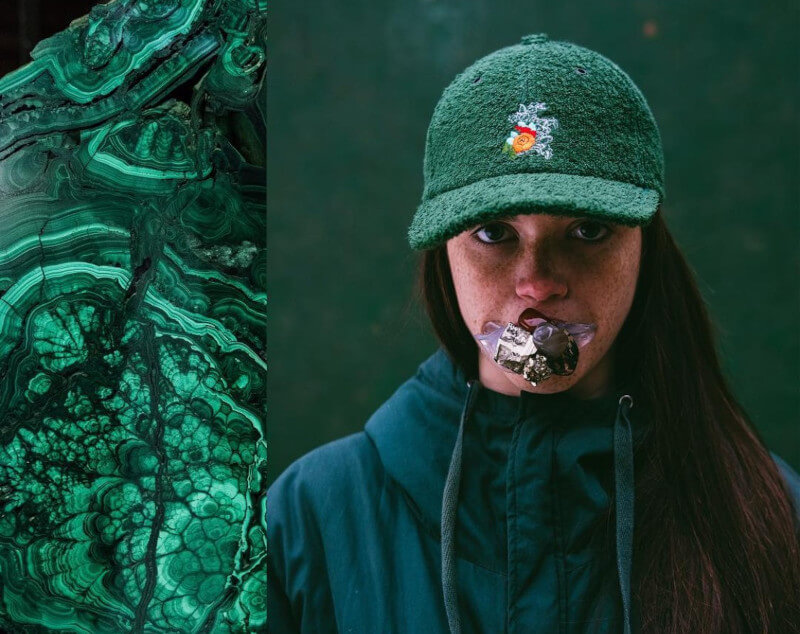
2024 was the year when “let’s make something beautiful” met the need for structure. On a friend’s recommendation, Dimitar applied to BASE, a program for starting entrepreneurs.
He didn’t go there to learn how to make sofas; that part he knew. He went for verification: Is it worth investing time and money in a designer furniture line? Are there clients for a high-end Bulgarian product? How do you separate hats and furniture so both can grow?
BASE put their business into a frame: financial models, new legal structures, conversations with entrepreneurs who’d already turned ideas into functioning companies. Dimitar wrote a business plan describing how Atelier Couchette could evolve from a workshop executing other people’s ideas into a brand with its own collection.
It wasn’t just homework for the jury; it was the first time they saw their entire picture on a few pages: what to automate, what to outsource, how to free up time for design. Their plan won first prize.
And the new network mattered: people with big, strange ideas, some already running, some just daring to try. No wonder Dimitar now encourages new BASE participants.
After BASE, their dreams sharpened: an online store so the hats could travel beyond Sofia, and a furniture portfolio where customers can choose their models, not just “something that looks like Pinterest.”
Hats, sofas, and a little kimchi
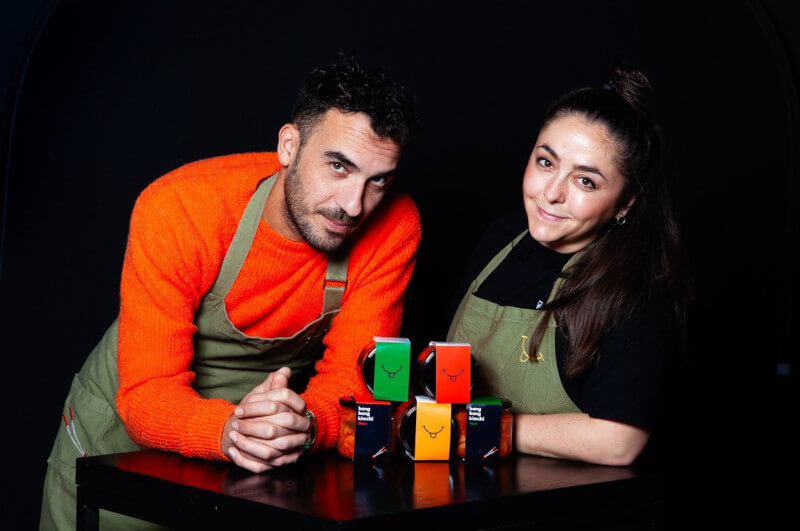
If you’re wondering where kimchi fits in this family saga, the answer is: naturally. Dimitar also co-runs a fermented foods brand, Bang Bang Kimchi, together with architect Iva Stanisheva, sold at Supa Star restaurants and events.
The kitchen gives him a different kind of adrenaline—everything happens in real time, with no room for hesitation—but the instinct to play and experiment is exactly the same as with the hats and the furniture.
Step into their studio on Serdika Street and you’ll feel it: shapes that refuse to end where you expect, fabrics that start talking in your hands, a little chaos of colors and textures kept in check by obsessive attention to detail. A family that debates, jokes, argues, and works—together.
Most customers arrive through recommendations: word of mouth, Instagram, or that one friend who says, “Trust me, you have to see them.” And once they step inside, they tend to linger. They sit, explore, touch fabrics and, more often than not, walk out with a new hat (sometimes two) and even more ideas. The sofa is comfortable; the hat becomes an object of envy—friends try it on “for just a second” and refuse to give it back.
Honestly, the marketing takes care of itself.
If you want a hat with character or a sofa with an opinion
If you are tired of blending in and want strangers to stop you to ask about your hat, look for 45 Street. A new collection is coming soon, while older models are still dancing their way through festivals across half of Europe.
And if you want a home that feels cozy, bold, and unmistakably yours—not something lifted from a catalog—choose Atelier Couchette for your next sofa, chair, or an entire room. Dimitar, Georgi, and their mother won’t hand you a conveyor-belt catalog. They will listen, sketch, rethink, build, and upholster until the piece feels right—the kind that makes guests pause at the door and ask, “Where did you get this?”
Tell them there’s a street in Sofia where twin brothers make hats and furniture with character, attitude, and stories.
Pieces that don’t just fill a space—they give yours a voice.