Nancy Schiller came to Bulgaria in 1992 for what was supposed to be a three-year assignment. Nearly 35 years later, she is preparing to leave a country that has become a second home. Somewhere along the way, a temporary job turned into a life’s work.
After a decade as president and CEO of the America for Bulgaria Foundation, Nancy is stepping down. But before she heads into a well-deserved retirement, we sit down with her for one last conversation about the country that surprised her, the people who kept her coming back, and the small beginnings that sometimes led to extraordinary things.
It’s a candid look back, with plenty of characteristic Nancy optimism, a little nostalgia, and a few thoughts about what she’ll miss most. (Spoiler: it’s the people. Though we suspect lyutenitsa is a close second.)
America for Bulgaria Foundation: Did you imagine in 1992, during your first visit here, that this country would occupy such a large part of your professional and personal life?
Nancy Schiller: Never in a million years. When I began in January of ’92, the Enterprise Fund was supposed to be a three-year project.
American optimism? Definitely!
We were supposed to come in, invest, and get out in three years. Didn’t quite work out that way, but it really did work out well.
We struggled very early on and continued to pivot until we found the right model, the right partners, the Bulgarian partners to work with. And then the business took off, and never did we foresee the success that we had and this foundation that we would create. So it just kept evolving and new challenges kept coming along that continued to intrigue and maintain the commitment that we’ve had and that I’ve had for so many years. It’s just been a remarkable journey.
ABF: Ten years ago, you said in an interview that “the Foundation should measure its grantees’ success in the small steps achieved, as every step forward is a step in the right direction.” Which of those small steps turned out to be not so small?
NS: One of the things that I’ve always said to my colleagues is that we have to celebrate every victory, no matter how small it is, because sometimes victories are long in coming. It takes a long time sometimes to be effective, to find the right formula.
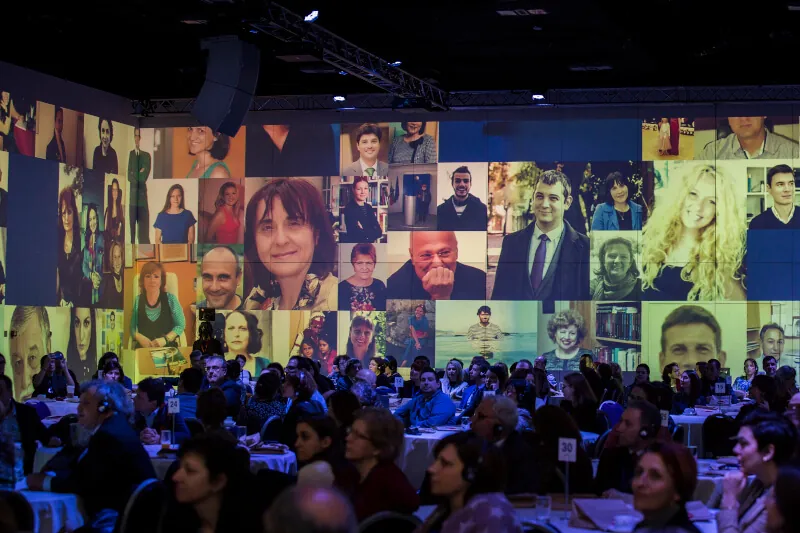
But one of the things that I would say I’m most proud of is the community that we’ve developed, the outreach that we as a foundation have done to not just civil society organizations or volunteers, but businesspeople, the diplomatic community, the political class, elected officials, to try to bring together the sense of community that together we can have impact, that we can make a difference. And to see the community that’s developed over all these years, and the sense of belonging, the sense of wanting to do something to make Bulgaria an even better place to live, is what I’m most proud of and where I find this foundation has made a significant contribution.
ABF: You have spent an extraordinary amount of your own time introducing people who might otherwise never meet. Why have you believed so strongly in the power of connection?
NS: I am a connector. I really enjoy getting to know people, understanding what their interests are, what their passion might be, and then connecting the dots. I have the advantage of 35 years here and meeting so many people over those years that I can say, “Oh, do you know so-and-so?” And they might live in the same community, but they don’t know each other. So you put them together, and it strengthens the community. It’s not just one plus one. It builds something more.
Sometimes it may not be obvious. You meet somebody from the business community who’s looking for a way to give back. And you hear what their interests are, and you think, “Oh, you could talk to so-and-so from this organization.” And they end up talking, and they become volunteers or board members or donors.
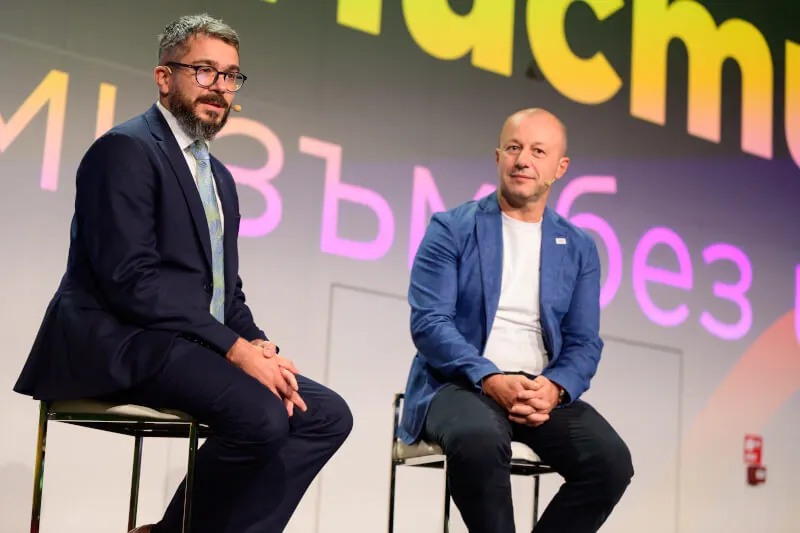
ABF: You have spent years trying to bring businesses into conversations about issues that affect all Bulgarians, but are too often left to civil society to resolve. Why has that mattered so much to you?
NS: Change, effective change, has to be all of society. You need engagement from all sectors of society.
Businesses are in business to make money, clearly. They’re not in business to stick their heads too far up above the ground and risk affecting their business. However, policy affects business. It doesn’t just affect civil society. So when a government policy might restrict the role of civil society organizations, businesses need to speak up because it ultimately will affect, whether it’s recruitment of employees, whether it’s the ability to do the types of training they want to do, they need to have a voice. They have a powerful voice. And when they unite, whether as a business association or as a group of interested parties, and join with civil society organizations, it is an amplifier.
It’s wonderful to see businesses that have been successful—some of your unicorns, some successful businesspeople—forming their own foundations and doing similar work to improve society in Bulgaria.
ABF: What is something about philanthropy that you understand very differently today than you did 20 years ago?
NS: Philanthropy has to be relearned in society. I know that it existed in the late 1800s, early 1900s. Some of your amazing universities, hospitals, and chitalishtes were founded by generous donors, but you had 50 years where that no longer existed.
Relearning that history is important. Civil society organizations need to learn that asking for support is not begging. And we all need to be reminded every day that what civil society organizations do is really important to society.
And encouraging them to value their own work so they can go to a potential donor and say, “This is important for you as well.” It’s a really hard thing to learn, to absorb, to recognize that what you do as a nongovernmental organization has value to society.
And being brave enough to hear a “no” and then go knock on the next door, because what you do has value.
ABF: What are you proudest of in the work of the Foundation?
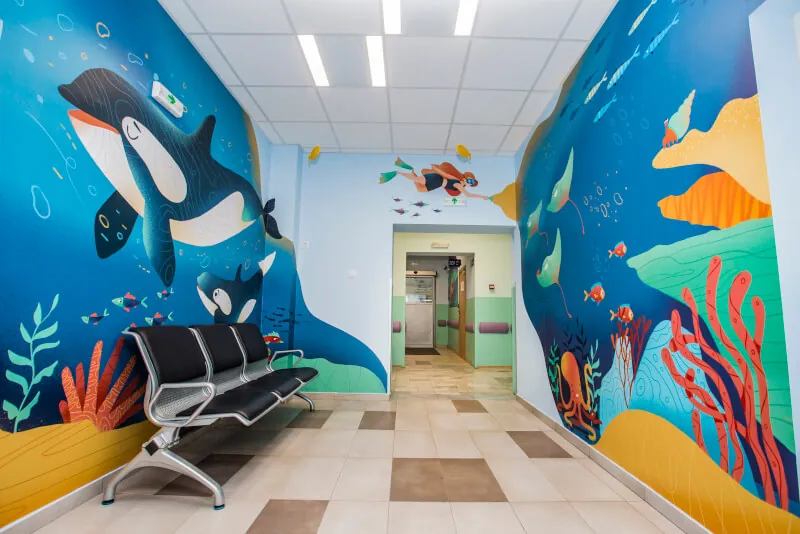
NS: One thing that I’m particularly proud of is what we did with Pirogov Children’s Wards. This was almost nine years ago. A little conversation that I had with a staff member turned into something transformational for children throughout this country.
We went and looked at Pirogov and saw the condition these wards were in, and I knew they could be so much better.
Having the trust of the donors who came on board, the trust of the medical community at Pirogov, the trust of the government, which agreed to do the renovation while we did the rejuvenation, and the donations we received… People came forward because they knew it was important.
What started as a 100-square-meter project that was just supposed to be the reception area turned into 65 rooms, three floors of children’s wards being completely refurbished.
And to me, that is the power of community, the power of philanthropy, and the power of having a vision for something better.
ABF: You had just stepped down as CEO when you set off with friends to show them some of the Bulgaria you love. After 35 years of coming here and 10 years of actually living here, what made it onto Nancy Schiller’s Best of Bulgaria tour?
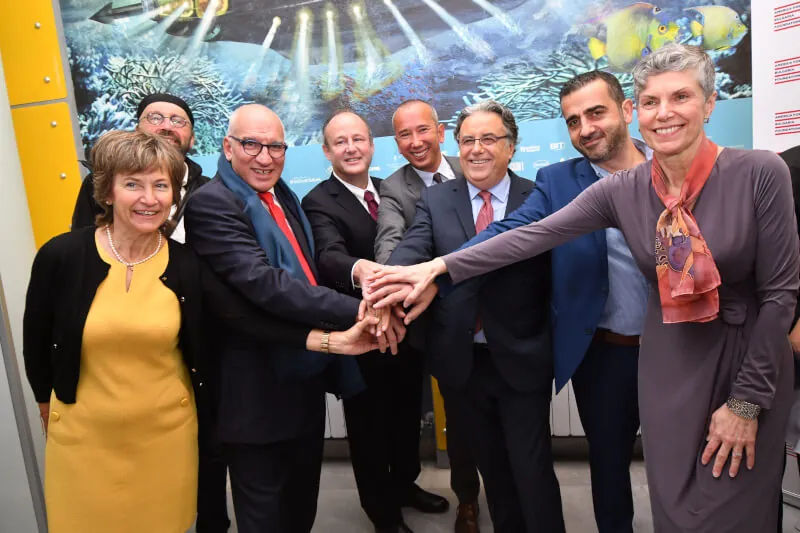
NS: It was difficult to choose. We had 11 days. So knowing that this was taking place in October, I certainly wanted to celebrate the fall and the bounty that’s available in the country. There was a lot of food involved!
It was really tough to make decisions about where, but it was magical. My friends had never been here before. They were awed by it.
And what I wanted was for them to understand the rich history here. Many people outside of Europe, especially in the United States, aren’t that familiar with Bulgaria. But one of my friends said, as she stood on top of a hill, one of the hills in Plovdiv, and looked out over the city: “I’m seeing 6,000 years right here, right in front of me, still living, still present.”
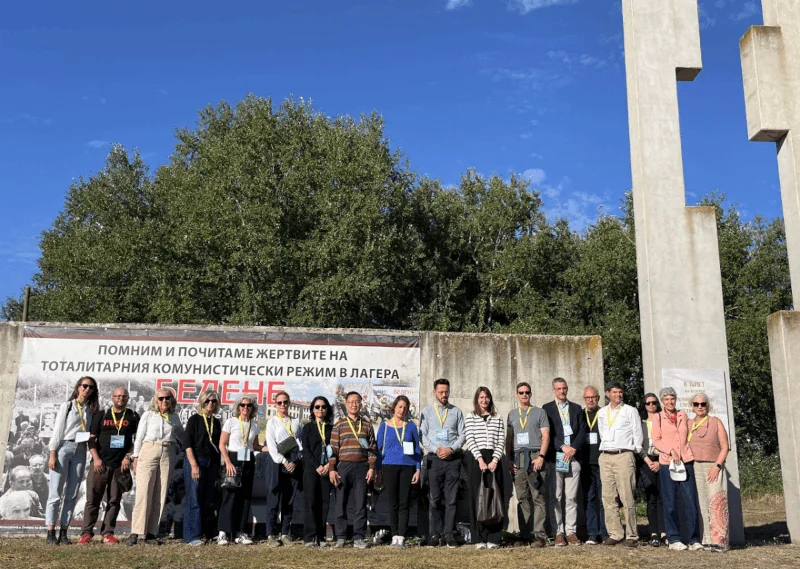
ABF: You took your friends to Belene, not exactly an obvious stop on a Best of Bulgaria itinerary. Why was it important to you that you get there?
NS: We all have our dark periods of history. The United States isn’t exempt from that.
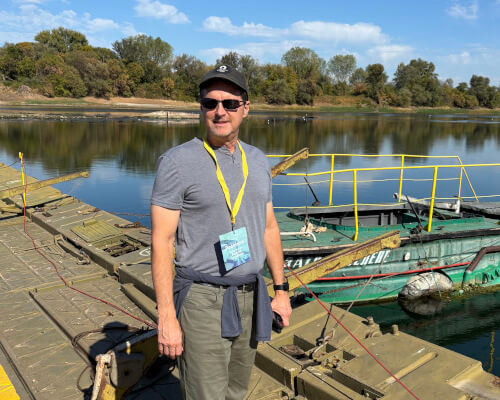
To walk over that floating bridge and know you’re getting onto this island and walking in the footsteps of people who were put there extrajudicially, and to meet survivors who talk about their fate… it was important, I thought, for my friends to understand this part of history as well.
I’ve been there nine or ten times over the years, and I can’t help but be moved by the stories of survivors of these camps, by their willingness to forgive, their need, desire, to talk about it, so history doesn’t repeat itself.
This is not just a Bulgarian story. This is universal.
ABF: What is different about Bulgaria today that Nancy, who first became involved here in 1992, would have found hardest to imagine?
NS: There’s so much that’s happened. This is a young democracy, just 35 years old, and the country’s progress has come in fits and starts, right? Not everything has been perfect, but there’s been so much transformation.
Probably what has made a big difference, too, is the ability for people to travel freely, to leave and come back, to go on holiday and return saying, “What I saw is important. We need this. Why don’t we have this?” And then to work to bring about change.
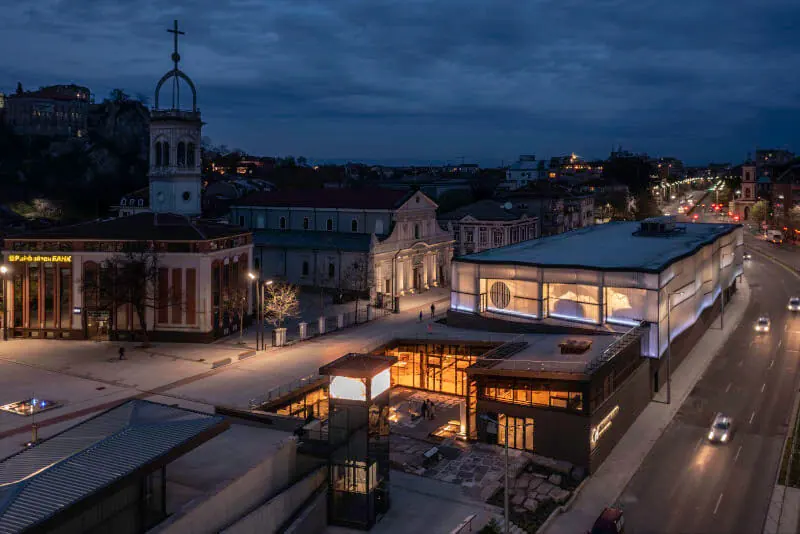
I think of the Bishop’s Basilica of Philippopolis. I looked at it, and I was astounded by the beauty, the history, the multi-layeredness of it. This is something the world needs to see.
Through the cooperation of government and all the people doing the backbreaking work, we now have something in Plovdiv that’s on the UNESCO Tentative List. It’s working its way through the process, and we hope it will receive full World Heritage designation so the world can learn more about Bulgaria’s rich history.
Of the 50 contractors who worked on the Basilica, 48 were Bulgarian. This was done by Bulgarians!
ABF: For the last 10 years, Bulgaria hasn’t simply been where you worked; it’s been home. What is hardest about leaving?
NS: It’s always the people. My colleagues at ABF are amazing people. Now, it’s not goodbye, just farewell for now, because I’ll be back as a director after a year.
But it’s the people who share a love of this country and a desire to make a difference, and the opportunity to get to know them. That’s what I’m going to miss. And the ability, because of what this foundation does, to effect change. To look at something and say, “We can help here.” That’s really powerful, whether it’s a small project or something grand like the Basilica or the Ivan Vazov House Museum.
It’s seeing something, finding a partner who shares your passion and commitment, and saying, “We can do this.” And then making it happen. I’m going to miss that.
ABF: What are you looking forward to getting back in your life? Particularly after so many years away from family and old friends.
NS: I mentioned already I’m a two-times baba. I have a new grandson, a little over a month old. The ability to see my family a little bit more, not being 10 time zones away from a conversation—that will be a good thing. My family’s come here a number of times to visit, and I go back to the US to visit, but it’s not the same. I’ve missed a lot.
I don’t regret it because I know what we do here is important, what I do here is important. I look forward to one day bringing my grandchildren and showing them what we’ve been doing together.
ABF: What is it like to hand responsibility for this next chapter to someone else?
NS: I am beyond thrilled that Rod Moore has taken this position, that he was selected. He’s going to be extraordinary. Any hesitation I have about my decision to retire [is now gone]. With no hesitation whatsoever, this foundation is going to be in such strong hands. I couldn’t be happier that Rod agreed to take this on.
His love of this country, his knowledge of it, and his three postings here over the course of his diplomatic career make it easy for him to jump right in.
ABF: After 35 years of watching this country change, 25 years from both inside and outside, and the last 10 while living here, what still makes you optimistic about Bulgaria?
NS: The people, the people, absolutely.
Some of the optimism that I’ve brought here—I like to think it’s a little bit contagious.
And that people believe that they can do what they set out to do. That they will have friends supporting them. A community around them.
Prefer to watch and listen? Here’s the video interview: