Payhawk aims to be the hawk of the global financial world—keeping a sharp eye on corporate spending with the same precision as Peya, the hawk adopted by the company at the Sofia Zoo.
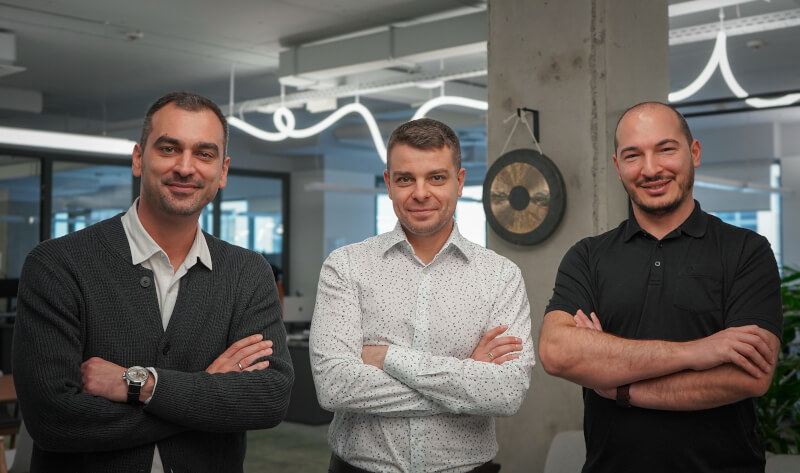
Founded by Hristo Borisov, Boyko Karadzhov, and Konstantin Dzhengozov, Payhawk started as an ambitious idea for a next-generation business bank. Today, it’s Bulgaria’s first unicorn—valued at over $1 billion.
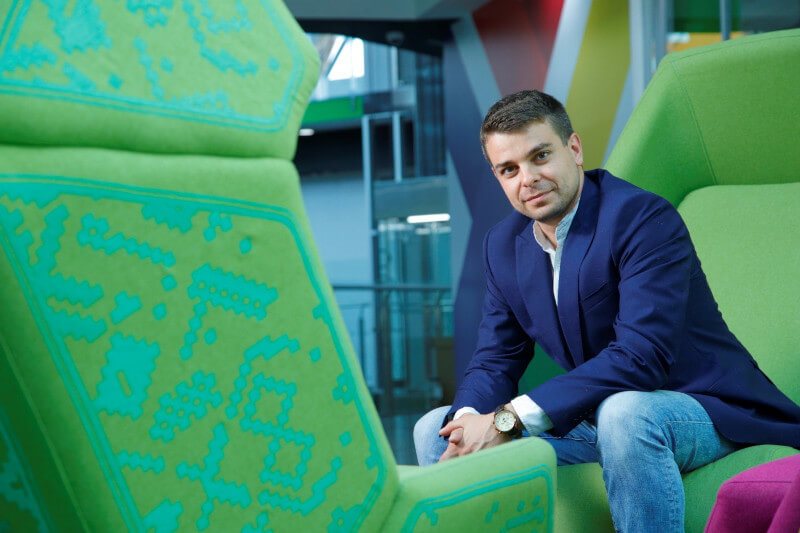
At the heart of Payhawk is Hristo—the company’s chief visionary and driving force. A graduate of the American University in Bulgaria, he is now part of the Owner/President Management program at Harvard Business School, designed for company founders and leaders. Before launching Payhawk, Hristo spent more than a decade at Telerik, where he led a team of over 180 engineers and helped create some of the company’s most successful products.
When he’s not thinking about the future of finance, Hristo remains deeply engaged with his community. In the past, he has mentored young people and co-founded the road safety platform Grazhdanite (“The Citizens”). Today, through Payhawk, he supports causes in education, entrepreneurship, and sports.
In this interview, we take a look inside his approach to leadership, purpose, and building something that lasts.
America for Bulgaria Foundation: What drives you these days—as a student at Harvard, as Payhawk’s co-founder, and as a person? Where do you invest your time, energy, and focus?
Hristo Borisov: I’m fully focused on the company—100%. It just so happens that I’ve been traveling a lot this year. I joke with my team that I’ve had only three weekends in Sofia since the start of the year. I feel like a tourist here. We now have nine offices across eight countries. The company is in such a growth phase—there are so many opportunities and things happening that we’re trying to keep up with the best speed we can.
ABF: On LinkedIn, you describe yourself modestly as just a “product guy.” Given Payhawk’s success, that sounds almost like calling yourself “just a Jedi lightsaber master.” What makes a great product in your eyes? And when do you feel something works—not just technically, but on a human level, too?
H.B.: For me, the greatest satisfaction is creating a product that solves a real problem and delivers value. It’s not about money or valuation. Sure, people’s willingness to pay for a product is one indicator, but the real magic is figuring out what they actually want—and giving it to them in a way they didn’t expect. That’s the thrill—creating something that shifts the industry. My goal has always been to find a big problem in a big market that hasn’t been solved yet. To create a vision, a strategy, build a team, ignite their passion, and together achieve something that’s never been done before—that’s what a great product means to me.
ABF: Your degree from the American University in Bulgaria combines computer science and business administration. What lessons or people from those years still stay with you?
H.B.: The most important thing I took away was the confidence that there are people who believe in you. I realized that successful people aren’t just the ones on magazine covers. AUBG taught me to think pragmatically. It was also the first time I learned to speak in front of people, defend ideas, and explain things clearly—that’s been incredibly helpful ever since.
ABF: From AUBG to Telerik to Payhawk and now Harvard—is there a common thread connecting all these steps? A kind of inner compass guiding your decisions?
H.B.: Maybe it comes from my early days as an engineer. I started as a programmer and could see the direct results of my work the very next day. When I shifted to product management and later business, I missed that feeling. So, I taught myself to get excited about data and metrics—they help me feel I’m actually achieving something. Everything I do has to be measurable. I have little patience for empty talk. I always try to tell if someone has really done the things they talk about or if they’re just talking. That’s also how I approach hiring—I can quickly tell if someone has truly contributed to a project. When I decided to start Payhawk, my life was very comfortable, but I knew I’d regret it if I didn’t try. I need to do things that feel meaningful. I’m not the kind of person who can just drift along—everything I do needs to have a purpose. That’s how I operate.
ABF: Payhawk became Bulgaria’s first unicorn. What has been the hardest and most meaningful part of that journey? And how do you keep a sense of purpose when you’ve already achieved major success?
H.B.: From the outside, people see someone who’s achieved something. But I see someone with the chance to accomplish something truly big. What inspires me is the idea that every bit of effort from our team can have a meaningful impact—not just for us, but for others too. I saw this at Telerik; so many companies were started by people who worked there. That’s real change for the ecosystem. I feel a deep personal responsibility for the 460 people working at Payhawk. I meet with all new hires every month. This month alone, we had 50 new people join. I want us to dominate our market and realize our vision: combining fintech and artificial intelligence so that our system not only understands what you need but acts on it for you—automating everything else in the process. We already have the capital, talent, product, and huge market. From here, it’s all about discipline and persistence. That’s what drives me.
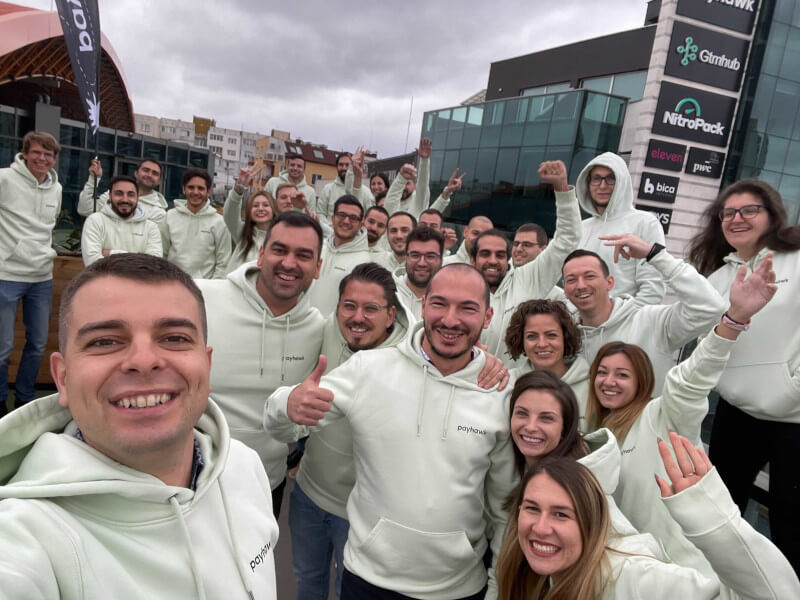
ABF: How do you attract and retain great people in a high-pressure startup environment? What qualities do you look for in your team? And what makes a workplace truly sustainable?
H.B.: The first 20–25 people we hired weren’t driven by money. They believed in the vision and wanted to be part of something bigger. Over time, people become more pragmatic: they have families, responsibilities, and need balance. But at the core, it’s still about finding people who want to make a difference. In the beginning, I personally found and convinced every hire. That’s key—finding people who believe and want to contribute.
ABF: Startup culture is often a culture of burnout—ideas, time, and energy burn fast. Is there anything you would change about that dynamic, especially as a leader?
H.B.: The most important thing is setting the right expectations. Startups aren’t for everyone. I make that clear from the first meetings with new hires. The time, energy, and effort required here are not for everyone. We look for the top 1%—people who understand that it’s like competitive sports. You can be a Ballon d’Or winner, but if you’re not in shape, you’ll sit on the bench. We’re competing globally. We’re a company that fits a certain stage in life, and everyone needs to recognize that.
ABF: Do you manage to meet with all new employees, considering you operate in eight countries?
H.B.: I always meet with everyone in Sofia over lunch. In our other offices, local leaders are required to do the same. We also organize regular company-wide events—three days by the sea in Sozopol in the summer and ski retreats in Bansko during winter. We bring everyone together to experience the culture firsthand. Plus, we have a program that lets employees work for a week from any of our offices at the company’s expense. This cultural mix is extremely important to us.

ABF: Why the name Payhawk?
H.B.: I wanted a name that explained what we do. Our first idea was about virtual cards that protect companies from unwanted subscriptions and payments. Payhawk made sense—it’s a combination of “pay” and “hawk.” And we even adopted a hawk at the Sofia Zoo; her name is Peya.
ABF: You have a history of civic engagement—from mentoring young people to co-founding The Citizens platform. Do causes still play a role in your life today? How do you make space for them?
H.B.: Yes, causes are fundamental for us. We support education, entrepreneurship, and sports. We work with organizations like Tuk-Tam, Teach for Bulgaria, and the Berbatov Foundation. We run business and product skills courses. We sponsor Grigor Dimitrov and various sports initiatives. We also allocate budgets for employee sports and education. We even sent a team to a course at Harvard. We invest as much as we can in these areas.
ABF: When do you think giving really makes an impact—whether we’re talking about money, time, or influence? And should successful businesses always “give back”?
H.B.: Giving matters because it shows what’s behind the brand. It’s not just about success—it’s about what you do with it and the causes you choose to support.

ABF: Where do you see Bulgaria in ten years? And what needs to happen for the country to become a better place to live and work?
H.B.: Bulgaria has incredible potential, but we lack political stability. To me, the biggest problem is politics. It often feels like we’re just swapping one bad government for other, at times worse ones. That kills the economy and the country’s potential. Bulgaria has amazing people and talent—but if politics stay the same, it will be difficult.
ABF: What would you like to see more of here—in terms of attitudes, culture, institutions, or communities?
H.B.: It all comes down to education. The more educated and ambitious people are, the more the system will improve. If education improves, everything else will follow.
ABF: If you were to start something new tomorrow—a business, a cause, an adventure—what would you do differently?
H.B.: I’d invest even more time in how we hire and care for people. I already do this, but I’d focus on it even more consciously. I wouldn’t rush to hire the first 300 people—I’d concentrate on getting the first 100 right.