Or reason No. 1 to fall in love with Vidin
There is an old joke in Bulgaria, equal parts funny and cruel: everyone knows someone from Vidin—they just usually know them in Sofia, London, Berlin, or somewhere else far away.
For decades, Vidin has been seen as a city people leave.
But if you walk slowly enough down Targovska Street, sit beside the Danube long enough, or stumble upon one of the small events organized by a handful of local enthusiasts, you begin to notice something else: a city of people returning home.
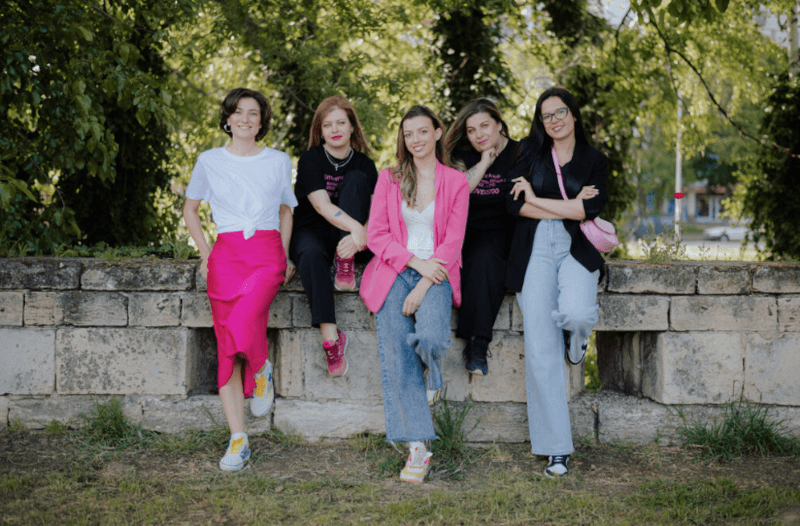
Bella Antova came back after twelve years in Sofia. She had worked for a fashion chain, then a marketing agency. She studied, met people, loved the energy of the capital. Yet, little by little, she realized she wanted to build something more meaningful—and more her own.
Back in Vidin, she opened Pashkul (“Cocoon”), a tiny art shop on the city’s main street that is much more than a shop. Ideas are born there: markets, exhibitions, charity initiatives, workshops, events for children and adults, conversations about architecture, crafts, and urban memory. All those supposedly “impossible” things that somehow become entirely possible in Vidin once somebody rolls up their sleeves.
Bella is one of those people who consciously choose to wear rose-colored glasses—not because they ignore the problems, but because they refuse to let the problems define the entire landscape. Together with fellow members of the local organization Stetika, she helps organize markets, parties, architecture walks, and cultural events across the city.
“We have to bring out the best in this town,” she says.
Coming from her, it does not sound like a slogan.
Her brother, Volen Antov, also chose to return. He studied tourism in Sofia already knowing that one day he would come back to Vidin. Today he is a tour guide and co-owner of the family travel agency Fiesta Tours, founded by their father. He takes visitors through Vidin, the Danube villages, and the forgotten corners of northwestern Bulgaria. Sometimes farther still, deep into the Balkans.
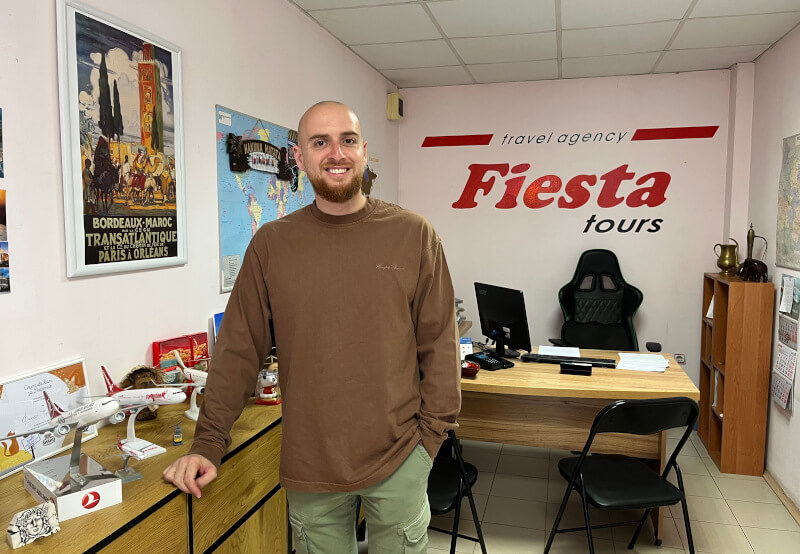
He dislikes cookie-cutter tours. With some guests he visits the medieval Baba Vida fortress. With others, the hidden Albotin rock monastery. Sometimes he takes people to villages where the best stories are not written on plaques, but told on benches outside somebody’s house.
Beside him is his wife, Silvana Antova, originally from southern Bulgaria, who chose to settle here too.
“Vidin found me, not the other way around,” she says with a smile.
She first met people from Vidin at university. Then came visits. Then love brought her permanently to the banks of the Danube. She calls the town “a little Vienna perched beside the river.” She loves the greenery, the calm, the feeling that people genuinely want more culture and life here.
“You feel like you’ve gained something,” she says about living in a small town.
And they are far from alone.
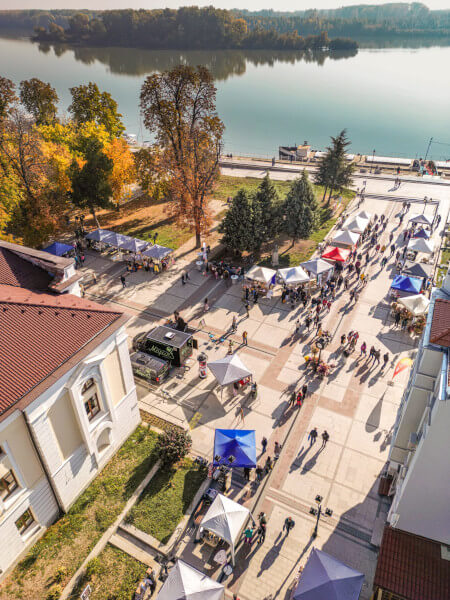
Mihail Milchev returned to modernize his family’s shirt factory with new technologies and fresh ideas. Photographer and designer Nikolay Naumov showcases the most beautiful sides of Vidin through photographs, souvenirs, and visual projects that make people see the city differently.
And outside the city itself, across villages and mountain towns, more people are quietly reshaping the places they come from.
People like Radoslav Mladenov from Han Madona guesthouse in Falkovets, who does not speak much about “community.” He simply helps, gathers people together, and welcomes everyone like an old friend.
People like Ivaylo Markov from the organization Torlakia, who clears and marks mountain trails, reconnecting people with both the Balkan Mountains and the stories of northwestern Bulgaria.
Or the community in Belogradchik, which in recent years seems to have started believing in itself again, energized by the ambition of its new mayor and local team.
And many, many others.
That may be why Vidin is beginning to look different these days. Not because the problems have disappeared, but because more and more people refuse to see this region only as a place you leave behind.
And perhaps they are the strongest reason to come here in the first place. And then find yourself wanting to return.
Listen to the whole story on Spotify: