🎧 Listen to this story on Spotify!
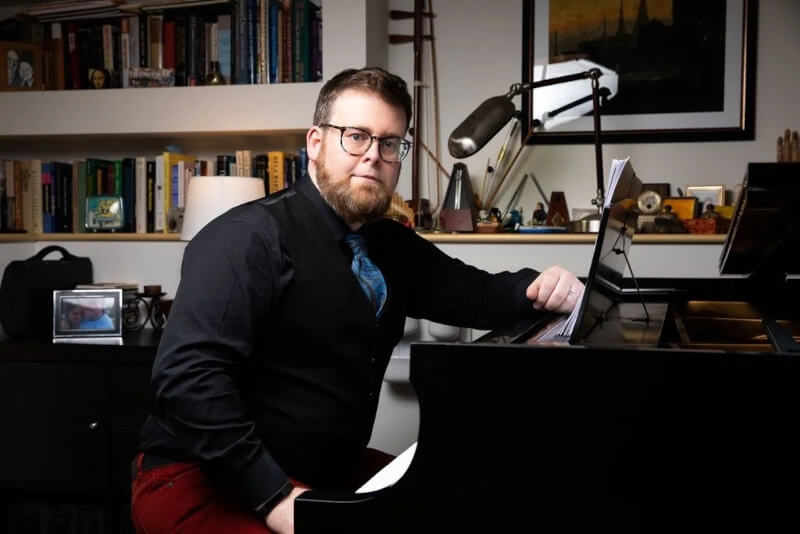
If you ask composer David Serkin Ludwig how a new piece begins, he will not talk about inspiration arriving like lightning. He will tell you about soot.
Imagine an old Renaissance fresco, he says. For centuries it has been hidden beneath smoke and dirt. Then someone arrives with a tiny brush and begins removing the layers. Slowly, an image appears. The painting was always there. The artist’s job is to uncover it.
That is how David thinks about composing. Perhaps it also explains how a letter written in wartime Bulgaria found its way into the hands of an American composer more than eighty years later.
This summer, David will travel to Bulgaria for the world premiere of his “Five Songs after Dimitar Peshev,” commissioned by the Off the Beaten Path Chamber Music Festival. The work honors the Bulgarian politician who helped stop the deportation of thousands of Bulgarian Jews during the Second World War.
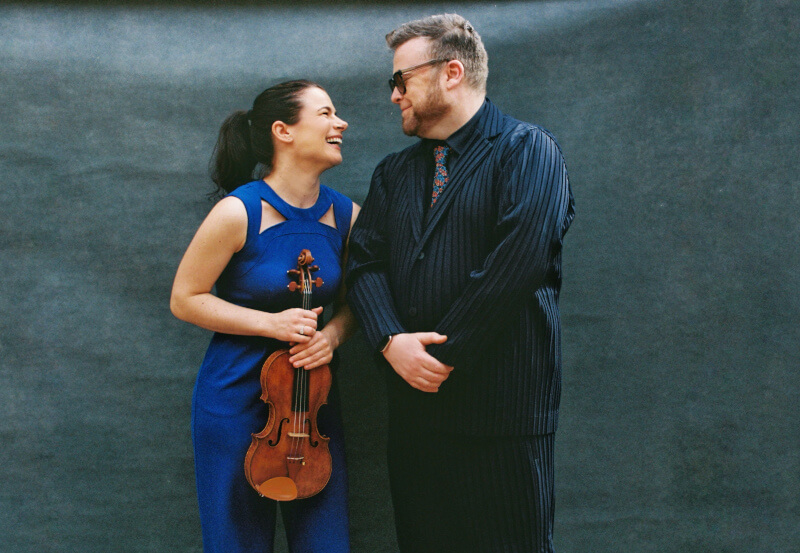
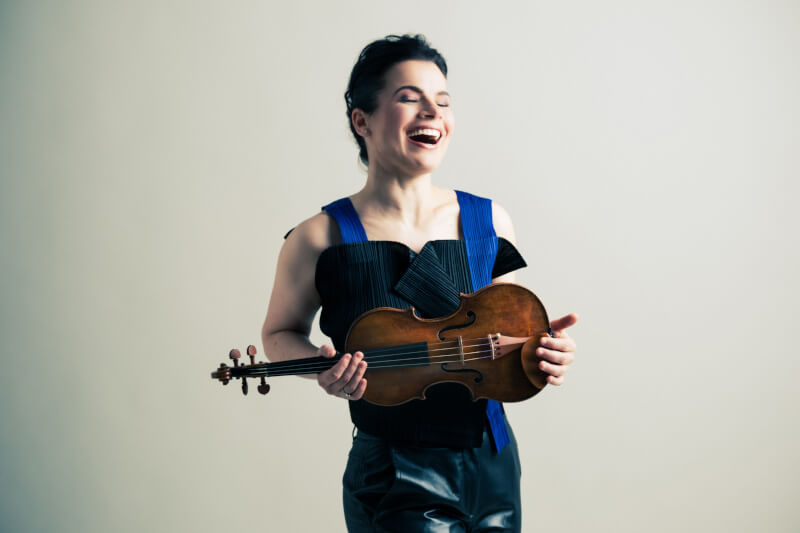
David will not be making the journey alone. His wife, Bulgarian-American violinist Bella Hristova, is also part of this year’s festival. Born in Pleven and having moved to the United States at the age of 13, Bella has built an international career on some of the world’s most prestigious stages. In August, Bulgarian audiences will hear her perform at the festival’s concerts in Troyan and Karpachevo. Among the works she will play is David’s “Rule of Three,” a piece by the husband, performed by the wife, in the country where her story began.
For both of them, the road to Bulgaria is crowded with history.
Where musical worlds meet
David, who is Dean of Music and Chair of Composition at the Juilliard School, had been fascinated by Bulgarian music long before he met Bella. As a composer, he was drawn to its asymmetrical rhythms and to the way different traditions seem to meet within it.
When talking about Bulgarian music, David references the “edge effect”—the place where two ecosystems meet and life becomes unusually rich. “The sounds overlap,” he says. “They speak to each other.”
As the grandson of Jewish refugees from Nazi Europe, David also hears echoes of Jewish musical traditions in Bulgarian folk music, and vice versa. That connection eventually led him to Dimitar Peshev.
When he and Bella began dating, David’s late brother-in-law, a historian, told him about Bulgaria’s rescue of its Jewish population during the Second World War. He began reading. What captivated him was not the story of persecution, but of conscience.
“Given the historical context of fear and pressure, we can’t assume people will do the right thing,” he says. “For Peshev to step forward as he did was a real heroic act.”
“Five Songs after Dimitar Peshev” grew out of the protest letter Peshev wrote in March 1943 and persuaded 42 other members of parliament to sign. David allowed its language and emotional arc to shape the music. The result is something between a song cycle and a liturgy, woven from biblical texts, fragments of Hebrew prayer, and a distant echo of the Bulgarian folk song “A Lamb Began to Bleat.”
It sounds neither traditionally Bulgarian nor conventionally Jewish. It sounds like David.
A history of leaving
David grew up in the shadow of stories about courage and exile.
His great-grandfather, Adolf Busch, was one of the twentieth century’s greatest violinists as well as a German patriot who had served in the First World War. When Hitler came to power and Busch’s Jewish son-in-law and David’s grandfather, Rudolf Serkin, was barred from performing, Busch took his family and left Germany. Years later, Hitler reportedly invited Busch back with the promise of an orchestra and every artistic privilege. Busch refused. He said he “would gladly return on the day when Hitler, Goebbels, and Göring were publicly hanged.”
“My close family was lucky,” David says. “They left early.” Many relatives did not.
That history is one reason Peshev’s story resonates so deeply. Yet David resists simple moral certainty. “Everyone is complicated,” he says. “I don’t know that too many people, myself included, could say with one hundred percent certainty that they would act as Peshev did.”
That question lies at the heart of “Five Songs after Dimitar Peshev.”
Though rooted in history, the work speaks just as much to the present. “We live in an era of polarization, of extremes,” David says. “Progress can only be made if people are talking, understanding nuance, and tolerating difference.”
Yet, he does not expect music to change the world. If it can make someone stop and think, he believes, it has already done something worthwhile.
The first date
Somewhere along the way, Bulgaria also brought Bella into David’s life.
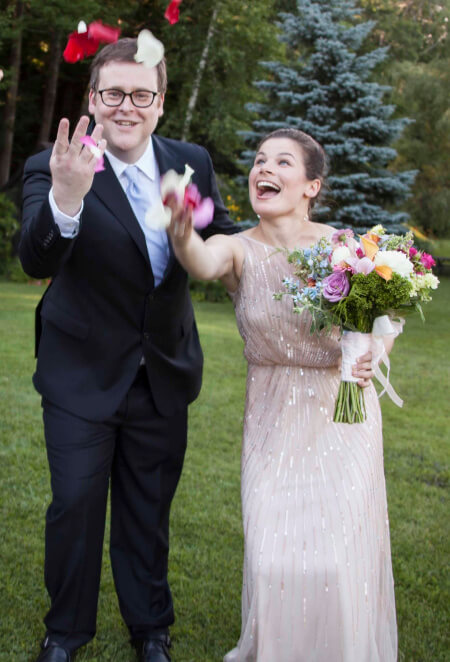
They met at the Marlboro Music Festival in Vermont, founded by members of David’s family. Their first date took place in the backyard of violinist Jaime Laredo and his wife, Sharon Robinson. They went swimming.
“It was a very tame date,” David says with a laugh. “But I knew right then we’d be together forever.”
On the way home, he asked Jaime whether he would give Bella away at their wedding. It was still their first date.
The request was deeply personal. Bella’s father, Soviet composer Yuriy Chichkov, had died when she was very young, and she never really knew him. Over the years, Jaime had become a father figure in her life.
Years later, David found another way to bring Yuriy Chichkov into their marriage.
A parental witness
David wrote his Violin Concerto for Bella around the time of their 2015 wedding. Commissioned by a consortium of eight orchestras to celebrate the occasion, it became less a wedding piece than a meditation on marriage itself.
He wanted Bella’s own story to be part of it. After tracking down what appeared to be the only available US copy of her father’s violin concerto, he wove thirteen measures into the slow movement of his own—“almost like a parental witness to our marriage,” he says. Bulgarian rhythms, including the asymmetrical pulse of a rachenitsa, run through the work as well.
He gave Bella the score on Valentine’s Day.
“I’m never going to be able to top that,” he laughs.
David admires Bella’s resilience, discipline, and unwavering moral compass. When it comes to her playing, he says, “She is fierce, and with total command of the instrument.”
Music occupies her attention completely. “I hear solfège when I listen to music,” Bella says, which is why she and David rarely play it in the background. At home, two people whose lives revolve around music often choose silence.
Those qualities carried her from Pleven to some of the world’s greatest concert halls. At 13, after a master class with legendary violinist Ruggiero Ricci opened an unexpected door, Bella left Bulgaria to study at the Curtis Institute of Music in Philadelphia. She later studied with Jaime Laredo at Indiana University before performing at Carnegie Hall, at the Kennedy Center, and with orchestras around the world.
This August, she will perform publicly in Bulgaria for the first time.
“Bulgaria is my roots,” she says. Her Bulgarian today is “baby Bulgarian,” but she remembers the folk music, the celebrations in town squares, and Sofia’s then–Sheraton Hotel.
As a girl, she and her mother traveled from Pleven on weekends to play outside the hotel for money.
This time, she’ll walk through the front doors as one of the festival’s star performers.
Music on a tractor
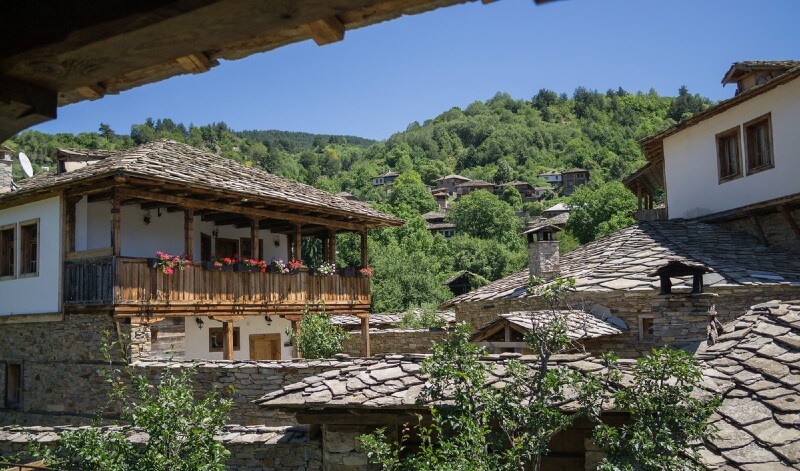
Off the Beaten Path began in 2018 in Kovachevitsa, a Rhodope village better known for its stone houses than for contemporary chamber music. Its founders, Bulgarian musicians with international careers including Lora Tchekoratova and Georgi Valtchev, wanted to bring exceptional music beyond the country’s usual cultural centers.
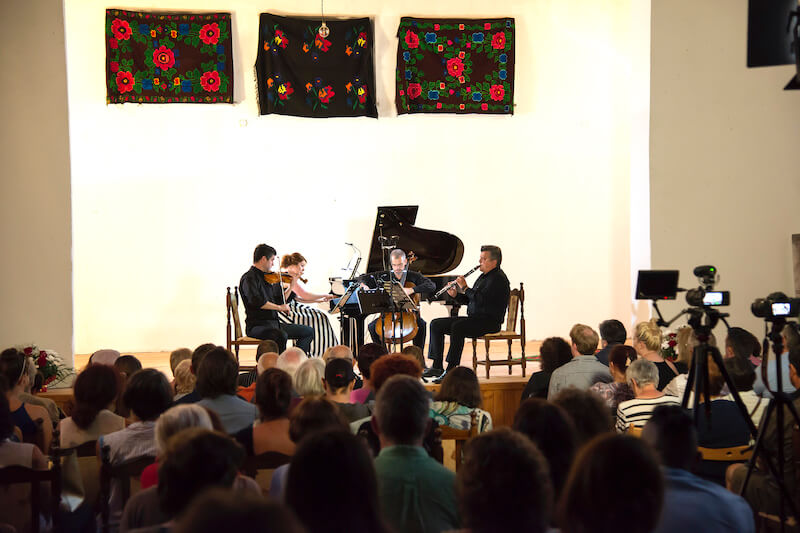
The festival has since expanded to Gotse Delchev, Dobrinishte, Karpachevo, and, this year, Troyan. In some of these places, listeners are encountering live chamber music for the first time. The musicians come to them.
That idea has deep roots in David’s family. His grandfather and great-grandfather once played for farmers in rural Vermont, with a piano loaded onto the bed of a tractor.
“The fact that we’re not going to be in a great big city is very significant and meaningful,” he says. “Being able to come to people and be physically present is an incredible privilege.”
In Kovachevitsa, the festival’s first concerts took place in the neglected Svetlina Community Center, where organizers borrowed chairs from homes, the local pub, and a neighboring municipality. As audiences grew, the organizers formed a charitable entity, Friends of the Off the Beaten Path, and began raising money for the building, first through a campaign inviting people to donate a chair and later through a community effort to repair the roof.
In 2021, the organizers received support through the AGORA Platform, in partnership with the America for Bulgaria Foundation, to strengthen local philanthropy and volunteering.
Mozart did not fix the roof. But the music gave people a reason to see the old community center differently—and to gather there again.
Today, Off the Beaten Path brings Bulgarian and international musicians to five destinations. Its 2026 program includes three world premieres and a new residency for young composers, whom David will help mentor.
What does he hope to convey to them? Openness—“the greatest tool that we have as artists,” he says.
Histories in conversation
David and Bella may spend only a few days together in Bulgaria this summer. Their schedules barely overlap, and their concerts will take them to different parts of the country.
In the Rhodopes, David’s “Five Songs after Dimitar Peshev” will receive its world premiere. Days later, Bella will perform his “Rule of Three” in Troyan and Karpachevo, alongside works by Beethoven, Brahms, Mahler, and Clara Schumann.
For Bella, the concerts will mark a long-awaited first appearance on a Bulgarian concert stage. For David, the premiere deepens a relationship with Bulgaria that has gradually become part of his own story and brings it closer to his family’s roots.
Bella left Bulgaria as a child to build a life as a performer. David became a composer in a family shaped by music and exile. His grandparents had fled Nazi Europe. Around the same time, Dimitar Peshev stood against his own government when silence would have been safer.
Those histories began in different places. David’s music brings them into conversation.
Music cannot undo history. It cannot make courage easier or erase division. But it can carry an old letter into a village hall. It can hide a father’s melody inside the concerto his daughter plays on her wedding day. It can travel on the back of a tractor.
And sometimes, when two lives begin far apart, it can help them recognize something familiar in each other.
Off the Beaten Path Festival opens in Dobrinishte on July 29 and continues with concerts in the Rhodopes and northern Bulgaria. Explore the full program and come hear David, Bella, and the other festival musicians live.
You can explore more of David Serkin Ludwig’s music and Bella Hristova’s performances on their official websites.