A coat of paint and a sense of purpose
A weekday afternoon in July. Renovation work is underway at the Biscuits Workshop, a small social enterprise in the town of Kazanlak in central Bulgaria.
The work crew isn’t large, but things are moving quickly. One person primes a wall. Two others paint sections that have already been prepped. A fourth runs a vacuum across the floor. One woman wipes dust from the windows while another stirs a fresh can of paint. Somewhere nearby, the smell of freshly baked cookies drifts through the room.
This isn’t a construction crew. It’s part of the team from STADA Bulgaria.
Last year, instead of their usual teambuilding retreat, the pharmaceutical company’s summer gathering turned into something different: a day of volunteering. More than a hundred employees split into five teams and spread out across Kazanlak and the surrounding area to help local organizations and community projects.
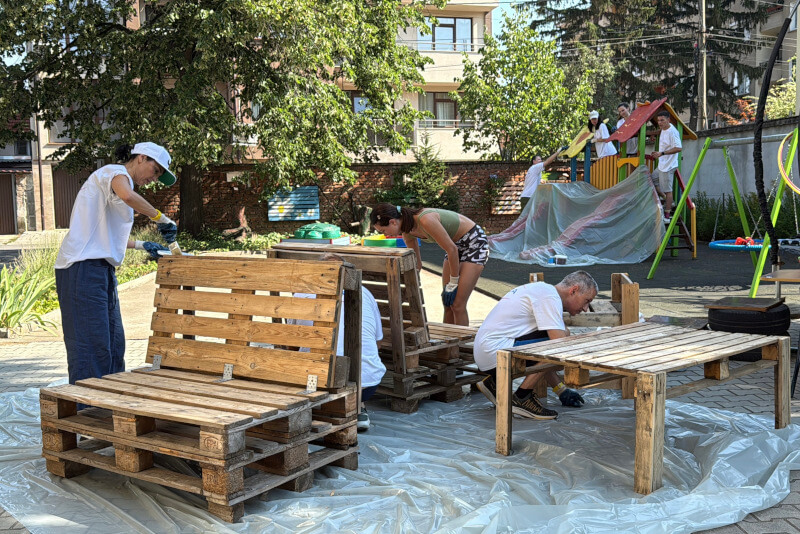
One group repainted the building of a social enterprise where people with disabilities find work and support. Another sanded and varnished benches in the yard of a residential home for seniors with dementia. A third collected litter around an ancient Thracian tomb in Tulbeto Park. A fourth cleaned the shoreline of Koprinka Dam. A fifth sorted donated toys at the town’s social services center.
It was teambuilding with results you could actually see.
And more and more socially responsible companies in Bulgaria are choosing to spend time together in exactly this way.
Volunteering enters the workday
Volunteerism in Bulgaria looks very different today than it did twenty years ago.
In 2007, a Eurobarometer survey revealed troubling numbers: only about 7 percent of Bulgarians said they volunteered their time to help others.
Since then, the picture has changed. A national study from 2023 shows that about one in three people in Bulgaria now takes part in some form of volunteering, whether helping people in need, supporting environmental causes, or improving their communities.
People between the ages of 30 and 65 and residents of large cities are the most active.
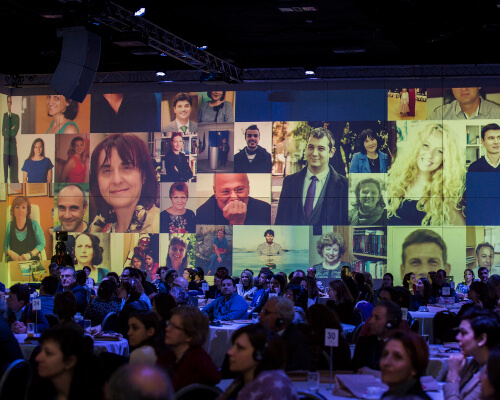
Much of this momentum has been fueled by TimeHeroes, the country’s largest volunteering platform. Founded nearly fifteen years ago, it connects people who want to help with organizations that need support. Over the years, more than 3,330 volunteer initiatives have been organized in over 400 towns and cities, with the participation of more than 102,000 volunteers.
“Teambuilding has long been a successful way to strengthen relationships within a company. When you add working together for a cause, the dynamic shifts. It starts to feel more like a group of allies,” says Nikola Kolev, who organizes cause-driven team-building experiences for TimeHeroes’ corporate partners.
But the change is not only visible in the numbers.
Increasingly, volunteering is showing up in a place where it was once rare: the workplace.
For many companies, encouraging civic engagement is no longer just part of a corporate social responsibility strategy. It’s a way for employees to feel connected to something bigger than their daily tasks.
When a company shows up for a community
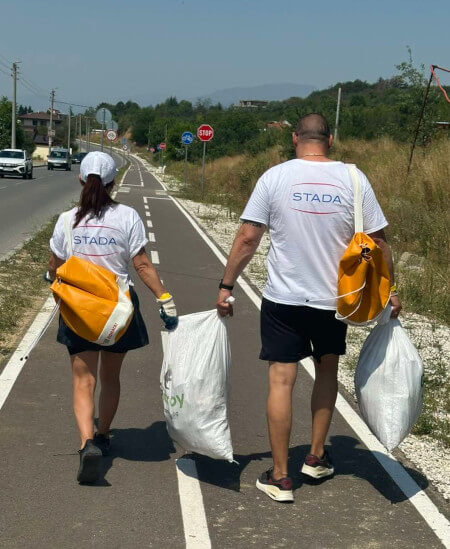
In Kazanlak, the impact was visible almost immediately.
At the Biscuits Workshop, where dozens of people with disabilities spend much of their day learning job skills, the freshly painted walls make the space brighter and more welcoming. At the home for seniors, the benches in the yard are once again safe and comfortable. In Tulbeto Park, visitors now walk along cleaner paths.
When an entire team works together, the difference is tangible.
Days like this show how a routine corporate gathering can turn into something meaningful for an entire community.
A 2025 TimeHeroes survey among employees in large companies found that 94 percent had already participated at least once in a volunteer initiative organized through their workplace.
In other words, volunteering is gradually becoming a normal part of the work rhythm.
A volunteer day in Razlog
On a crisp autumn morning near the town of Razlog in southwestern Bulgaria, a group of volunteers from the technology and telecom company A1 gathers in a meadow in the Rolban area, on the road leading toward Mount Vihren.
This is where children from the local Pirin Biathlon Club train. But the terrain has become overgrown with bushes and small trees.
It’s a beautiful place, a mountain meadow where people come for walks and picnics. But it’s far from ideal for sports training.
The volunteers spend the day clearing the land. They cut branches, level the ground, and prepare space for a future shooting range.
By the end of the day, the meadow already looks different.
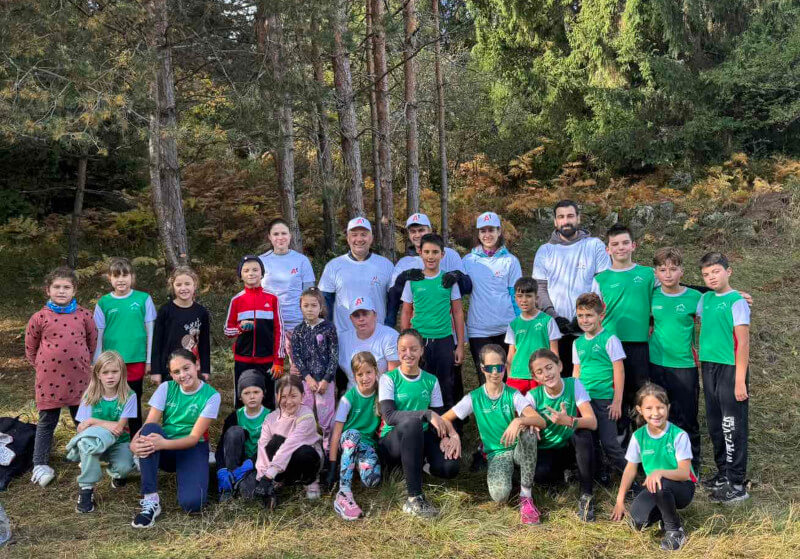
“Everything has been cleared and leveled with machinery. The kids will have a wonderful training ground,” says Nikolinka Pirishanchina, who helped organize the initiative.
Her colleagues even try their hand at target shooting, half joking, half proud.
“They didn’t miss a single shot,” she laughs. “They’ve already been invited to compete for Team Pirin.”
An invitation to do good
Interestingly, many people do not begin volunteering on their own.
Often, someone invites them.
A 2025 TimeHeroes survey of corporate employees shows that for many people, their first encounter with volunteering comes through their employer.
Work, in other words, often becomes the first step toward broader civic engagement.
When initiatives are clearly organized, with a specific task, place, and time, many more people decide to join.
And sometimes that leads to unexpected stories.
The smallest gestures
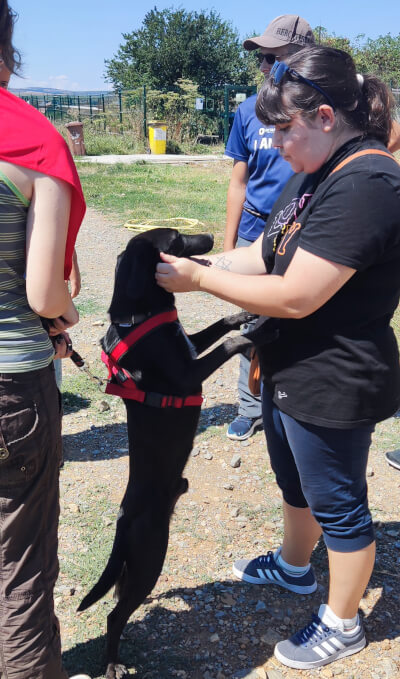
After a volunteer day at the Every Dog Matters animal shelter near Kostinbrod, a member of the A1 team made a decision that had not been part of the plan.
She adopted a dog.
There were no announcements or fanfare, just a quiet decision made on the way home.
But stories like this show how volunteer initiatives work.
Sometimes they begin as a corporate campaign and end as something deeply personal.
How companies build a culture of volunteering
Today many companies see volunteering as part of their culture.
Research among businesses shows that these initiatives have a real impact on teams. Employees feel more connected to their company, collaborate more easily, and often feel greater pride in where they work. When people feel their employer’s values align with their own, they are also much more likely to stay.
That is why companies like A1 and STADA Bulgaria work long-term with TimeHeroes to engage their teams in meaningful initiatives. Over time, volunteering becomes not a one-off event but a natural part of company life.
And it is not just about public image.
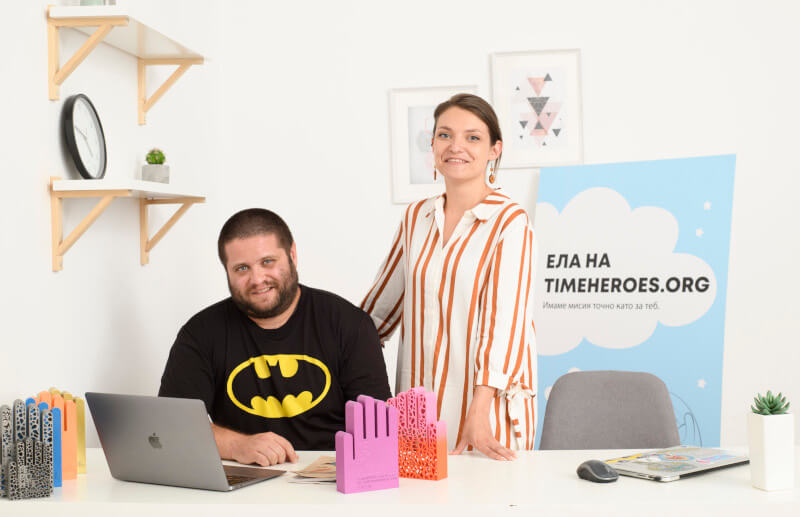
“More and more companies realize that investing in their employees also means showing a commitment to society beyond the office. It’s a statement about the company’s values and a signal that its interests are connected to the community it operates in,” says Natalia Ivanova, Executive Director of TimeHeroes.
When colleagues join forces on a volunteer mission, whether improving a schoolyard or library, helping seniors prepare for winter in rural communities, or spending meaningful time with children in social care institutions, the relationships between them change.
They begin to see one another not only as coworkers but as allies.
And that feeling often lasts long after the workday ends.
From one mission to many
TimeHeroes helps turn that initial spark into the next volunteer mission.
Sometimes that means a group of enthusiasts clearing land so young athletes have a place to train. Other times it is an entire company dedicating a day each year to community causes.
The results may look different, but the logic is the same.
A freshly painted wall.
A spruced-up park.
A meadow where future Bulgarian biathlon champions take their first steps.
Sometimes even a newly adopted dog.
Each story may seem small on its own.
Together, they slowly change the shape of a community.
Discover your cause at TimeHeroes.org. And if you are a company, the TimeHeroes team can help you build a volunteering program for your employees—from a single initiative to year-round engagement.
Sometimes one mission is enough to start something much bigger.