Listen to this story on Spotify:
Every spring, Chiprovtsi shows why a carpet can be family history, a museum mission, and a reason for people from around the world to knock on the town’s door.
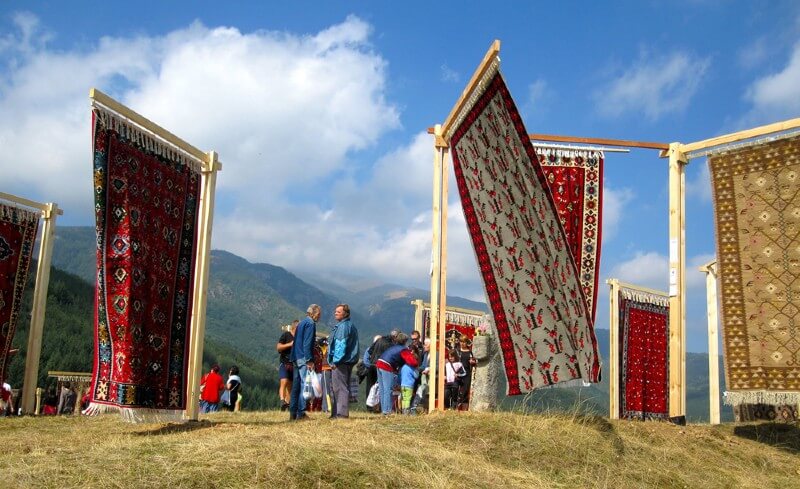
Some carpets decorate rooms.
Others inspire researchers, collectors, and craft enthusiasts from across the globe to travel to a small mountain town in northwestern Bulgaria.
Every May, that town is Chiprovtsi.
For a few days, the main square fills with looms, patterns, weavers, souvenirs, and stories. Inside the local history museum, collectors swap discoveries, researchers compare notes, and visitors find themselves drawn into conversations they never expected to have. At the center of it all is the Chiprovtsi carpet—a craft that has survived centuries and refuses to become a museum piece.
The annual Chiprovtsi Carpet Festival, organized by the Municipality of Chiprovtsi, celebrates the community that keeps this tradition alive. Many visitors arrive because they admire the beauty of the geometric designs. Many return because they discover something deeper: the skill, patience, memory, and human connections woven into every piece.
The festival brings that commitment to preserving the tradition into public view. Visitors can watch master weavers work at a traditional loom, browse modern creations inspired by centuries-old motifs, and hear stories that reveal how this craft has been passed from one generation to the next—stories you will not find in a history textbook but are unlikely to forget.
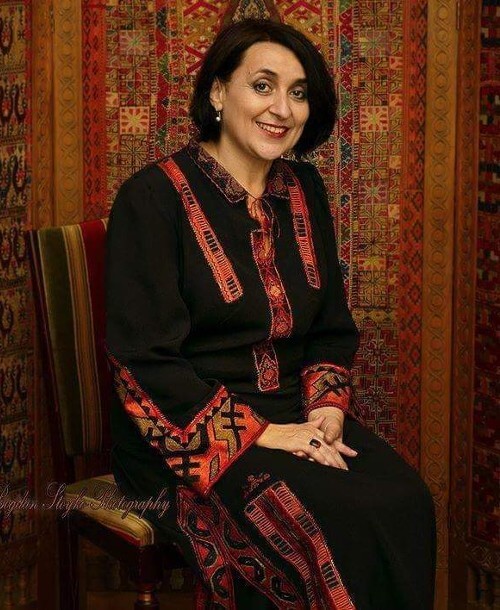
At the heart of those efforts is the Chiprovtsi History Museum. Under the leadership of ethnographer Anita Komitska, the museum does far more than preserve carpets. It brings together the people who keep this heritage alive: local weavers, scholars, collectors, donors, visitors, schoolchildren, and proud residents who see the carpet as part of their family history.
Among them is the Tchushkarev family, one of the few families still weaving Chiprovtsi carpets by hand. Their work requires a kind of patience that is increasingly rare. There are no shortcuts in a Chiprovtsi carpet. There is counting, repetition, concentration, and the quiet memory of hands that have performed the same movements for generations. Every carpet carries not only a pattern, but a way of life.
One of the most fascinating guests at the 2026 festival was Jacob van Beilen, a collector and scholar of Bulgarian carpets. The title of his lecture sounded almost like a password shared among insiders: Bakamski/Garibalda Carpets: The Oldest Chiprovtsi Carpets.
Behind that academic title lies a remarkable story.

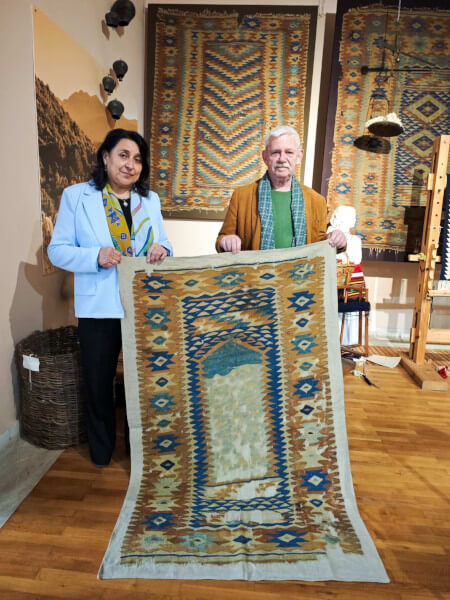
Years ago, van Beilen donated an eighteenth-century Bakamski/Garibalda carpet to the museum, filling an important gap in its collection. In 2026, he made another extraordinary gift: a rare Bakamski carpet featuring a mihrab, a prayer niche motif. Only five such carpets are known to exist worldwide.
Van Beilen had acquired the carpet in central Turkey. At the request of collector Penelope Hayes, and with her financial support, it was professionally cleaned and conserved there before making its journey to Chiprovtsi.
The American collectors Timothy and Penelope Hayes are also part of this unusual community. Between 2021 and 2022, they donated several Chiprovtsi carpets from their personal collection to the museum. Through a centuries-old weaving tradition, people from Europe and the United States have found common ground and a shared belief that these carpets deserve to be preserved.
In 2014, the tradition of making Chiprovtsi carpets was added to UNESCO’s Representative List of the Intangible Cultural Heritage of Humanity. For Chiprovtsi, however, that recognition was not the finish line.
It was a responsibility.
Carpets must be studied, documented, restored, displayed, and passed on. Not as beautiful relics from the past, but as living knowledge.
That may be what truly makes Chiprovtsi Bulgaria’s carpet-weaving capital. Not only the patterns. Not only the craftsmanship. Not only the international recognition.
It is the people.
Some weave the carpets. Some study them. Some help bring them home.
And every spring, the festival brings them together again in the mountain town where the story begins: Chiprovtsi.