EVN was among the first companies to respond when the America for Bulgaria Foundation invited partners to help bring the Bishop’s Basilica of Philippopolis back to life. At the time, the project held enormous promise—and just as many unknowns. But its ambition was clear: to transform an archeological site into a living place for people today.
Five years after the Basilica opened its doors, that promise is no longer abstract. It has taken shape, and it has made one thing clear: projects like this depend on early, committed partnerships between the public and private sectors.
EVN is part of that story, with a contribution that goes beyond traditional corporate support. The energy-themed children’s playground outside the Basilica is more than an addition to the site; it’s an invitation for children to experience it on their own terms, through movement, play, and discovery. It also reflects a philosophy the company has long embraced: that sustainable solutions begin with knowledge, understanding, and a long-term perspective.
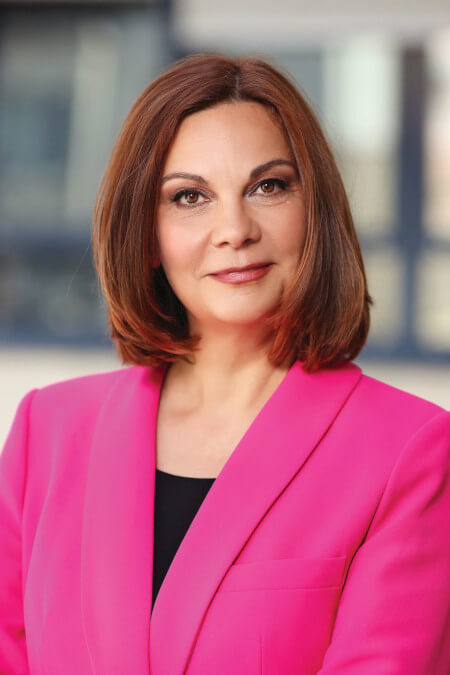
That long horizon also defines the professional path of Kalina Trifonova, Deputy Chair of the Board of Directors of EVN Bulgaria. With over 25 years in the energy sector, first in public administration, then in business, she brings together two perspectives that don’t always meet easily: regulation and practice, institutions and markets, public interest and corporate responsibility.
In our conversation, the Basilica is the starting point, but the themes quickly expand to: how trust is built, the role of business beyond financial results, and the kind of decisions that take time, consistency, and patience but ultimately make a system more stable and predictable.
America for Bulgaria Foundation: Do you remember when you first heard about the Bishop’s Basilica of Philippopolis project? What stood out to you?
Kalina Trifonova: The Basilica itself has long been known as an archeological site in Plovdiv, but the project gained real public visibility after the restoration of the Small Basilica in 2013, led by the America for Bulgaria Foundation with support from the Municipality of Plovdiv. That project showed both the potential and the scale of what could be achieved with the larger basilica.
We first learned about the details of the restoration project during a joint meeting in the Trakia Economic Zone in the spring of 2018. Soon after, we decided to become a partner and, by September that same year, we broke ground on the children’s playground and EV charging station that EVN built as part of the site.
We were drawn to the project because of its long-term impact and significance, not just for Plovdiv, but for Bulgaria as a whole. The ambition of the Foundation’s team, the quality of the concept, the way the space integrates into the city, and the strong commitment from the municipality all made the decision an easy one. Today, five years after the opening and eight years after our partnership began, it’s clear that the project has delivered on its promise. The Basilica has become a landmark of modern museum practice in Bulgaria.

ABF: How did you decide to support the outdoor children’s playground specifically? What did you see in that idea?
K.T.: As with all our partnerships, we look for the best intersection between who we are as an energy company and what the project needs. It’s important for us that our involvement goes beyond financial support, that it leaves a meaningful mark connected to energy, education, and innovation.
Together with the Foundation’s team, we explored different options and arrived at the idea of an energy-themed playground, an EV charging station, and 3D experiences. The playground builds naturally on our long-running educational program on energy efficiency for elementary school students. We already had experience with similar “energy playgrounds,” where children can see how movement generates energy and how much effort it actually takes.
The charging station, on the other hand, was our way of contributing to the early development of e-mobility in Plovdiv, at a time when the topic was just beginning to enter the urban landscape.
ABF: There is something powerful about children encountering history through play. Why does that approach matter to you?
K.T.: From personal experience, I know that children learn most naturally, and most effectively, through play. Nothing is more motivating than seeing the result of your own actions, especially when that result is immediate. That’s exactly what happens with the kinetic installations on our playgrounds: children generate energy themselves and understand that it takes effort.
This principle isn’t accidental. Even in professional training for adults, experiential learning is often the most effective format. When knowledge is experienced, not just explained, it stays with you.
ABF: What would you like to see happening on that playground five years from now?
K.T.: Not in five, in twenty years, I’d like to see the children who play there today bringing their own children. Not because there’s a sign saying EVN built it, but because it has become a natural, loved part of the city, a place to meet, play, and spend time.
ABF: You started your career in public administration and later moved into business. What from those early years still influences the way you think and work today?
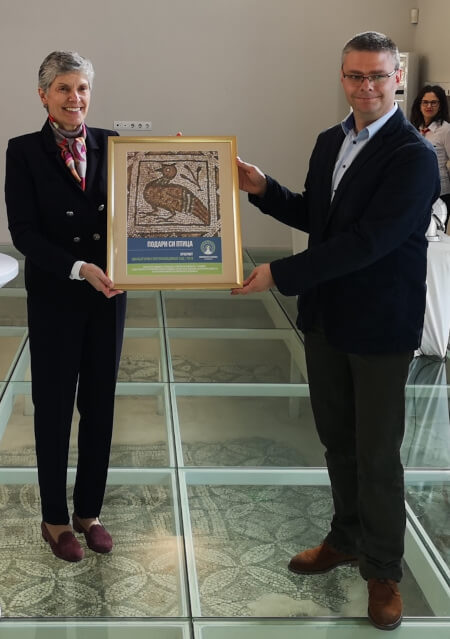
K.T.: One thing became very clear to me early on: energy operates on a long horizon. Decisions in this sector require patience, stability, and clear rules and, above all, the ability to think beyond immediate results.
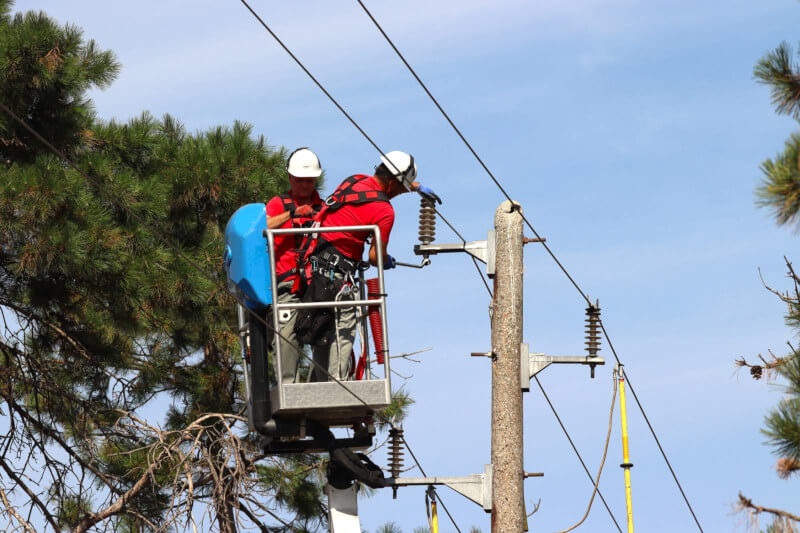
You can see this clearly in investments in the electricity distribution network. They are planned years ahead, implemented step by step, and the results come gradually: fewer outages, better service quality, easier integration of new capacity. For that to happen sustainably, you need a predictable and consistent regulatory framework.
As a lawyer, this resonates strongly with me. The rules in this sector are the “skeleton” that supports both investment and the protection of public interest. That perspective still guides me today, whether we’re talking about regulation, long-term investment, or partnerships with societal impact. Energy is not a sprint; it’s a marathon.
ABF: When you moved from public administration to EVN, what really changed?
K.T.: More than anything, my perspective changed. If I had to put it simply: administration gave me the theory, EVN gave me the practice.
In the company, I saw how processes actually work behind the regulatory framework and how even a small legislative change can have major financial and operational consequences. It also became clear how important it is for business and government to work closely together, to speak the same language, so that the sector can remain predictable and sustainable, and earn public trust.
ABF: What has kept you in energy all these years?
K.T.: I entered the energy sector right after graduating law school nearly 26 years ago, and it has challenged me ever since—with its complexity, its constant change, and its importance to society.
At the time, energy law wasn’t even a formal field of study; it was being built. I had the opportunity to be part of that process, working on the transition from a centrally planned system to a liberalized market aligned with European legislation. I was part of the administration that helped establish the foundations of energy regulation and market liberalization in Bulgaria.
That early experience shaped my understanding that energy is fundamental to the economy, to quality of life, and to societal development. That sense of responsibility—and the constant need to adapt and think long-term—is what has kept me here.
ABF: Was there a moment when you realized your role had become more than technical and more about connecting people and systems?
K.T.: Yes, that realization comes gradually. For me, it happened naturally as I moved from administration into business. Over time, you understand that your value isn’t just in expertise, but in the ability to connect perspectives, interests, and expectations. That’s where sustainable solutions emerge, when there is dialogue and trust.
ABF: EVN recently marked 20 years in Bulgaria. What becomes visible only from that kind of long-term perspective?
K.T.: Three things: a lot of work, consistency, and accumulated trust. There’s pride in what’s been achieved, but also a strong sense of responsibility. Because every decision today builds on everything that came before.
Behind those 20 years are very concrete results: investments in infrastructure that translate into more reliable service, increased digitalization, clearer processes, and growing focus on energy efficiency, e-mobility, and long-term societal impact. These are no longer add-ons; they’re part of how we operate.
ABF: When does an energy company truly serve its customers well?
K.T.: When it goes beyond simply delivering a service. Being a “supplier” implies a one-way relationship. Partnership means something more: consistency, expertise, and long-term commitment.
We serve customers best when we make energy more understandable, more accessible, and more convenient through digital tools, clear information, and responsiveness. It’s also about helping people navigate a rapidly changing energy landscape.
When customers feel they can rely on you—for clarity, for solutions, for respect of their time—that’s when you become more than a supplier.
ABF: How do you see EVN evolving over the next 5 to 10 years?
K.T.: Our lives will become increasingly dependent on technology, and energy will be at the center of that. I see EVN as a stable, recognizable partner, one that introduces new solutions in ways that translate into greater convenience, transparency, and reliability for customers.
ABF: EVN has a long track record of working with NGOs. What can they offer business that it cannot easily achieve on its own?
K.T.: NGOs bring expertise in areas where business may not have deep experience. A strong partnership is about predictability and trust and requires adaptation on both sides.
Business looks for measurable results and accountability; NGOs often work toward broader societal impact. When expectations are aligned, the result is meaningful collaboration, like our work with the America for Bulgaria Foundation, WWF, the Bulgarian Society for the Protection of Birds, and others.
ABF: When is a partnership truly meaningful, not just good-looking on paper?
K.T.: When it becomes part of how a company operates, not just a campaign. When it’s long-term, and its results can be tracked over time.
Our partnerships on biodiversity and environmental protection, for example, have evolved into ongoing efforts that are now embedded in our work.
ABF: A predictable business environment depends on rules, trust, and functioning institutions. Does business have a role in defending that environment?
K.T.: Absolutely. A predictable environment is a shared responsibility, and business is part of that. It doesn’t happen on its own. It requires institutions that apply rules consistently and fairly.
When that stability exists, companies can plan long-term, invest sustainably, and contribute to causes that matter beyond immediate returns. Business should be more visible and active in supporting transparency, fairness, and consistency and in leading by example.
For me, that comes down to personal responsibility—leaving a mark that still matters after you’re gone.
ABF: If you had to explain your job to a child on the playground outside the Basilica, what would you say?
K.T.: I would say: imagine electricity is like an invisible road that leads to your home. My colleagues and I take care of that road every day, so you can turn on the lights, charge your phone, and make toast. And if something goes wrong, we find the problem and fix it as quickly as we can.