Photo: Anthony Georgieff
An ordinary workday, interrupted
The year is 1982. It’s early morning in downtown Plovdiv, one of Europe’s oldest continuously inhabited cities. The city is just waking up. At the site of a new pedestrian underpass, workers gather for another shift. Someone lights a cigarette. Another checks the machinery. A third pulls on his gloves in silence.
It looks like any other day: digging, dirt, noise, dust, hurry.
No one expects a surprise.
Then a shovel hits something hard.
A patch of small stones appears, tightly set together. Not the way nature arranges them, but the way a careful hand would—deliberate, precise.
The pace slows. More of the same emerges: color, pattern, a rhythm that repeats. It becomes clear this isn’t random.
Gradually, something surfaces beneath the street that does not belong to that day. Or even that century.
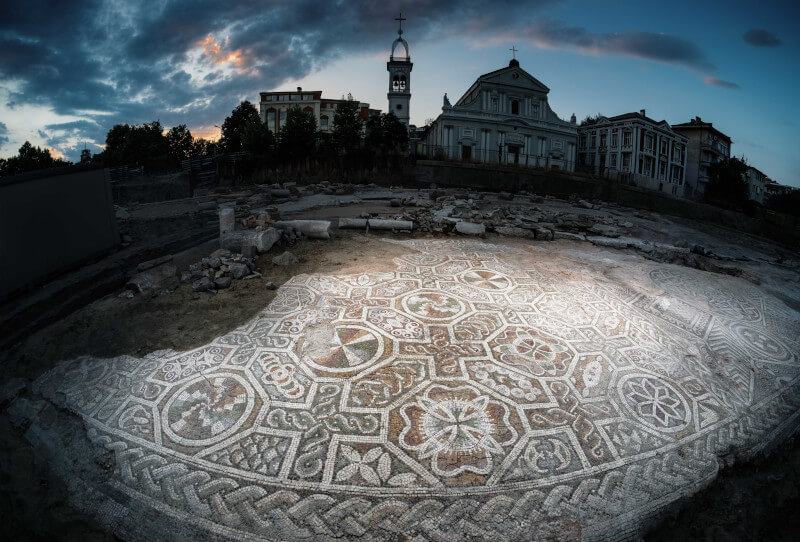
These are the remains of the Bishop’s Basilica of Philippopolis, the largest early Christian church ever discovered in Bulgaria. Beneath the workers’ feet lies an entire ancient world: mosaics that have survived centuries, birds that still seem to move, and a story that was buried, but never lost.
That ordinary morning marks the beginning of a long return. Slow, uncertain, far from inevitable.
Nearly half a century later, the Basilica is no longer just part of Plovdiv’s past. It is steadily proving that it belongs to a much wider world.
A church, an earthquake, a long silence
Before it was buried and forgotten, the Basilica stood at the heart of late antique Plovdiv—the city that was then known as Philippopolis, part of the Roman Empire. Likely built in the late 4th or early 5th century, just decades after Christianity was legalized, it was anything but peripheral. Its size and central location near the Roman forum make that clear.
This was the city’s spiritual center.
The building itself was vast, about 120 feet wide and nearly 300 feet long. But what still stops you in your tracks today are the mosaics. Covering floor space of about 20,000 square feet, they reveal not only extraordinary craftsmanship, but imagination: geometric patterns, crosses, rosettes, the Fountain of Life scene, and more than a hundred birds that suggest both motion and meaning.
This is where people married, baptized their children, and said goodbye to their dead. The Basilica was woven into daily life—until, abruptly, it wasn’t.
Most likely, a powerful earthquake brought that chapter to an end. The structure was damaged, abandoned, and slowly disappeared from view. Not overnight, but gradually, the way great buildings often do, slipping into silence.
And yet, the place itself never stopped mattering.
The Basilica had been built over an earlier pagan structure, likely from the 1st century. Centuries after it fell out of use, a Christian necropolis appeared on the same spot, complete with a small church decorated with frescoes. Layers of belief, ritual, and human presence accumulated here over time.
That is why the Bishop’s Basilica is not just a monument to early Christianity. It is a monument to continuity—and to how stubbornly a place can refuse to fall silent.
The long road back
The discovery in the 1980s was only the beginning.
Between 1982 and 1986, a team led by archeologist Elena Kesyakova uncovered roughly half the site. Its importance was immediately clear. So was something else: a project of this scale requires time, funding, and long-term commitment.
All three were in short supply.
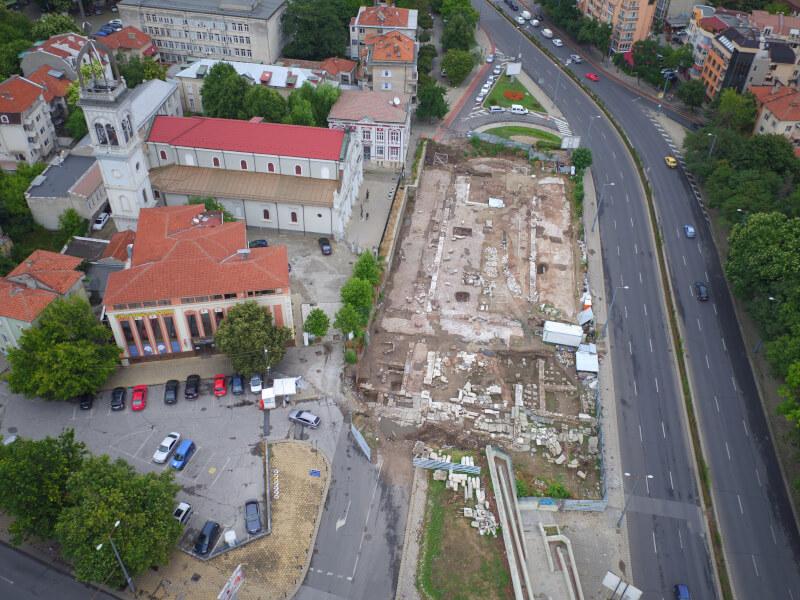
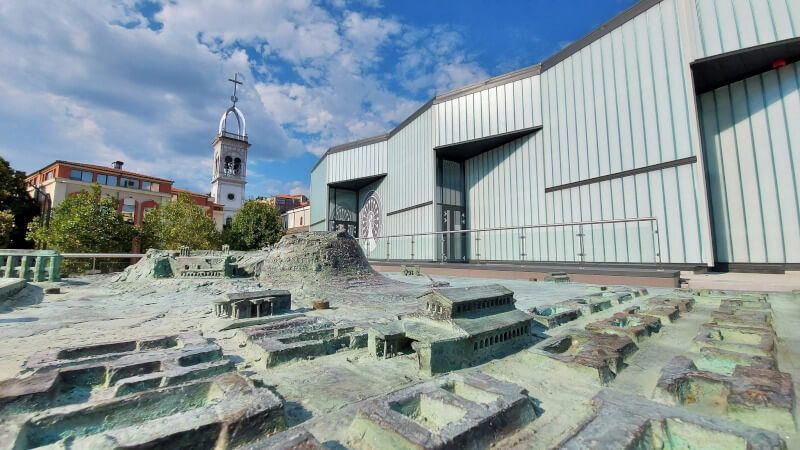
Some mosaics were removed to a museum. A protective structure was built over the remains. The rest stayed buried beneath the street. Eventually, the cover collapsed. The mosaics deteriorated. The site slipped back into neglect.
Then, years later, something shifted.
After the successful restoration of the nearby Small Basilica, the America for Bulgaria Foundation stepped in, this time for a far more ambitious effort: fully uncovering, restoring, and presenting the Bishop’s Basilica. Working with the Municipality of Plovdiv and Bulgaria’s Ministry of Culture, the Foundation launched a project that would change the site’s fate.
In 2016–2017, a team from the Regional Archeological Museum in Plovdiv, led by Zheni Tankova, completed the excavation. Restoration followed under the guidance of Dr. Elena Kantareva-Decheva.
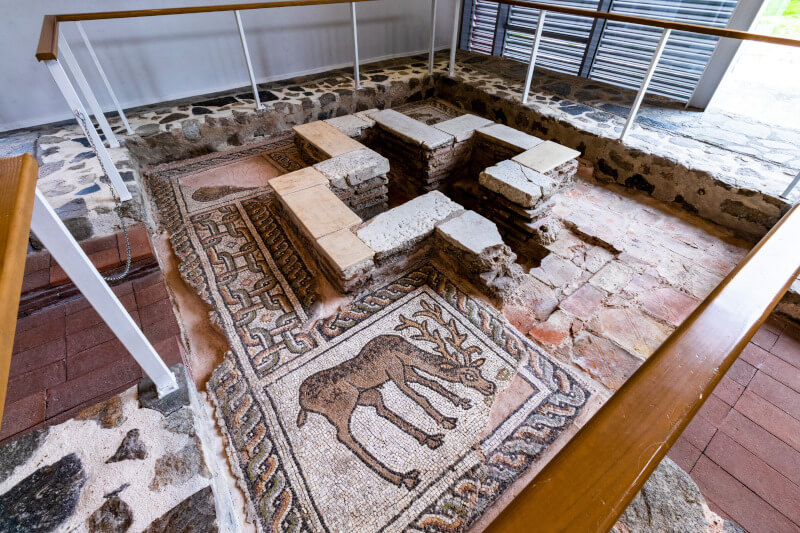
This was no longer just archeology. It was rescue work—slow, meticulous, expensive, and exacting.
The Foundation contributed 7 million euros, but the number alone doesn’t tell the story. Behind it stand years of effort, hundreds of people, and something rare: institutions, experts, businesses, and citizens all working in the same direction.
On April 18, 2021, the Basilica reopened. Seventeen centuries after it was built, it didn’t simply return to the city. It reentered it in a new way.
At the entrance, visitors are greeted by the words of Bulgarian national hero Vasil Levski: “Brotherhood for all, regardless of faith or nationality.”
In a place where eras, beliefs, and cultures meet, those words land with particular force.
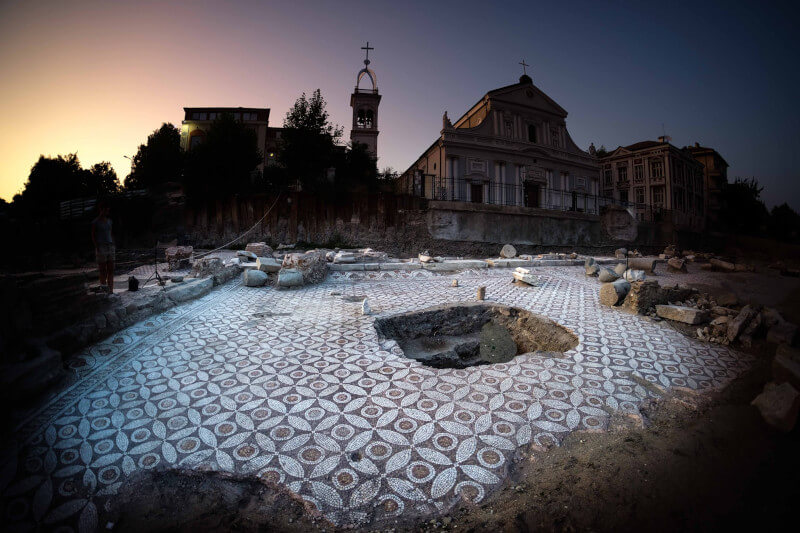
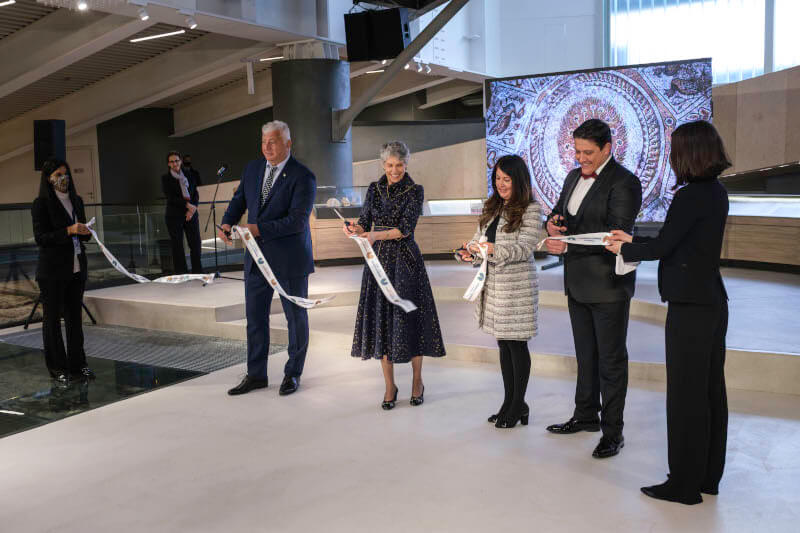
Photo: 4K Studio
A place that lives
These days, the Basilica is rarely quiet.
On any given day, you might walk into a rehearsal, a children’s workshop, a reading—or simply people moving slowly across the mosaics, as if trying not to miss a detail. The space isn’t frozen. It shifts with every visitor, and no two visits feel quite the same.
In the evening, music fills the hall: Schubert, Mozart, Tchaikovsky. People sit among the columns while, underfoot, the mosaic birds remain still, yet unmistakably present. The space seems to remember what it was made for: to gather people.
On another day, passages from Time Shelter, the first Bulgarian novel to win the International Booker Prize, are read here. Not long after, words give way to sound. Dobrinkа Tabakova’s Stone Trail, inspired by the Basilica itself, has its premiere in the same space.
During the day, children lean over the mosaics, arranging small stones the way craftsmen did centuries ago. They learn that, in ancient Plovdiv, the craft was so valued it had its own verb: “to make mosaics.”
People come with a plan—or without one. For an event or just to explore. They linger. Take one last look before leaving. And often return.
Since reopening, nearly a quarter of a million visitors have passed through.
This is when a place stops being a stop on the map and becomes part of how a city lives. And that may be the Basilica’s most important achievement. It shows that heritage doesn’t have to sit behind glass to be protected. It can be used without being damaged. It can feel close without losing its meaning.
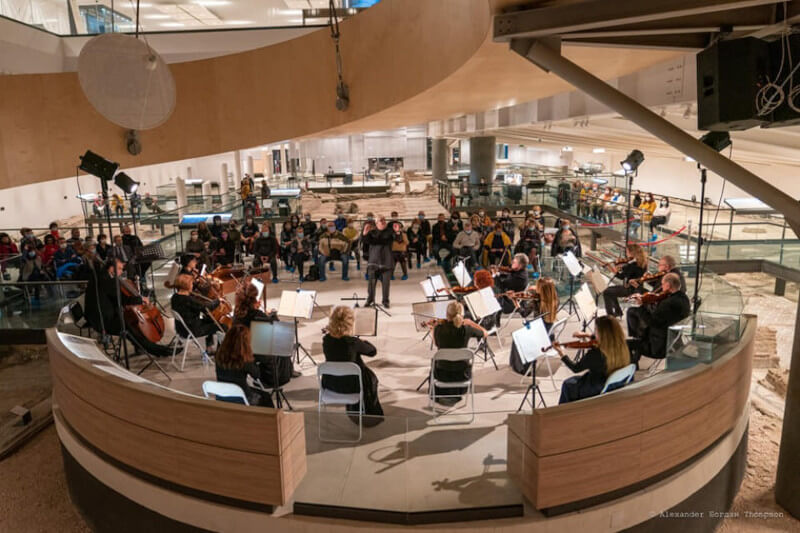
Photo: Basilica Facebook page
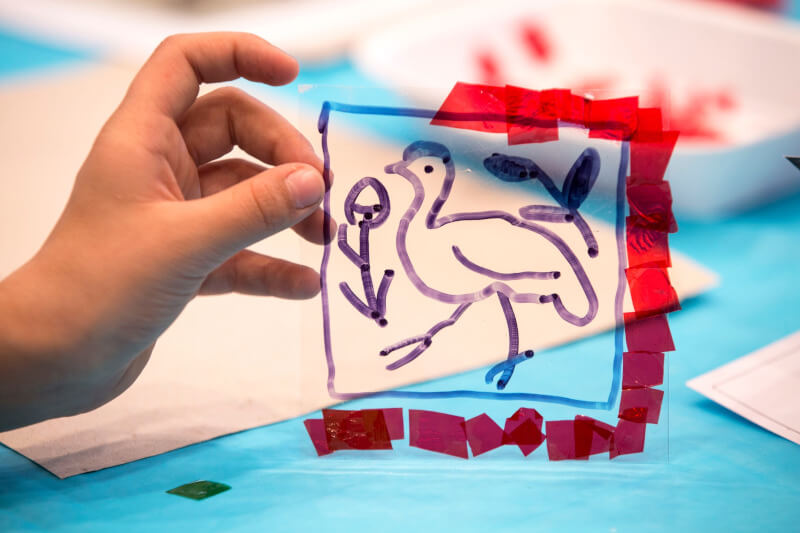
Photo: Basilica Facebook page
The birds that built a community
There is something about the Basilica’s birds.
They don’t feel like artifacts accompanied by dry labels. They have character. Motion. Presence. One lunges forward. Another searches for food. A third feeds its young. A fourth keeps watch. They are fixed in place, yet somehow not still.
Maybe that’s why people remember them.
In antiquity, birds were held in special regard. In Philippopolis, parrots, guinea fowl, pheasants, and mallards moved freely, while the peacock was a symbol of status. In Christian imagery, their meaning deepened: birds evoked paradise, and the peacock came to symbolize immortality.
It’s no coincidence that a peacock, tail fully spread, greets visitors at the Basilica’s entrance.
In 2018, a group of engaged citizens and business leaders founded the Friends of the Basilica – Plovdiv. Their first initiative was simple and effective: an “Adopt A Bird” campaign. Individuals and companies choose a bird from the mosaics and support it through a donation, helping fund the Basilica’s ongoing cultural and educational work for children.
Today, the Friends number in the hundreds.
This isn’t just support; it’s participation. A way for the site to keep living not only as history, but as part of the present. And perhaps that’s the most remarkable part of the story: these ancient images have become the point around which a modern community has formed.
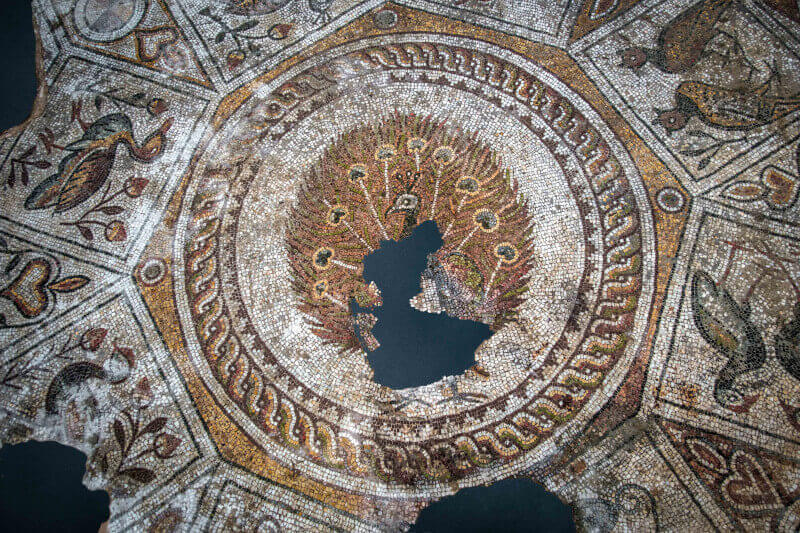
Photo: Anthony Georgieff
When a place becomes global
Every major story about cultural heritage ends with the same question: what comes next?
For the Bishop’s Basilica, the answer is coming into focus.
In 2018, a group nomination—“The Bishop’s Basilica and Late Antique Mosaics of Philippopolis, Roman Province of Thrace”—was added to UNESCO’s Tentative List. It includes three sites: the Bishop’s Basilica, the Small Basilica, and the Late Antique building known as “Irene.” Together, they represent a distinctive mosaic tradition from the 4th to 6th centuries.
That collective approach matters. Because the value here isn’t just in a single building, however impressive. It lies in a broader ensemble: a story of a city, an artistic language, a religious shift, a way of organizing society, a level of skill and taste. The Small Basilica, for instance, preserves a unique cross-shaped baptismal pool—the only one of its kind found in Bulgaria so far.
Together, these sites don’t just document the past. They bring an entire cultural world into view.
UNESCO is not a decorative label at the end of a good story. At its best, it recognizes places whose significance reaches beyond local pride or national borders—places that belong to the shared heritage of humanity.
The Bishop’s Basilica makes a strong case.
Because of its scale. Its extraordinary mosaics. Its place among the early monumental churches that emerged after Christianity was legalized. Its layered history. And the way it is presented and lived in today.
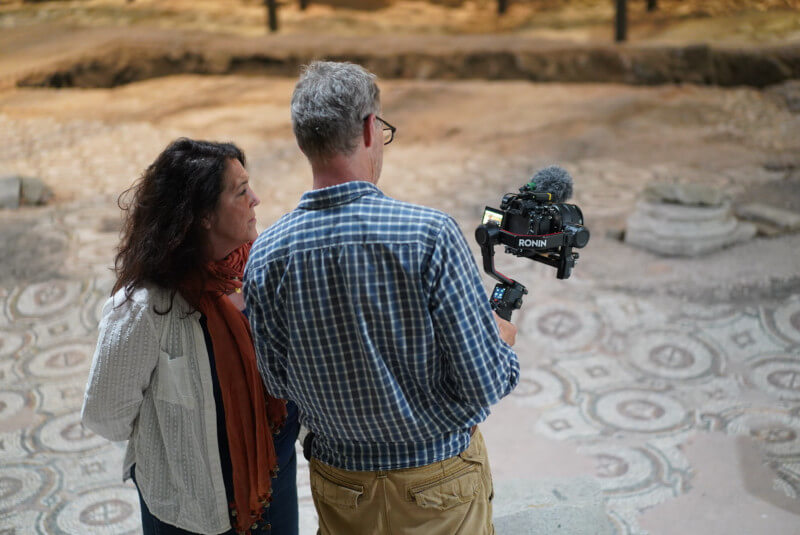
Recognition has already begun to follow. The site received Bulgaria’s Building of the Year award in 2020 in the category of Culture and Historical Heritage, and it has been nominated for the SHARE Architecture Awards in 2024. It also features in historian and broadcaster Bettany Hughes’s documentary series Treasures of the World, introducing it to a global audience.
When a place can speak to scholars, tourists, local residents, and international visitors alike, it has already outgrown its birthplace.
In 2026, Bulgaria marks 70 years of membership in UNESCO. On May 16, the Basilica will celebrate five years since reopening. It’s a moment for celebration, but also for clarity.
This isn’t about ambition. It’s a natural next step.
Because the hardest part is already done. The site has survived collapse, neglect, scarcity, and delay. It has been uncovered, covered again, nearly lost, and then painstakingly restored, stone by stone. Built by ancient craftsmen, studied by archeologists, restored by conservationists, supported by institutions, businesses, donors, volunteers, and workers.
Today, it stands in the heart of Plovdiv not as a frozen monument, but as living proof: cultural heritage can be local and global, ancient and present, fragile and resilient—all at once.
Sometimes a city digs a tunnel and finds its past. More rarely, it finds its future.
The Bishop’s Basilica of Philippopolis is that kind of place.
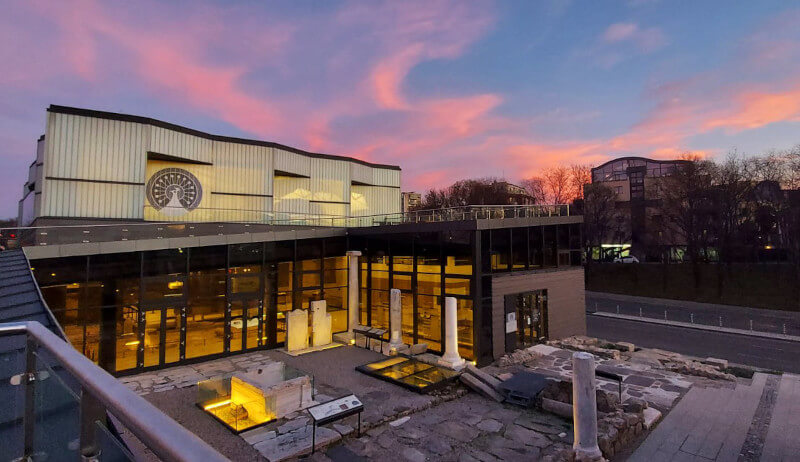
Photo: Basilica Facebook page