Listen to this story on Spotify:
From Chiprovtsi carpets and Torlak mysteries to the first history of Bulgaria, the Chiprovtsi History Museum gathers the many threads of a town that keeps surprising visitors.
In Chiprovtsi, the road to history leads uphill. The town’s history museum sits on a hill, as if to suggest that the past here is not tucked away from daily life. It stands high, visible, and waiting to be told.
From that hill, Chiprovtsi looks like more than a small town in northwestern Bulgaria. It looks like a place with an unusually long memory. Roman roads, legends of Thracian sanctuaries, Catholic scholarship, goldsmithing, carpet weaving, uprisings, schools, family stories, and patterns that still fascinate people far beyond Bulgaria all meet here.
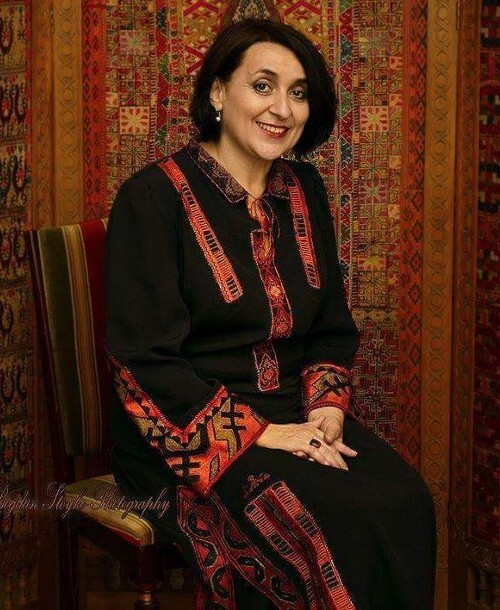
For ethnographer Anita Komitska, director of the Chiprovtsi History Museum since 2017, that memory is not a reason for self-congratulation. It is a responsibility.
“For years, people did not speak about the glory and grandeur of Chiprovtsi’s seventeenth century,” she says. Then she recalls the words of the seventeenth-century scholar Petar Bogdan, who called Chiprovtsi “the Flower of Bulgaria.”
He had reason to.
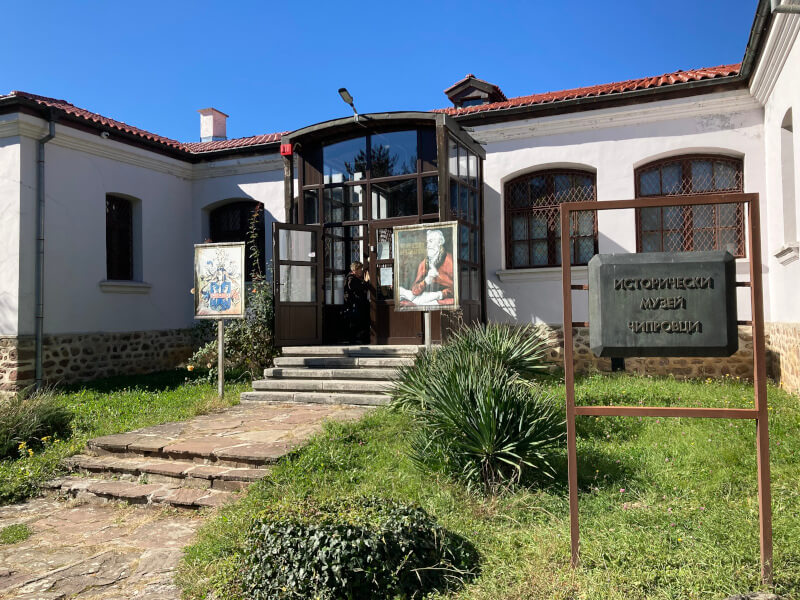
In the seventeenth century, Chiprovtsi was the seat of the Catholic Archdiocese of Sofia and one of the most important Catholic centers in the Bulgarian lands. Young people from the town went to study in Italy and returned as clergy, thinkers, and writers. The first secular Bulgarian school was founded here. And here, in 1667, Petar Bogdan wrote On the Antiquity of the Fatherland and the Bulgarian Affairs, considered the first history of Bulgaria. For centuries, Orthodox Christians and Catholics lived side by side in the town—a quiet but powerful Bulgarian story that is still not told often enough.
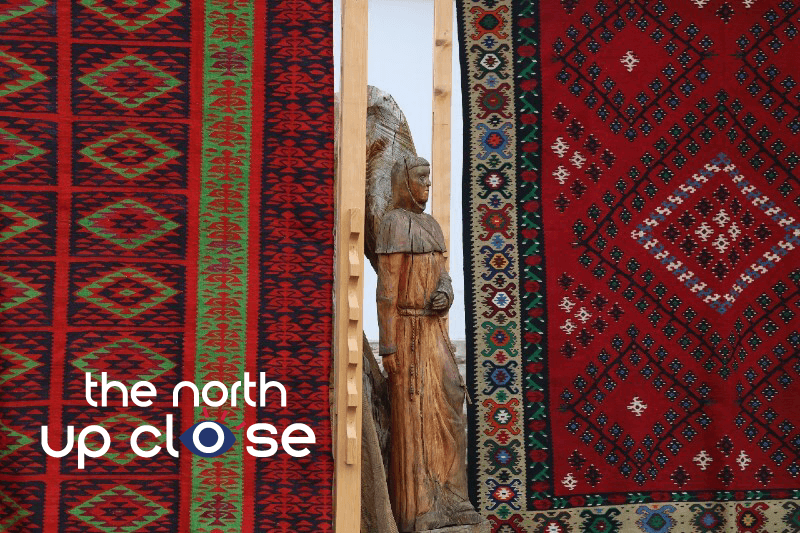
And yet the most recognizable language of Chiprovtsi remains the carpet.
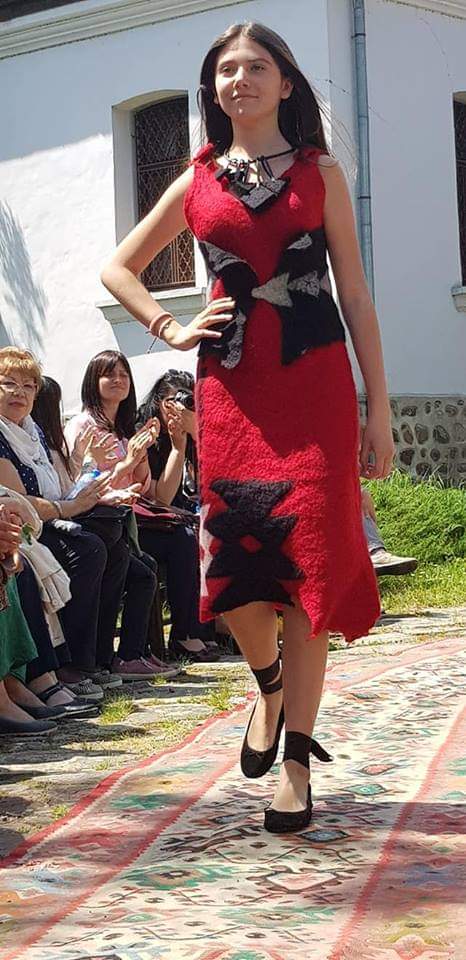
In 2014, the tradition of making Chiprovtsi carpets was added to UNESCO’s Representative List of the Intangible Cultural Heritage of Humanity. For the museum, however, that recognition is not a pretty plaque on the wall. It is work: preservation, exhibitions, research, workshops, publications, and conversations with visitors who want to understand why these patterns carry such force.
The origin of the Chiprovtsi carpet remains a puzzle. One theory links it to the Thracian heritage of the Triballi, the ancient people who once inhabited these lands. Another sees it as part of the heritage of the early Bulgars, who came from Asia, pointing to similarities in technique and ornament with carpets from Central Asia and the Caucasus. The two theories also lead to the Torlaks, the local ethnographic group whose origins are still debated: do they carry a stronger Thracian trace, or an early Bulgar one? Komitska calls it “an open question still waiting for its answer.”
Questions like these make the museum much more than a home for valuable objects. It is a cultural gathering place for the town and the region, a place where old subjects remain very much alive. Its renewed exhibitions, ethnographic collection, educational center, weaving workshops, museum shop, concerts, exhibitions, and public events have turned the historic hill into one of the liveliest places in Chiprovtsi.
You may come to the museum to see carpets. But you may also stumble upon a conversation about Petar Bogdan, a concert among the remains of the old Catholic cathedral, an exhibition, a workshop, or a souvenir with a Chiprovtsi motif that carries a small piece of the town into someone’s home.
The 2026 program is again full: from a memorial gathering for writer Rosi Antov and a chamber concert by the Vidin Philharmonic to exhibitions of woodcarving, painting, and posters from museum events over the past ten years. With support from the America for Bulgaria Foundation, the museum shop was created as well; its proceeds help the institution develop new programs and activities.
Perhaps this is why the Chiprovtsi History Museum matters so deeply to the town. It does not keep the past like a locked room. It opens it. It invites people in, encourages them to ask questions, to touch the threads, to look up toward the hill, and to leave with the feeling that Chiprovtsi has yet to claim the place it deserves in Bulgaria’s memory.