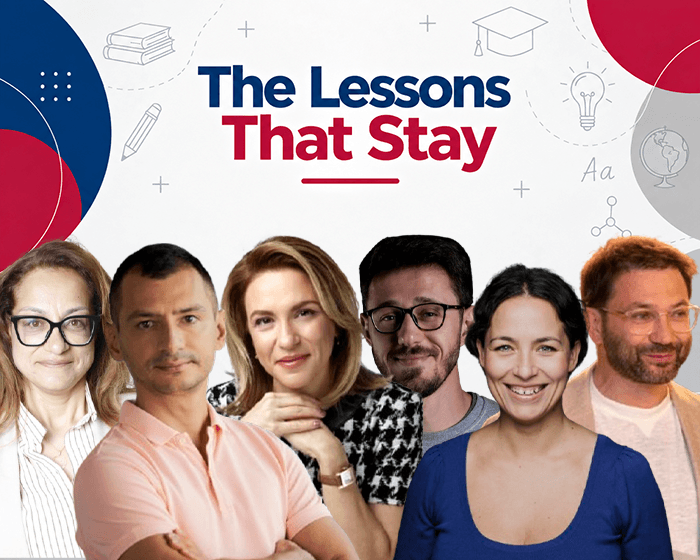
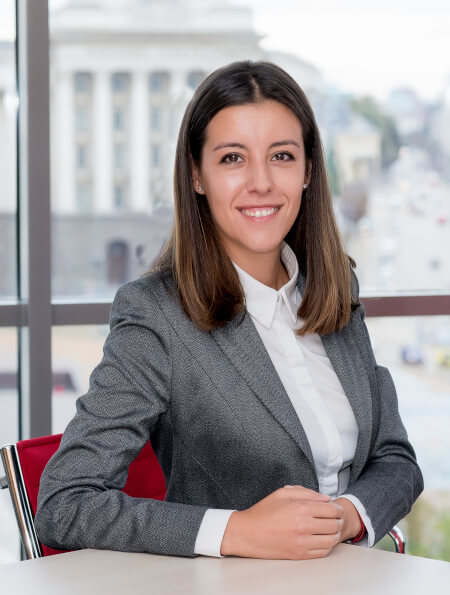
Martina Koleva, Desislava Gospodinova, and Marina Georgieva spend their days working with international companies and multimillion-dollar investments. In Teenovator, they invest something just as valuable—time and experience in the next generation of entrepreneurs.

One day, Desislava’s son came home from a meeting with his mentor and shared something that made her smile.
“He explained something really important to me,” he said.
Something she had been telling him for years.
The difference was that this time, he heard it.
That moment stayed with her. It reminded her how powerful an outside voice can be, especially for a young person still figuring out who they are and where they’re going. Later, that realization led her to Teenovator, a Bulgarian program where high school sophomores and juniors develop business ideas with the help of mentors from the business world.
Today, Desislava runs a venture capital fund and works with startups chasing the next big idea. But once a week her conversations shift back to a much earlier stage, where ideas are still fragile and the people behind them are teenagers with more questions than answers.
This year she is joined by Martina Koleva and Marina Georgieva among Teenovator’s ninety mentors guiding students through their first steps in entrepreneurship. Like Desislava, both women spend their professional lives discussing investments, business strategies, and new ventures. In Teenovator, however, they begin at the very start, where the questions are simpler but often more important.
How do you know if an idea is good?
What problem are you trying to solve?
And can you solve it together?
Mentorship: an old idea with new energy
The word mentorship may sound trendy, but the idea itself is ancient. Every community has always had people outside the family who help younger generations find their way. Teachers. Coaches. Older colleagues.
“To achieve anything, you need many different mentors in your life,” Desislava says. “Different people give you different perspectives.”
For her, that belief comes from experience. She began her career in the technology sector and spent more than a decade in global companies before launching an investment fund with partners. Today she works with entrepreneurs building new companies, often at their earliest and most uncertain stage.
“A big part of my job is already about working with people who are starting companies,” she says. “In Teenovator, I simply do it with younger founders.”
The age of the participants changes the conversation in one crucial way. Instead of funding rounds or growth strategies, the discussions often begin with more fundamental questions. Why do you want to build something in the first place? What motivates you?
“One of my goals is to teach them not to be afraid to try,” Desislava says. “Teenovator gives them a mindset. You can try. It may work, or it may fail. And that’s normal.”
A place where it’s okay to let go
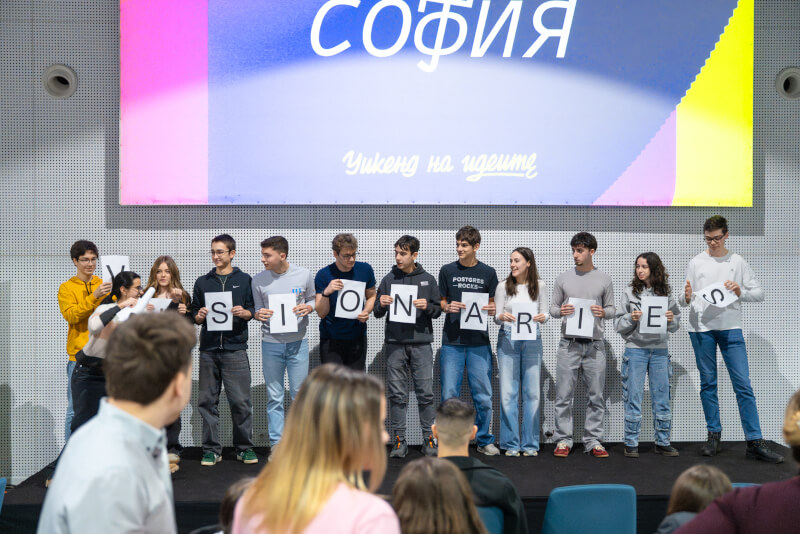
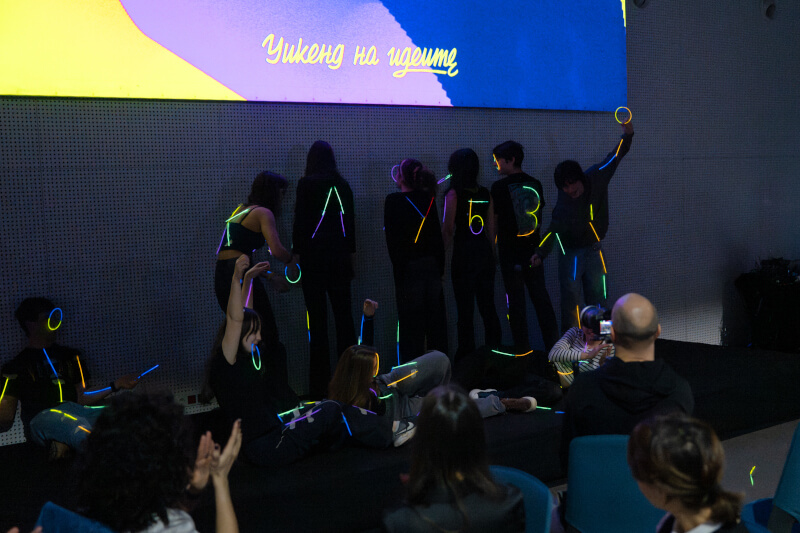
In Teenovator, students and mentors work together throughout the school year. The first meetings are less about building businesses and more about getting to know one another. There are team exercises, conversations, and plenty of idea sharing. Gradually teams form and the first projects begin to take shape.
And sometimes the original idea changes completely.
In Martina Koleva’s group, students first discussed creating a platform for alternative music. Then they explored an idea that used game mechanics to encourage people to care for the environment. Eventually they settled on a project that helps households save electricity.
“That’s part of the process,” Martina says. “Sometimes the most important decision is letting go of your first idea.”

She knows something about changing direction. Her career began in polymer manufacturing. Later she worked for companies such as Shell Bulgaria and Studio Moderna. Today she is building ventures at the intersection of entrepreneurship, culture, and the arts.
Her education reflects that mix: history at Sofia University and art history at the National Academy of Arts.
“That contrast always pushed me to look for the connection between ideas and reality,” she says. “Business shows you how an idea becomes something real.”
That is what she hopes students discover in Teenovator. Not a formula for success, but a habit of mind.
“The drive to keep learning new things and building new skills is the most important thing you can develop,” she says.
Thinking like an entrepreneur
Entrepreneurship in school is not simply a business exercise.
It is a form of practical education. Students learn how ideas emerge, how they are tested, and how they can evolve into real solutions.
But it is also something deeper.
Entrepreneurial thinking begins with a simple question: could the world around me be different?
Many student ideas begin there. Something in their city bothers them. Something in everyday life does not work well. And they start asking how it might be improved.
“We talk about what troubles them in society and how they could make it better,” Martina says. “It’s important that they believe change can start with them.”
From an idea to a shared project
One theme inevitably appears in almost every meeting: collaboration.
Many students arrive with an idea they came up with alone. Very quickly they discover that turning it into reality requires other people.
“In life, no one accomplishes big things alone,” Desislava says.
So their conversations become practical: How do you choose a team leader? How do you divide responsibilities? How do you make decisions? What happens when someone does not do their part?
“Labels do not define people, but they have their role and purpose,” Desislava says. “It matters that everyone knows who is responsible for what.”
These questions are familiar to Marina Georgieva. In her work, she advises companies at exactly these moments—when they must make critical decisions about shifting their business strategy, navigate transformations such as mergers and acquisitions, or find the right financial partners.
But her first lesson about collaboration came much earlier.
As a student at the National Trade and Banking High School in Sofia, Marina helped create a student-run company, a bank managed entirely by teenagers.
“It was incredibly challenging, but we learned so much,” she remembers.
The project later earned her the school’s “Banker of the Year” award. She is quick to point out that the recognition was never about one person. It was the result of many people working together.
Today she sees the same process unfolding in Teenovator, as early ideas slowly evolve into shared projects and students discover what it means to build something as a group.
Time is the most valuable investment
Everyone involved in programs like Teenovator knows one thing: mentorship takes time.
A lot of time.
The meetings happen every week. Outside them, mentors prepare sessions, talk to experts, and sometimes help students find suppliers or partners who can turn an idea into a prototype.
So why do they keep coming back?
The answers sound surprisingly similar.
“It gives me a lot of energy,” Desislava says.
“Teenovator makes me feel useful and hopeful about the future and about young people,” Marina adds.
For Martina, the meetings mean something else as well.
“All of us want to feel part of a community,” she says.
No one succeeds alone
Entrepreneurship is often told as a story about exceptional individuals. Visionaries. Bold leaders. People who seem to change the world on their own.
But reality rarely works that way.
“I don’t believe anyone succeeds alone,” Marina says. “You always need people. Knowledge. Experience. A team.”
That is the lesson these mentors try to pass on to their students. Success is rarely a solo
achievement. More often it grows out of conversations, mistakes, second attempts, and the quiet support of people who choose to invest their time in someone else’s journey.
Sometimes it starts with an idea.
Sometimes with a question.
And sometimes it begins with something even simpler: someone willing to sit down beside you and say,
“Let’s figure this out together.”
Teenovator works with the long-term support of the America for Bulgaria Foundation.