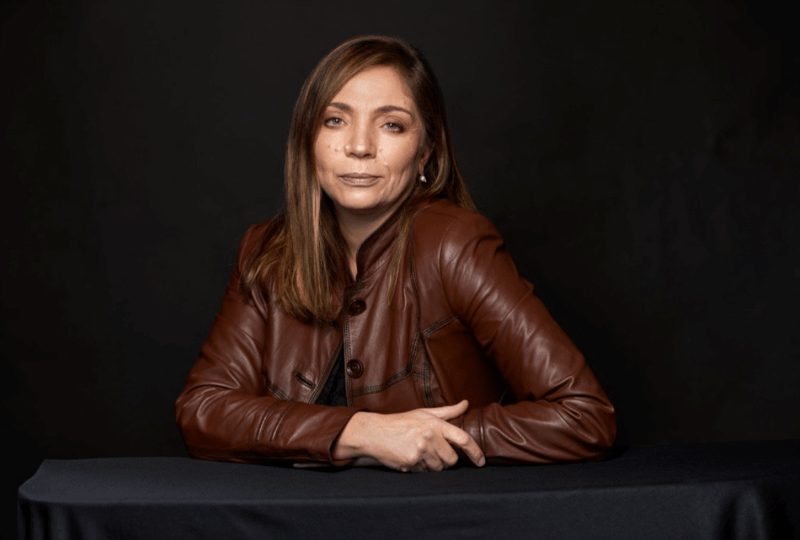
Early in her professional career, Vanya Manova saw up close how banking and payment systems work—and how many people rely on them every single day. That experience shaped a clear conviction: technology only matters when it makes real life easier.
Today, Ms. Manova is Regional Manager at Mastercard for Bulgaria, North Macedonia, Albania, and Kosovo, a company many people associate simply with the card in their wallet, but which in fact stands behind the technology, partnerships, and infrastructure that make everyday payments possible.
In Bulgaria, that translates into very tangible things: being able to pay for a taxi by card, buying your child’s school lunch online, receiving cash back for going out to dinner with friends, or supporting a cause with a single click. Small actions that make everyday life just a little easier.
In this conversation, Vanya Manova discusses personalization as a key driver of technological progress, partnerships as the foundation of meaningful impact, and civic responsibility at every level, from business leadership to education at home.
America for Bulgaria Foundation: You are Regional Manager at Mastercard for Bulgaria, North Macedonia, Albania, and Kosovo. What does this role look like in practice?
Vanya Manova: In practical terms, we have an office in Sofia with a team of over 20 people, but we work across several very different markets, all at different stages of development. That requires a global approach combined with a very clear understanding of local context. There is no universal solution that works everywhere.
What matters is making Mastercard’s global expertise accessible to each specific market, adapted to its particular realities.
In recent years, our focus has shifted from selling products to offering solutions. We always put the customer at the center. Our approach to partners is personalized because every partner is different. Even two banks will have different priorities and strategies.
That’s why there can’t be a single, universal solution. Our approach adapts to the specific market, the specific partner, and the specific need. This applies both to large clients and to small and very small merchants, including those who have never worked with electronic payments before.
ABF: When you work across so many different markets, what does the work itself teach you?
V.M.: That not being among the first is not necessarily a disadvantage. On the contrary, it can be an advantage. Markets like Albania and Kosovo today are roughly where Bulgaria was about ten years ago in terms of electronic payments. That gives them the opportunity to skip mistakes others have already made.
The same was true in Bulgaria. We were not among first adopters either, but when new technologies emerged, we were ready to implement them directly. I believe that any “lag” can be turned into an opportunity if it’s used wisely.
ABF: Is there something in your daily work that makes you think not only as a manager, but also as a citizen and a parent?
V.M.: Constantly. I believe that business leaders are people first. We live in this environment; our children grow up here. I strongly believe that environment matters enormously, perhaps even more than DNA or talent.
That’s why I believe in building communities with clear goals. Their influence is far greater than we often realize.
ABF: Was there a personal moment that made you stop and think, “This shouldn’t be this way. There must be a better solution”?
V.M.: Yes. That’s how the idea for the digital school meal system was born. It’s not important to solve a problem only for your own child. If you have that problem, others certainly do, too.
In my case, I wasn’t able to solve it immediately for my own children, but that doesn’t make me any less satisfied that the system first launched at Acad. Mihail Arnaudov School, Sofia’s 119th, then expanded, and is now used in other schools as well.
Big changes happen through many small steps. The key is choosing them well and taking them consistently.
ABF: What exactly did this system change?
V.M.: Not just the queues for paper meal vouchers or the inconvenience of a child forgetting their voucher at home. If a child is sick, you can easily shift that meal to another day with one click. You can buy a meal at any time of day. You can see whether the child has eaten, when they ate, and whether the meal was checked in.
Yes, it costs money. But the real question is what you get in return.
ABF: In the February issue of our newsletter, we focus on food, bees, and sustainable livelihoods. Why are these topics important to you and to Mastercard?
V.M.: Because people cannot live without food. But food is not just physiology; it has emotional, social, and economic dimensions.
Good food affects health, mood, and relationships between people. It brings people together, creates communities, and provides livelihoods.
We focus on things that truly matter to people and that ultimately have a positive emotional impact. Because in an age dominated by technology, there is something we must pay particular attention to, and that is what will continue to distinguish us from machines: humanity and the human factor.
Our work on food goes much further than that. We collaborate with JRE – Jeunes Restaurateurs, an international association of young chefs and restaurant owners, and we support young people on their path to becoming nutrition professionals, because we believe that knowledge about food and health is essential.
Together with United Bulgarian Bank, we also run a campaign focused on water, because food and water cannot be considered separately. These are fundamental issues that affect all of us and have a direct impact on quality of life.
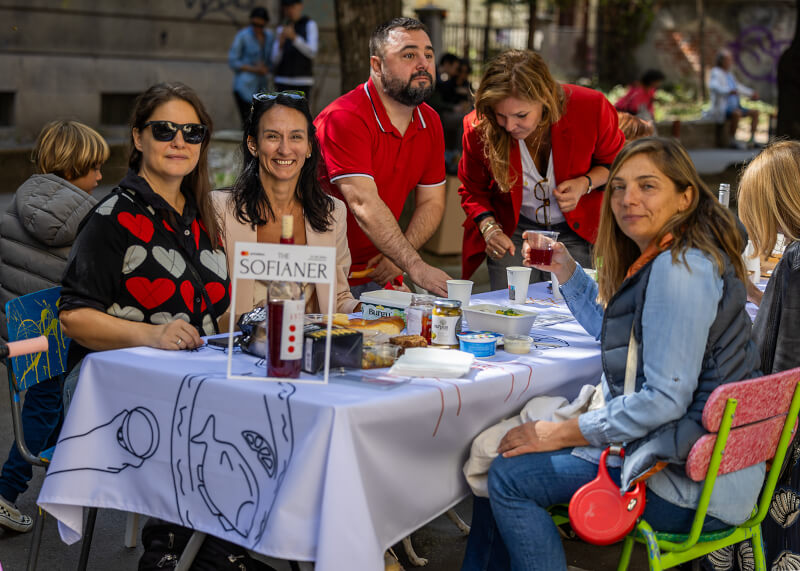
ABF: Initiatives like Together We Create Something Priceless, which work with small businesses in Sofia’s Small Five Corners neighborhood, are sometimes seen as marketing campaigns. What’s the thinking behind them?
V.M.: We are not looking only for commercial effect. Supporting small businesses means shining a light on them: giving them visibility, bringing in people beyond their usual circle of customers, helping them be recognized.
Small Five Corners is a very telling example. There is a tightknit community of neighbors and small businesses there. Together We Create Something Priceless started precisely from this idea, bringing people, businesses, and causes together around something meaningful.
What’s very important to us is that none of this happens in isolation. We work through partnerships—with neighborhood businesses, NGOs, and local communities. When partnerships exist, all parties must be equally committed; otherwise, the impact remains superficial.
Through this initiative, we also supported environmental causes, including fundraising for WWF’s bear response team. Small neighborhood businesses actively took part and showed that when community, business, and cause work together, the effect is far greater than the sum of individual efforts.
ABF: How can business encourage a culture of giving?
V.M.: By making it easy and by working with the right partners. A good example is our December 2 initiative last year, which offered 10% cashback on donations made through DMS and Platformata.bg.
When giving is easy, part of everyday life, and supported by trusted partners, many more people are willing to take part.
ABF: Mastercard Day is also part of this logic. How does it work?
V.M.: Mastercard Day started as a once-a-month initiative, offering 10% cashback for Mastercard payments at small food businesses—restaurants, bars, bakeries, pastry shops.
People enjoy going out and spending time together. When you add this kind of incentive, even unconsciously, they start meeting more often. My daughter, for example, has a small group of friends who turned it into a tradition to meet on the first day of each month, so they can go out a bit more affordably and, at the same time, simply spend time together.
Last year, we decided to make the campaign weekly, every Tuesday. The reason is very practical: many small places are closed on Mondays, and Tuesdays tend to be quieter. With one small adjustment, we support businesses on their weakest day.
We don’t invest in large advertising campaigns. We invest in the businesses themselves; they become our communication channel. This brings them additional revenue, greater visibility, and more direct contact with customers. With one initiative, the impact spreads across many different participants.
ABF: How do these initiatives affect your team?
V.M.: People have started to recognize us as a company that does meaningful things. I hear this often: “Mastercard does really cool things.” For me, that is a huge source of satisfaction.
Inspiring someone to want to be part of what you do—there is no greater recognition than that.
ABF: To do work like this, you clearly need the right people. What qualities do you look for in your team?
V.M.: Curious, brave, adaptable people with an entrepreneurial mindset. Not narrow specialists, but people who can choose the right solution for the specific context.
For me, adaptability is key. The world is changing extremely fast, and the ability to change along with it will become increasingly important. You can’t work with yesterday’s solutions in today’s reality.
It’s also important for people to have what we call a winning mindset. That doesn’t mean focusing only on financial results. It means having the attitude to look for solutions, take responsibility, and keep moving forward.
There’s one more crucial thing: people need to be informed, to know what’s happening around them, to be open to the world. This goes hand in hand with entrepreneurial thinking, courage, and curiosity.
I try to stay informed myself, and that’s what I tell my son as well. This year he has a subject called Civic Education. When I saw the curriculum, I was genuinely happy. The topics, materials, and links were extremely well prepared.
I told him: “Please pay attention to this subject. Whatever you do in life, it’s important to be a full, engaged citizen.” That’s not abstract. It’s how we live together.
Personal example matters a lot. I don’t tell people what to do. I expect responsibility and awareness.
ABF: As a citizen, what concerns you most today?
V.M.: Disinformation. It’s a problem we still don’t address seriously enough. Just as we learned to recognize phone scams, we need to learn to recognize fake news.
This is a matter of digital hygiene and civic responsibility.
ABF: Does business underestimate its role in society?
V.M.: No, on the contrary. Business understands its role very well, especially in recent years. Large companies today have not only financial goals, but also goals related to positive social impact.
We measure our success precisely through that impact. We always look for the positive effect of what we do, not simply implementing a project because it’s a corporate objective, but prioritizing initiatives that genuinely matter to more people.
Our company motto is Doing well by doing good. While we do our job well and achieve our financial goals, we also have the opportunity to address concrete issues and contribute to positive change.
ABF: When you look to the future, what do you see as most important for both business and social initiatives?
V.M.: Personalization. Understanding that there are no universal solutions, and that different people, communities, and markets have different needs.
We’ve been working with artificial intelligence for many years, long before the term itself became common. We’ve always used data and algorithms to make better decisions and to approach each context differently.
Today, we simply talk about this in a different way. Artificial intelligence helps us make personalization much more precise—understanding needs better, making more informed decisions, and directing efforts where they truly matter.
The question is not whether we will use artificial intelligence, but how. It should not replace us but help us think better and make more accurate decisions, in business and in how we support causes.