An empire beneath the grass
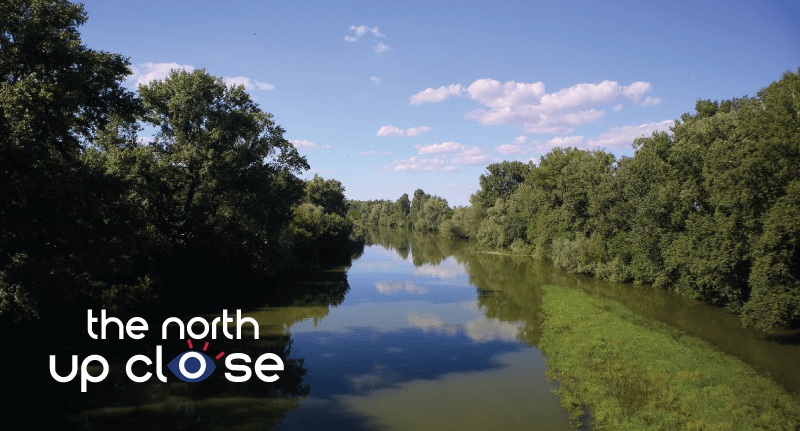
About an hour north of Pleven, near the point where the Iskar River meets the Danube, lies the village of Gigen. Two rivers shape the landscape here: the broad, unhurried Danube and the more restless Iskar, which gradually slows its pace as it approaches the larger river. A few streets. Single-story houses. Gardens tucked behind thick greenery and weathered fences. A quiet Danube village.
It’s hard to imagine that this unassuming place was once home to Ulpia Oescus, one of the most important Roman cities along the lower Danube frontier.
From here began Constantine’s Bridge, an engineering marvel of the ancient world stretching more than two kilometers across the river and linking the two banks of the Roman Empire. In 328 CE, Emperor Constantine the Great himself came to inaugurate it, an extraordinary moment when the ruler of the empire traveled to this distant frontier to celebrate one of the most ambitious construction projects of his age.
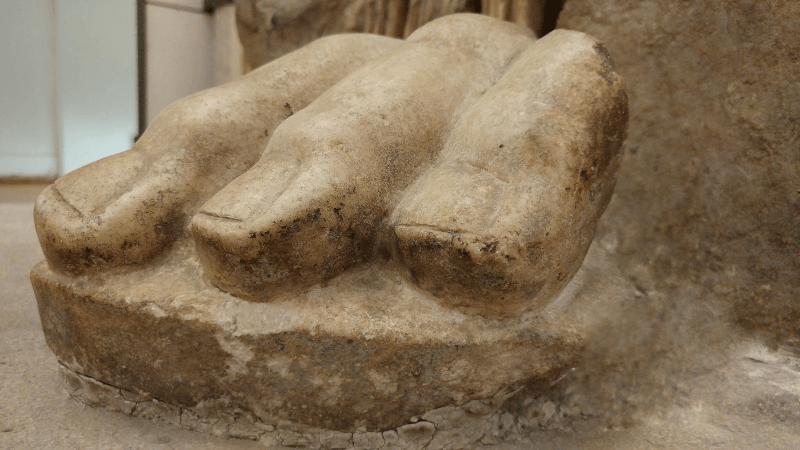
Oescus also yielded one of Bulgaria’s most remarkable ancient discoveries: a nearly ten-foot marble statue from the second century, likely depicting a goddess. Today it stands in a museum in Sofia, but it was unearthed right here, in the fields near Gigen.
About 1,500 people live in the village today. The ruins of Oescus lie low and scattered across the plain, while the Danube continues its calm journey toward the Black Sea, much as it did two thousand years ago.
The great Roman city has vanished. But the place still carries a sense of scale.
The people who keep the region alive
Head back toward Pleven, and the landscape begins to change. The Pleven Heights rise gently along the horizon, and between them lie villages, farms, and yards where the day unfolds in work and care for the land.
In the village of Orehovitsa, a century-old mill has begun turning again, one of the rare places where you can still follow the journey from grain to flour. A little farther on, the Patovi family opens the gates of their apiary to visitors, showing how life unfolds inside the beehives before leading guests to a small workshop where candles take shape from beeswax.
In Riben, Lambev Farm produces cheese and traditional Bulgarian kashkaval from milk sourced entirely from their own herd. In Petarnitsa, the Haralambiev family pours wines from vineyards around the nearby villages of Petarnitsa, Sadovets, and Gorni Dabnik, including Kaylashki Misket, a nearly forgotten local grape variety that is finding new life here.
There are other encounters along the way. In Gostilya, locals keep alive the traditions of the Banat Bulgarians—whose ancestors migrated centuries ago to Central Europe and later returned—serving homemade pastries called treskicheta, sharing traditional costumes, and chatting in their distinctive Banat dialect.
In the village of Baykal, perched on the Danube’s bank, the local community center hosts riverside picnics—tables laid with cheeses and homemade delicacies, accompanied by the natural soundtrack of birdsong drifting from the wetlands.
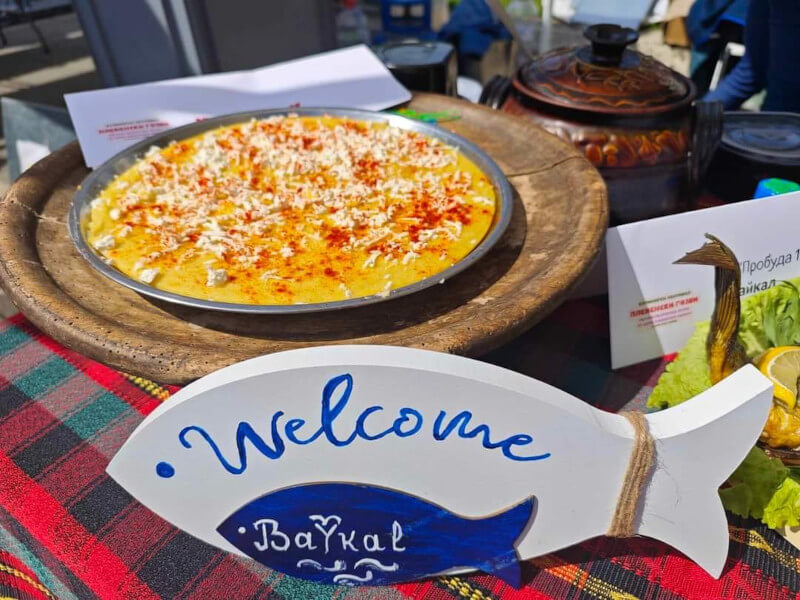
Many of these experiences can be discovered through pendara.bg, a platform that brings together local producers, farm visits, tastings, and meetings with the people who host travelers in the region. Behind this network stands the work of the Local Action Group Dolna Mitropolia–Dolni Dabnik, which supports local entrepreneurs and encourages small communities to preserve and develop their traditions.
Each point on this map has a face behind it. People who have chosen to stay. People who invest their savings here. People who give a neighbor a job or bring life back to buildings that might otherwise stand empty.
From these efforts something larger slowly takes shape, something beyond individual businesses.
A region that is learning to breathe again.
The major and the lilies
On the main highway between Sofia and Ruse, not far from Pleven, there’s a place where drivers instinctively slow down. First you notice the water. Then the colors. Lilies.
It all began as a hobby.
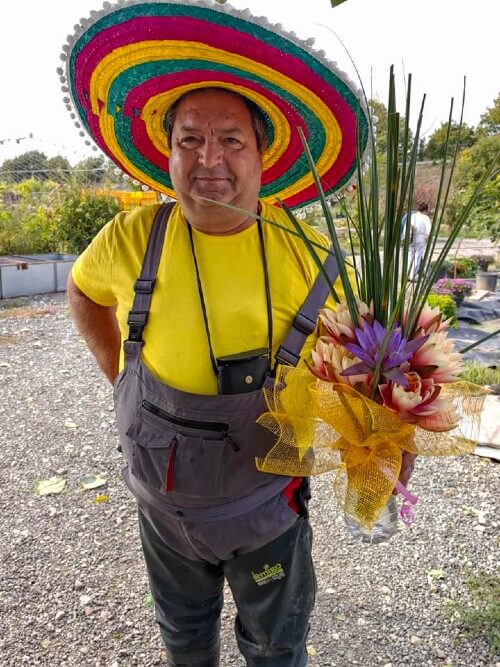
Doychin Vladimirov spent more than twenty-five years as an officer in the Bulgarian army. His work often involved streamlining systems—finding order in chaos so that things would function more smoothly. Those skills, however, rarely found much room for creative expression.
When he retired about a decade ago, he decided to dig a small pond near Pleven where he could grow his favorite water lilies.
People driving by began to stop. At first out of curiosity, then with questions, and eventually with orders.
The little pond slowly grew into something much larger: today it is the only water-lily farm in Bulgaria, twenty acres of aquatic gardens, more than fifty plant varieties, and visitors who come not just to admire the flowers but to experience the quiet of the place.
Doychin often spends fourteen hours a day working chest-deep in the water. Yet when he talks about the couple who recently got engaged among the lilies, his voice softens.
For some people, retirement marks the end of their professional life.
For this man from Pleven, it turned out to be the beginning.
Kaylaka lives again
Kaylaka Park is getting a second chance as well.
Just minutes from the center of Pleven, a rocky valley carved by the Tuchenitsa River opens into a long green corridor. Cliffs rise on both sides, while the water widens into small lakes. Along the paths, you see families pushing strollers, cyclists gliding past, and fishermen casting lines.
In recent years, the municipality, local businesses, and residents have begun working together to care for the park, maintaining the trails, restoring spaces, and organizing events.
Little by little, the park has filled with people again: for walks, for conversations, for long summer evenings beside the water.
A route that exists because of people
Continue north toward the Danube, and you’ll encounter another story of how small efforts grow into something bigger.
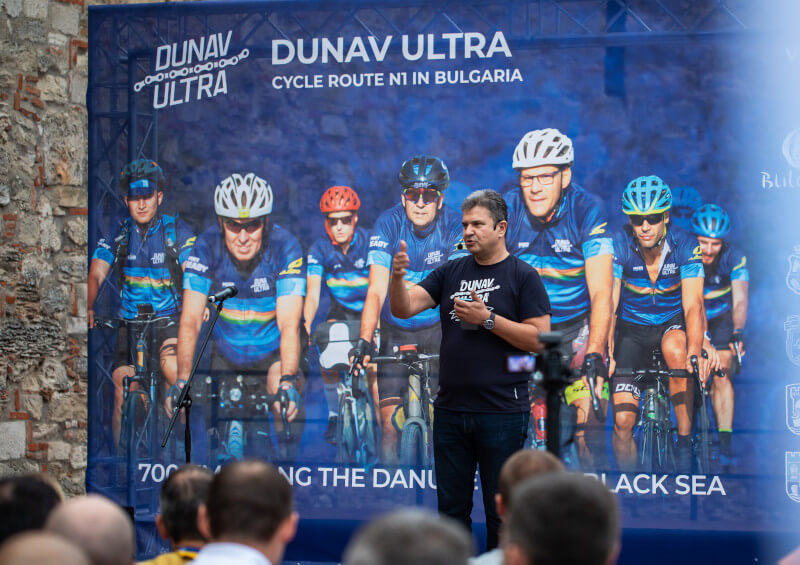
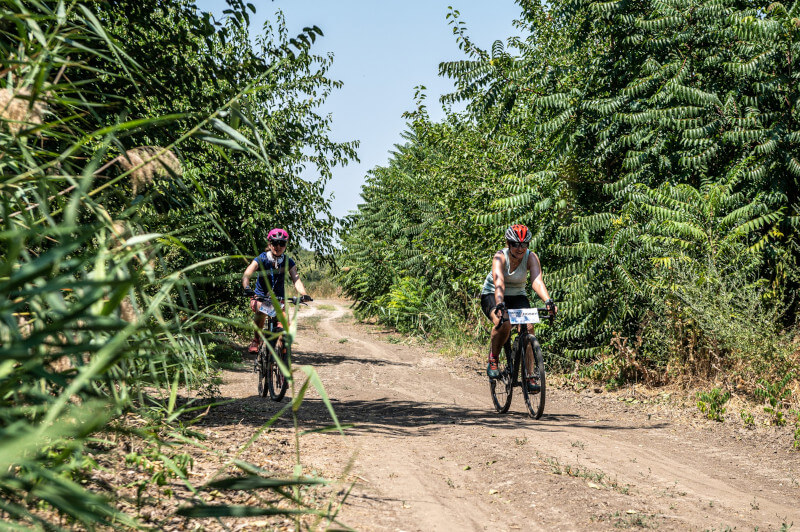
Dunav Ultra is the longest cycling route in Bulgaria, a journey linking Vidin on the western edge of the country with the Black Sea. Each year it draws more cyclists from around the world.
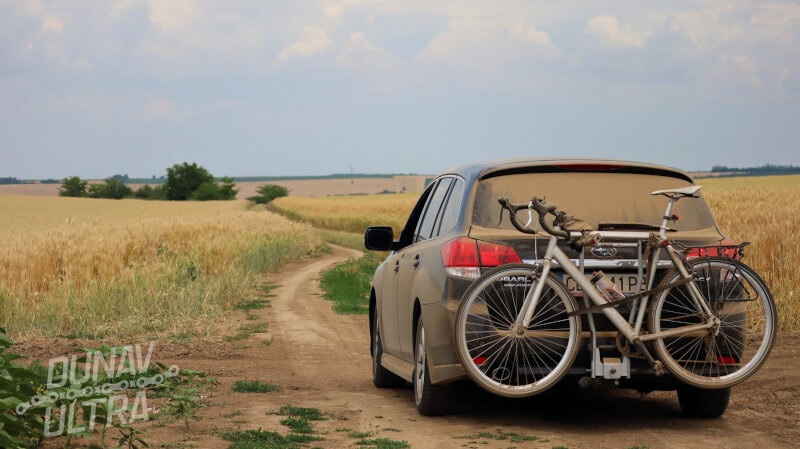
But the route is more than a line on a map. In the Pleven region, the route winds past village yards, family kitchens, small workshops, and countless small acts of hospitality.
You might meet hosts like Uncle Velichko and his wife in Gigen. They’ll offer you a place to stay, pour a glass of homemade wine, and show you one of the most unusual ethnographic collections you’re likely to encounter anywhere.
Along the road, you’ll also notice metal stands equipped with pumps and tools: bike repair stations. In this part of the route, there are hardly any repair shops, so for cyclists they are genuine islands of security. They were installed by Zdravko Vasilev, an engineer from Varna, and placed at key points along the Dunav Ultra.
But for the route to exist at all, someone had to imagine it, connect it, and keep it alive.
That person is Boris Begamov.
For more than fifteen years, the entrepreneur and visionary has traveled from village to village along the Danube, talking with mayors, encouraging hosts, connecting partners, and mapping the Danube Ultra route kilometer by kilometer, person by person.
Not because it is easy. But because he believes this region deserves more.
Cyclists come for the river and the road.
Yet without the people along the way, the route would not exist.
History told through people
The same is true of history. Behind even the largest events stand individual lives.
In Pleven, this human perspective on the past can be felt inside the Regional History Museum.
A new exhibition titled The Soldier in Human Uniform, created by Studio SFERA (part of RISK Electronics) with the support of the America for Bulgaria Foundation, tells the story of Bulgaria’s 1912–1918 wars for national unification in an unusual way.
Not through triumphal marches and victories, but through letters sent home, small personal objects from the front, and delicate artworks made from spent bullet casings. Visitors are invited to trace the journey of the Bulgarian flag as well as the soldiers who risked their lives to keep it from falling into enemy hands.
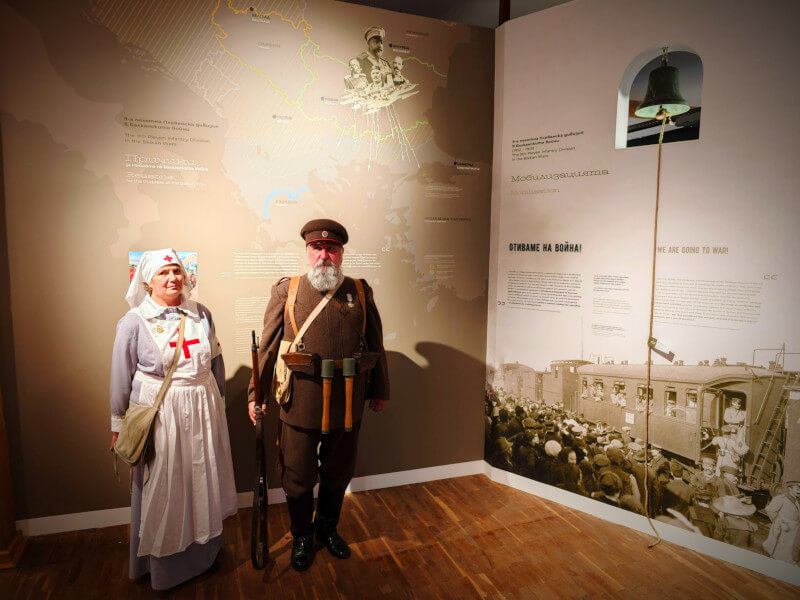
The Pleven Panorama, recently enhanced with sound by the same team, also shifts attention toward the human side of history. Amid the sweeping scenes of the siege of Pleven, individual figures begin to emerge: a wounded soldier, an exhausted medic, a frightened child, small gestures of mercy toward the enemy.
Technology here is not the point. It serves the story.
A place of contrasts
Few people would use the words jungle and Pleven in the same sentence.
Yet between the coastal towns of Belene and Nikopol, the Danube flows past dozens of islands tangled with reeds, vines, and riverside forests. Known as the Nikopol–Belene island group, this area is one of the richest natural habitats in Bulgaria, a wild world of wetlands, animals, and lush vegetation that at times truly feels like a jungle.
It’s no wonder some people call these islands the Bulgarian Maldives.
The best way to explore them is from the water, on a boat weaving between the islands. But you can also wander along paths through vegetation that feels almost tropical. (Just don’t forget insect repellent. In a true Danube jungle, mosquitoes are part of the scenery.)
During Persina by Bike, a cycling event organized by the Dunav Ultra team, visitors can experience the islands this way as well. This year, on June 27–28, the towns of Nikopol and Belene will welcome cyclists with a festive program marking Danube Day, traditionally celebrated on June 29.
Only a few kilometers away stands another place with a very different weight: the Belene labor camp, a symbol of repression during Bulgaria’s communist era.
Today, these two layers exist side by side.
The local community is searching for ways to speak about both. Young people organize music events like Persina Fest. The municipality is developing ideas for nature tourism. And local guide Mihail Marinov often shows visitors the two faces of the place: after a walk through the former camp, he takes them to a bird-watching platform built by the Bulgarian Society for the Protection of Birds, where pelicans, herons, cormorants, spoonbills, and dozens of other species can be seen.
The Belene.Camp platform also allows people from around the world to speak directly with survivors of the camp, not as part of a museum display, but, through the use of AI, as a living conversation about memory and freedom.

The coexistence of nature, history, and the present is not always easy. Yet it is precisely here that the strength of the place becomes visible. Because the Pleven region is not defined only by its past. It is a place where people continue to build businesses, routes, parks, festivals, and new conversations.
And perhaps that is the most striking contrast of all: that between empires, wars, and prison camps, there are always people planting lilies, restoring old mills, installing bicycle stations, and inviting strangers to sit at their table.
In doing so, they are writing the next chapter of Northern Bulgaria.
The America for Bulgaria Foundation supports tourism development in Northwestern Bulgaria and along the Danube. The best way to experience this region is to see it for yourself.