Or reason No. 5 to fall in love with Vidin
Vidin and its surrounding region are not beautiful only because of the river, the mountains, or the rocks.
Its real landscape is made of people.
You find them in the Danube villages, in the Torlak hamlets tucked into the mountains, in the Vlach communities, in the community centers, in courtyards, and in small kitchens where someone has already put a pot on the stove before you have even realized you are being invited in.
Yanina Taneva from the Ideas Factory Association says the region’s greatest treasure is precisely its people. The organization works to preserve cultural heritage in small settlements—but not by locking memories behind museum glass.
“A room with old objects does not make a museum,” Yanina says.
Instead, they bring together local communities with young artists, ethnologists, designers, and researchers. Out of those meetings come restored gathering spaces, digital archives, living installations, and conversations that pull villages back into the present tense.
In the village of Yasen, for example, they created something called a babaphone.
It sounds like an object from a fairy tale, but it is actually an art installation that collects and plays the living stories of local people. Through it, you can hear Severina Alexandrova explaining why, although her real name is Severina, everyone calls her Grandma Mirotka. You can hear the local Vlach dialect, wedding customs narrated by Baba Tanka, or a story about an old analog refrigerator told by Dilyana Angelova. (If you are thinking, Huh? you will need to make your way there to find out more!)
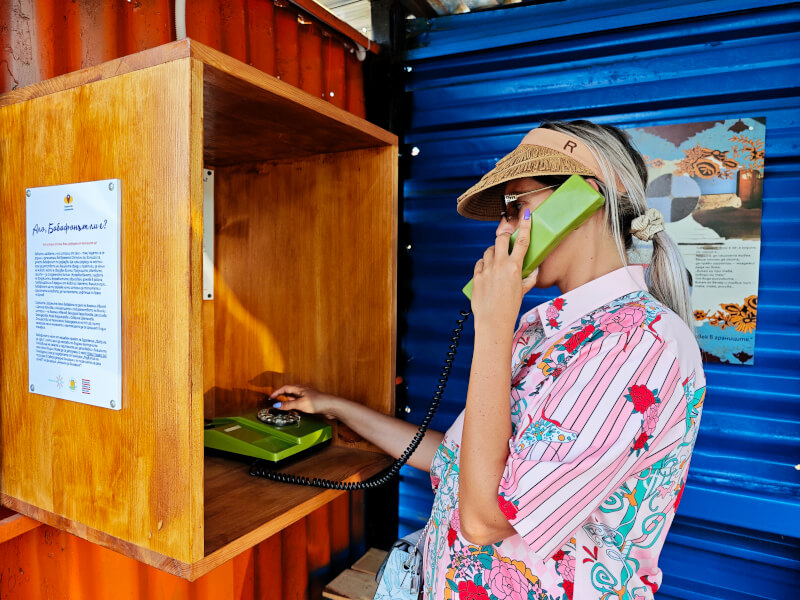
The babaphone is not nostalgia covered in dust. It is a telephone line to a world that is still speaking—if someone is willing to pick up the receiver.
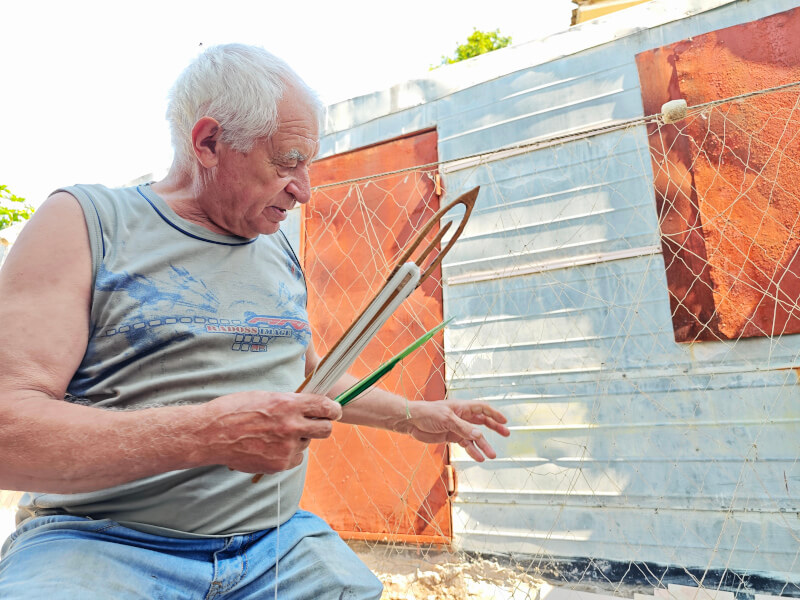
In Koshava, a village sporting some of the Danube’s most breathtaking views, a man named Ventsislav still weaves fishing nets by hand. Knot by knot. Thread by thread.
He is a fisherman and one of the last people preserving the net-weaving craft. Watching his hands work, you begin to realize that the net catches more than fish. It catches time itself. And if no one passes it on, time simply unravels.
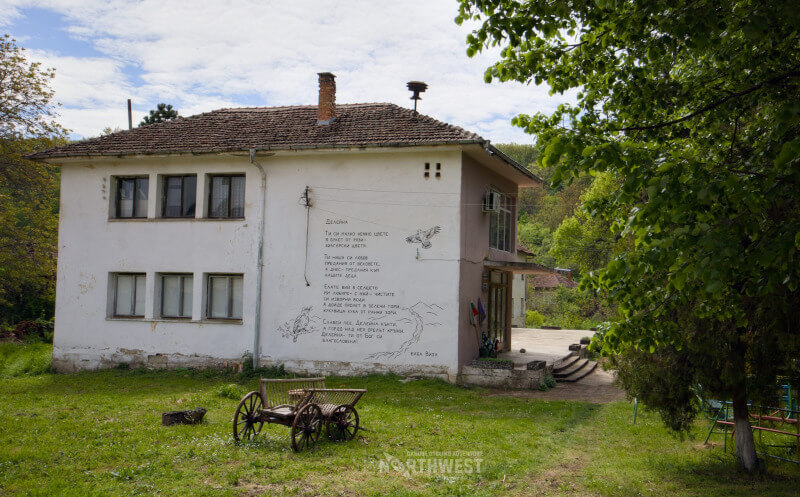
You do not arrive in Deleyna by accident. You have to mean to go there.
The village sits near the Serbian border, among springs, fountains, and people who still remember and others trying to gather those memories before they scatter for good. There, the Ideas Factory team works with locals on a photographic archive of the village. They also talk openly about difficult chapters of history, including resistance to collectivization and a women’s protest from 1944.
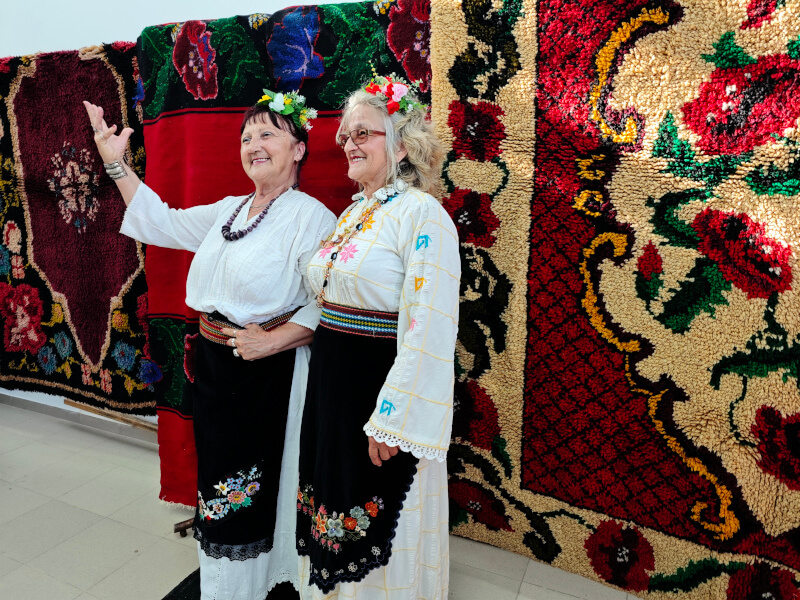
On the facades of some Vlach houses, you can still see zhugraveli—painted wall motifs that seem to animate the buildings themselves. Ethnologist Desislava Bozhidarova says they make a home feel larger from the inside.
And she is right. A painted ornament on a wall can turn out to be protection, memory, prayer, or the signature of someone who believed a home was not just a roof, but an entire world.
A few kilometers from Deleyna stands the Albotin Rock Monastery. On the second day of Easter, people from nearby villages gather in the meadow below it, a tradition kept alive for generations by families from Gradets, Dolni Boshnyak, Rabrovo, Kosovo, Deleyna, and Tiyanovtsi.
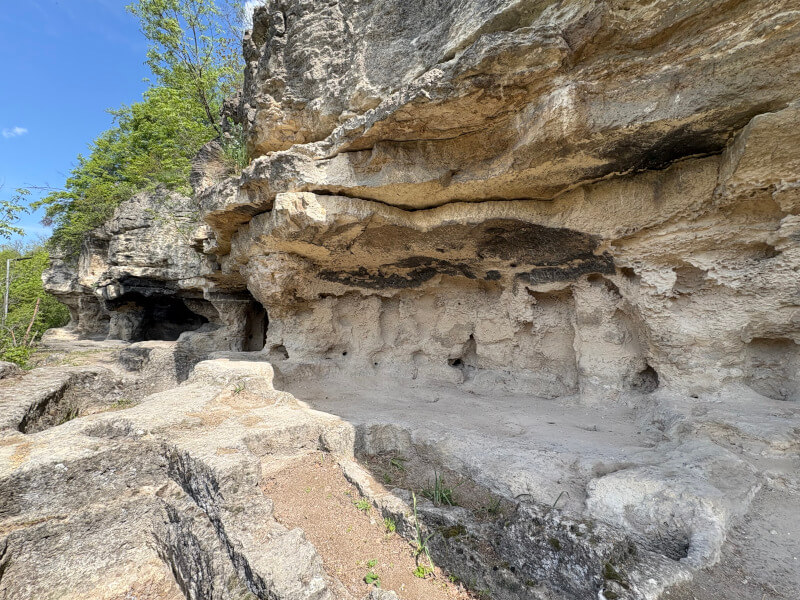
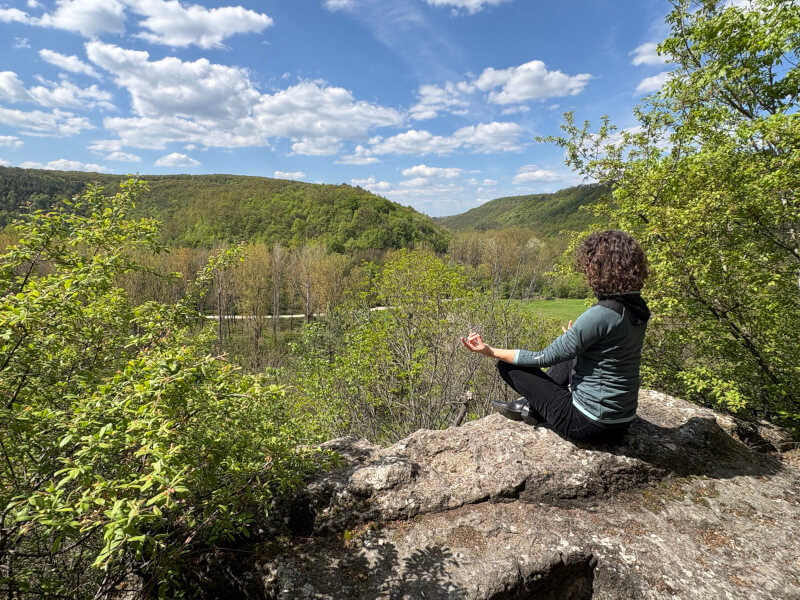
There is music, noise, reunion, conversation. And if you prefer silence, the surrounding cliffs and forest paths are enough for an entire afternoon of reflection.
Further south, in the village of Salash, memory still holds stories about the kindness local people showed to Bulgarian Jews who were interned there during the 1940s, a story later written about by author Moni Papo.
Perhaps it is no coincidence that the century-old Bulgarian-Serbian gathering known as Kadă Boaz also takes place nearby every summer, bringing together people from both sides of the border. In a region shaped by frontiers, this part of Bulgaria has long understood how to live beyond dividing lines.
Stories like these rarely become tourist attractions. But without them, a region remains impossible to truly understand.
And then there is Vidin’s more tongue-in-cheek side.
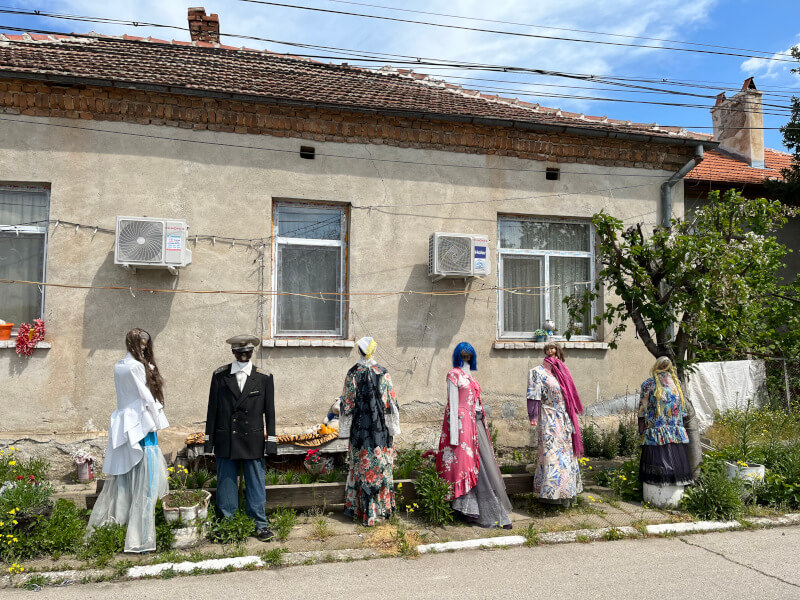
In Novo Selo there is a house full of dolls—one of those strange, delightful places that stay in your memory much longer than official landmarks ever do.
That is what this region is like: riverside villages with beaches, mountain villages with dialects, Vlach songs, Torlak recipes, Bulgarian legends, painted houses, and people carrying stories everywhere they go.
It is not epic in the usual sense.
Here, the epic sits on a small chair in front of the house and asks whether you have eaten.
Listen to the whole story on Spotify: