🎧 Listen to this story on Spotify!
Meet Max
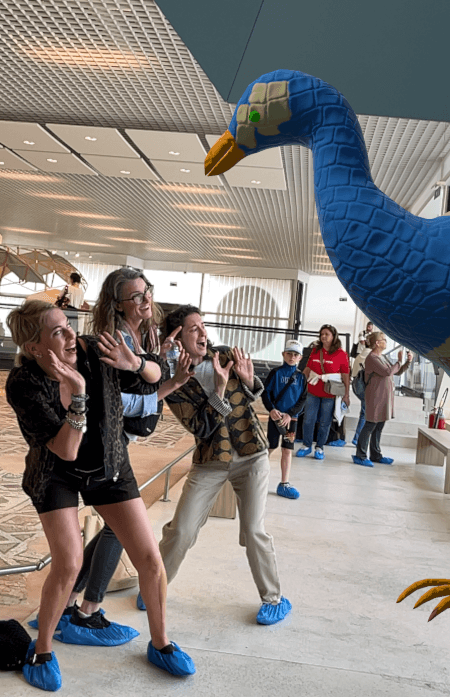
The birds in the ancient mosaics of the Bishop’s Basilica of Philippopolis have been still for centuries. Raise your phone, though, and suddenly they are strutting and swooping around you. A moment later, an enormous bird appears to be charging straight at you.
At the Basilica’s Festival of Mosaics on May 16, 2026, another game drew an almost constant line. The arcade machine refused to accept coins. To start playing, you had to feed it an empty aluminum can or plastic bottle.
Who comes up with things like this?
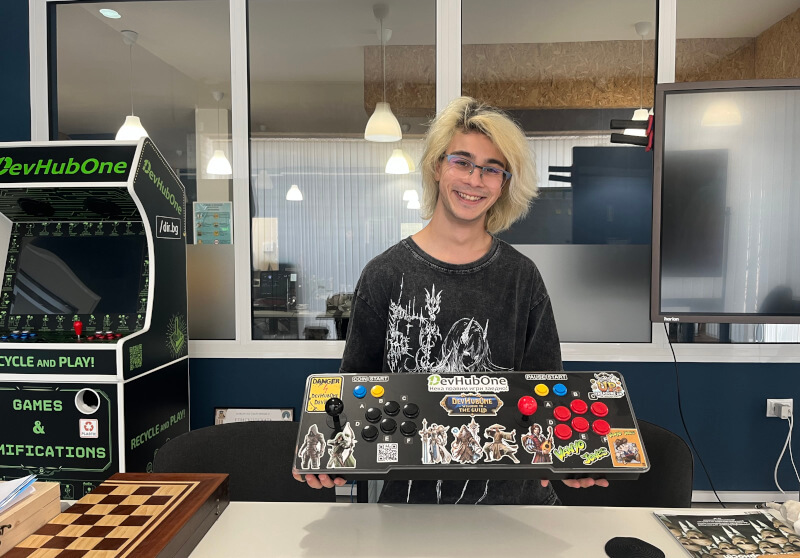
Meet Max.
That is what some members of Vasil Anastasov’s team call him. MaxVRAB was his gaming handle, and over the years Max has stuck almost like a second name. Some of his colleagues have never called him anything else.
Vasil is the founder of DevHubOne, a Bulgarian organization that gives students free opportunities to take their first steps in game design and digital creative work. Today, the team also uses games to help museum visitors notice overlooked treasures, solve practical problems for companies, and even make recycling more appealing.
Vasil is 23 and has already spent nine years designing games—and almost as long helping others learn how to make them. He finished his first game at 14. The following year, he began showing students his own age how they could build one, too. More than 540 young people have since taken part in DevHubOne workshops.
None of it was planned. Many of the turns that shaped Vasil’s life began as a joke, a happy accident, or with the words that capture his approach better than any carefully crafted mission statement: “Let’s give it a shot.”
The 5 A.M. Bell
Vasil inherited his older brother’s computer when he was four. He played often, sometimes with his brother and father. Games were a shared pastime at home, and his parents gave him the freedom to discover for himself where that interest might lead.
“My parents aren’t really parents to me in the conventional sense. They’re genuinely close friends,” Vasil says. His father gave him one piece of advice early on: find what you enjoy while you are still young, so that by the time you finish school, you already have experience.
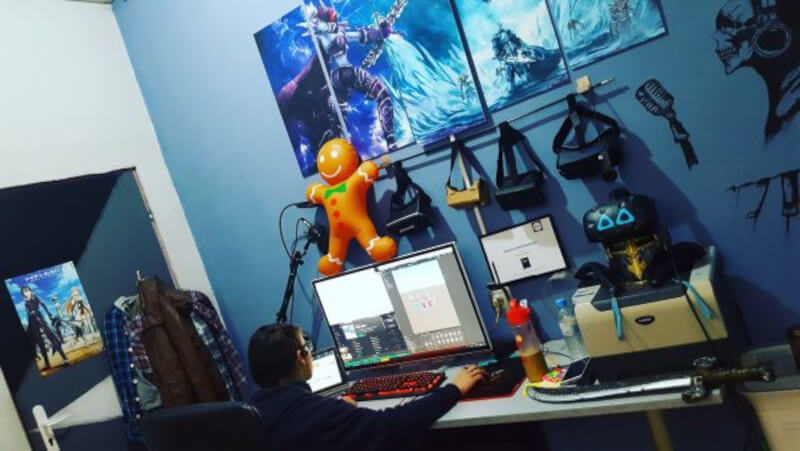
Vasil’s first game began with a suggestion from his brother. When Vasil was in seventh grade, his brother bought a virtual-reality headset and said, “Why don’t we make a game?”
Vasil hesitated, then replied, “Let’s give it a shot,” and got to work.
The brothers started from scratch. A year later, they released TimeWarriorZ VR on Steam, one of the world’s largest digital platforms for video games. It earned an “impressive” $37, not even enough to withdraw from his account. What mattered was that Vasil now knew what he wanted to do.
His parents gave him room to choose his path. His grandfather supplied the discipline.
Until seventh grade, Vasil spent his summers with his grandparents in a Bulgarian village. His grandfather, a former military officer with two university degrees, turned the school holiday into what Vasil jokingly calls “military training.”
A bell woke him at five every morning. He had five minutes to get up, make his bed, dress, and report downstairs ready for the day. Physical exercise came first, followed by a circuit of the village and mathematics. Tasks completed properly earned points, which could later be traded for rewards such as a trip to the swimming pool or a new toy.
Once the work was done, the day belonged to him. He could take a hammer, nails, and a saw into the woods and build a small house. His grandfather had only one condition: bring the tools back.
Without calling it game design, Vasil’s grandfather had turned everyday life into a system of tasks, choices, and rewards. Years later, his grandson would apply the same logic in museums, schools, and companies.
The Third Rule of Game Design
Vasil’s first game took him to Romania, where he sat an exam to become a certified Unity game developer. At the time, Bulgaria had no certification center for Unity, one of the most widely used tools for building video games.
By chance, he learned that DevPlay, a major game-development conference, was taking place in Bucharest and received a free ticket.
“There I was at 14, while everyone else had about 14 years of experience in the industry,” he recalls with a smile.
His nervousness quickly gave way to surprise. People asked about his game, offered advice, and in several cases even shared code from their own projects. Vasil had assumed that companies guarded such solutions closely. Instead, he found a community where people readily passed knowledge along.
He came away with a third rule for game designers: make games, keep learning, and share what you know.
The Student Who Became the Teacher
In ninth grade, Vasil approached Asen Alexandrov, the principal of his school, 51st Secondary School “Elisaveta Bagryana” in Sofia, with a proposal. Once a week, he would bring in his own computer and virtual-reality headset and show other students how games were made.
The principal’s response surprised him: “We are not doing it that way. We’ll buy the equipment.”
The principal saw more than an entertaining extracurricular activity. Game design could introduce students to a fast-growing global industry. The video-game market now exceeds $200 billion worldwide, and making games requires much more than programming. It also involves visual art, music, writing, design, and project management. A few years later, the school would go on to offer vocational classes in animation and computer graphics.
It began by purchasing two computers and two VR headsets. Five eighth-graders joined the first group. Vasil was barely older than they were and still learning how to explain his own process. A year later, the students were presenting projects of their own: one had built a virtual room containing the planets of the solar system, while another had filled a room with dragons.
In 2021, the course became an official extracurricular program, and Vasil continued leading it after graduation. He still resists being called a teacher.
“I’m simply sharing my experience and what I know,” he says.
At the beginning of his own journey, Vasil gave up several times. He did not know where to start and wondered whether making games was simply too difficult for him. His older brother encouraged him to keep going.
In the classroom, Vasil tries to do the same for others: show them where to begin before the complexity has a chance to drive them away.
A Place to Keep Going
After several years at the school, Vasil noticed a problem. Between 70 and 80 percent of the workshop participants either did not have a suitable computer at home or shared a single machine with their entire family. They could become excited about game design in the classroom, but afterward they had nowhere to keep building their skills.
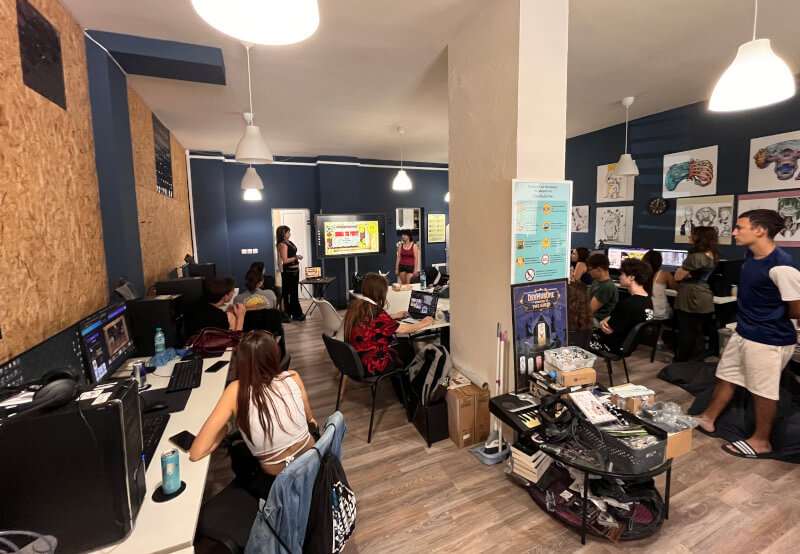
At first, Vasil imagined a modest room with six computers that students could use free of charge. By the time the idea became reality, it had grown considerably. The DevHubOne Foundation was established in 2022, followed by a dedicated space with 16 workstations, virtual-reality equipment, and simulators. After attending an introductory workshop, students could return to develop projects of their own.
The space came together through the efforts of many people and organizations. The idea received early support from the social-entrepreneurship incubator run by Reach for Change. A charity #GoodGame marathon brought together more than 115 participants for a 127-hour livestream. Bulgarian game studio Imperia Online donated computers, while the owner of the Ruvex Business Center provided the premises. The America for Bulgaria Foundation supported DevHubOne in 2023 and 2024, allowing the free workshops to continue.
More than 540 young people have now taken part. Some have gone on to work in the game industry. Others have discovered that their interests lie elsewhere. Both groups had the chance to experiment before making a major choice about their future.
When someone calls DevHubOne an academy, Vasil is quick to correct them: “We’re not an academy. We’re a community.”
In that community, mistakes are not hidden. Students see that mentors also get things wrong, retrace their steps, and try again. Gradually, failure begins to look less like an ending.
The Worst Job Offer
Free workshops raise an unavoidable question: who pays the bills?
Vasil soon realized that the organization could not rely on donations alone. At the end of 2024, the team established DevHubOne Company, which develops paid products and services. Its revenue helps fund the foundation’s educational work.
At Vasil’s side is Boyan Ivanov, a programmer and friend since seventh grade. While they were still in high school, Vasil occasionally hired Boyan to write code for different projects. Then, in 2022, he called with an offer unlikely to appear in any recruitment handbook.
“You’ll work twice as much and earn half as much.”
Boyan thought about it and replied, “That sounds really cool. Let’s do it.”
The two began developing DevHubOne together. Vasil took charge of game design and the business side, while Boyan led software development. Although they are partners, neither owns shares in the company. It belongs entirely to the foundation.
The team also includes 3D artist Kostadin Stoilov, who first met Vasil in a virtual video game. They played together for two years before meeting in person, despite living only about 15 minutes apart. Kostadin still calls him Max.
Vasil’s parents are part of the team as well. His father, Ivo, builds the arcade machines, while his mother, Ani, works on visualizations and graphic design. His older brother still steps in whenever needed.
Insert Bottle to Play
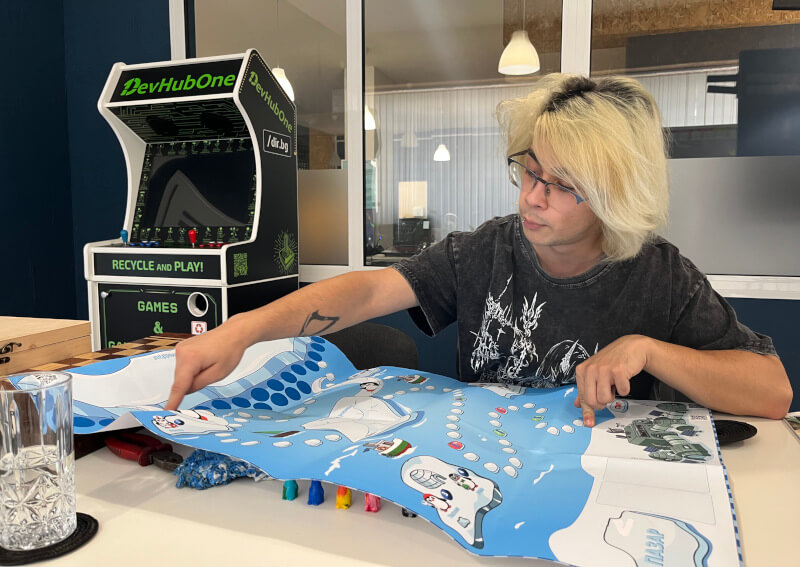
Among DevHubOne’s most recognizable products are arcade machines that accept plastic bottles and aluminum cans instead of money.
You insert the packaging, the machine registers it, and the game begins. Some games involve collecting rubbish. In others, two players battle monsters made of trash. The team designs the cabinet, hardware, software, and games. Seven machines have already been sold to schools, universities, and companies.
The idea is practical. Recycling usually promises a benefit that remains distant and invisible. The arcade machine provides an immediate response: the bottle unlocks a game. A useful action suddenly has sound, movement, and a reward.
“Our goal is always to connect something useful with something enjoyable,” Vasil says.
The team also turns collected bottle caps into pieces for a board game about climate change, including tiny penguins. Players learn what is happening to the Thwaites Glacier (also commonly referred to as the “Doomsday Glacier”) or about the enormous accumulations of plastic gathered by ocean currents. Codes printed on the game lead to up-to-date information about the issues it explores.
A child is not simply handed a lecture on global warming. The player holds a tiny-penguin piece, makes a decision, and sees the consequence unfold within the game.
DevHubOne applies the same approach to other problems. The team has developed a recruitment game, tools for corporate training, and an application used in rehabilitation. Each project begins with the same challenge: how do you make a dull, complicated, or distant process clear and engaging enough for people to want to take part?
Treasures Beneath the Mosaics
TreasureUp began with a similar question: how do you help museum visitors notice what they might otherwise walk past?
Before working on the product, Vasil was not particularly fond of museums. He was interested in history, but long rows of objects accompanied by short labels rarely held his attention. That feeling became the starting point for TreasureUp, which he further developed while taking part in Muse Academy, an America for Bulgaria Foundation program for museum professionals and cultural entrepreneurs.
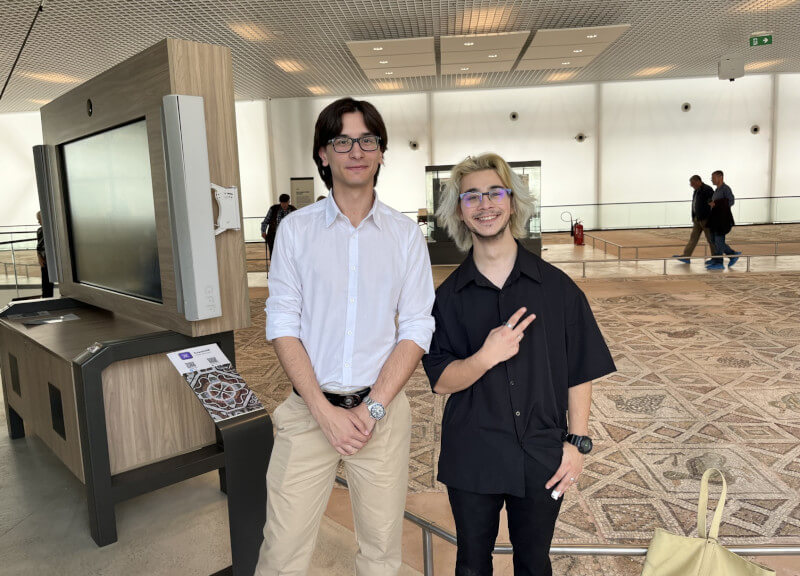
Today, TreasureUp operates in nine museums. The app guides visitors through an exhibition by asking questions that cannot be answered from the sofa at home. You have to find a particular object, read about it, and look closely.
Your score earns you a medal, along with augmented-reality rewards. At the Bishop’s Basilica of Philippopolis, these allow you to walk among virtual birds or come face-to-face with a giant one. To make that bird look exactly as Vasil imagined it, Kostadin reworked the 3D model four times.
No Save Button
From the outside, Vasil’s story might resemble a quick run through a series of successful levels: a first game at 14, workshops while still in high school, a foundation at 20, and soon afterward a company with paying clients.
The beginning was harder than that. When you are a young entrepreneur, Vasil says, trust has to be earned. People want experience and proof before entrusting a project or budget to someone barely out of their teens.
Vasil’s answer is persistence.
“When someone tells me, ‘You can’t do that,’ my reaction is the opposite: ‘Oh, really? You think I can’t? Let’s give it a shot.’”
He rarely speaks of failure. In his vocabulary, there is a mistake, something learned, and another attempt. Yet this instinct has another side: Vasil finds it difficult to call something finished when it does not look exactly as he imagined. Sometimes that means another version, another correction, and several more hours of work.
Persistence can easily turn into workaholism. Vasil admits that he works even while on vacation, something his girlfriend does not always greet with enthusiasm. Until now, he has not even found time to celebrate the organization’s anniversary.
His next challenge may be less about knowing how to begin than recognizing when to stop. Real life has no Save button and no earlier version to return to after an endless workweek.
The Next Level
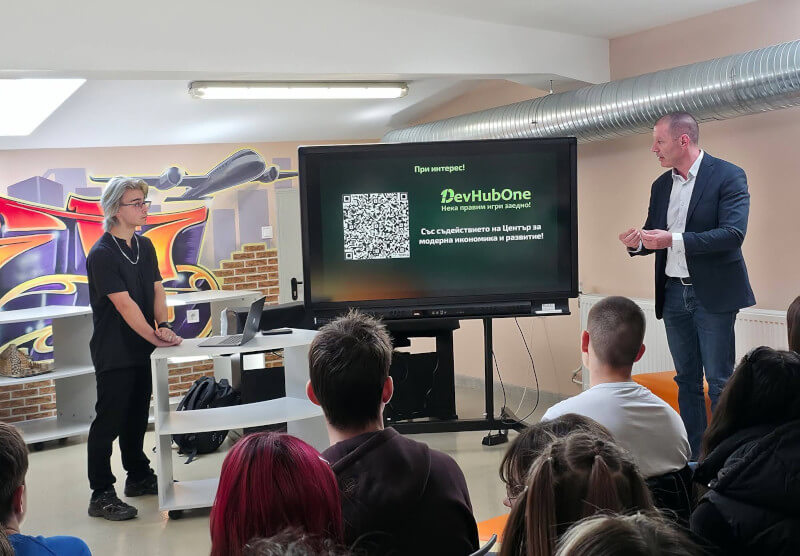
At the end of November, DevHubOne plans to hold its first game jam in partnership with SofiaGameJam: a 48-hour event in which participants will create games in teams. If all goes well, the organization will also celebrate its birthday for the first time. Four years after its founding, Vasil has finally decided to pause for a moment and look back, together with the people around him, at how far they have come.
Then the work will continue. DevHubOne hopes to reach more young people outside Sofia through mobile workshops. One day, the team would also like to take TreasureUp and its recycling arcades beyond Bulgaria.
One of Vasil’s dreams remains unchanged: “I want to make a game that the whole world will hear about.”
His first game still holds its unreachable $37 on Steam. In the meantime, however, it has set hundreds of other stories in motion. For many of the young people who come through DevHubOne, everything begins with a computer, a place to work, and someone beside them saying, “Let’s give it a shot.”
From there, the game is in their hands.