Listen to the story: 6:34 min
School-level rounds of the Bulgarian National English Spelling Bee take place between February 9 and 15.
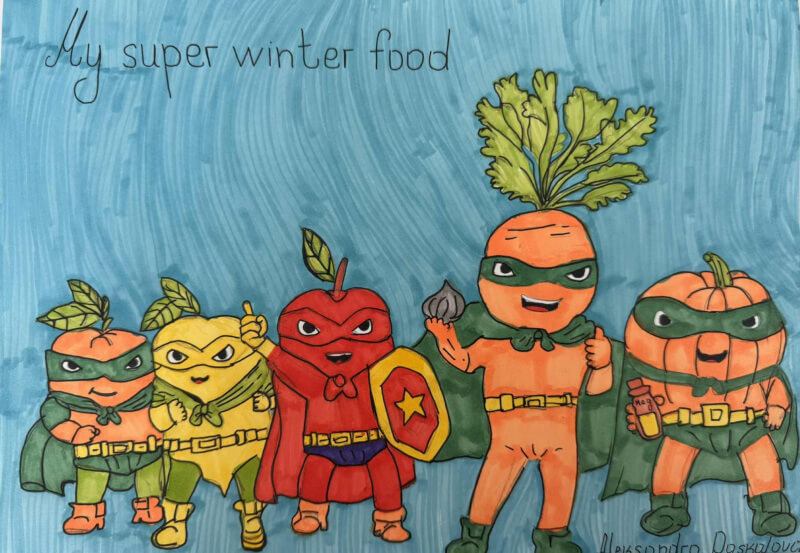
In Bulgaria, spelling is not a sport. Least of all in a foreign language.
And yet, for the past 16 years, thousands of children have been walking onto small stages, one by one, standing alone—no notes or prompts—and spelling English words out loud, letter by letter. Sometimes their voices shake. Often, they don’t.
This is what the English Spelling Bee looks like in Bulgaria. And if it sounds dry, that’s a sure sign you’ve never been in the room.
In the 2025–2026 school year, the “hive” is louder than ever. A total of 254 schools and more than 3,500 students are taking part in the national Spelling Bee, while another 3,200 children in grades 1–4 compete in Spelling Bee Junior. They come from elite private schools in Sofia and from small towns and villages where the school is the heart of community life. English, here, is not a barrier; it’s common ground.
Bulgarian is a largely phonetic language: once you hear a word, you can usually spell it. English plays by different rules. Silent letters, spelling traps, words that refuse to make sense. No wonder the US National Spelling Bee is broadcast on ESPN. Not with slam dunks or sprints, but with the kind of tension usually reserved for a championship final.
Which raises a more interesting question: how did this famously American, decidedly non-contact “sport” take root in Bulgaria and not just survive, but build communities?
When the theme is food, everyone has something to say
Each year, the Bulgarian Spelling Bee chooses a central theme. In 2026, it’s Bee Healthy, with a focus on healthy eating. On the surface, it may seem far removed from spelling. In practice, it fits perfectly.
“It’s a topic that’s familiar and accessible to everyone,” says Yulia Dimitrova, a former English teacher and now part of the team at the Education and Development Corps Foundation (CORPluS), which organizes the competition in Bulgaria. “Everyone has a food story. And children take part not for grades, but for the experience itself.”
English stops being something memorized for a test. Children use it while reading food labels (and discovering a useful superpower along the way: how to tell which ingredients are good for them and which aren’t!), drawing “healthy plates,” cooking with their parents, and turning fruits and vegetables into small compositions. Words come with action. And they stay.
“Spelling Bee sparks children’s interest in English and gives them an extra push to learn,” says Valya Zavyalova, Program Director at CORPluS. Participation improves results even among shy students and those who struggle academically.
There’s something else, quieter but just as important: children learn while they’re having fun, almost without noticing. English travels alongside drawing, cooking, arranging, explaining—not as an exercise, but as part of everyday life.
One hive, many voices
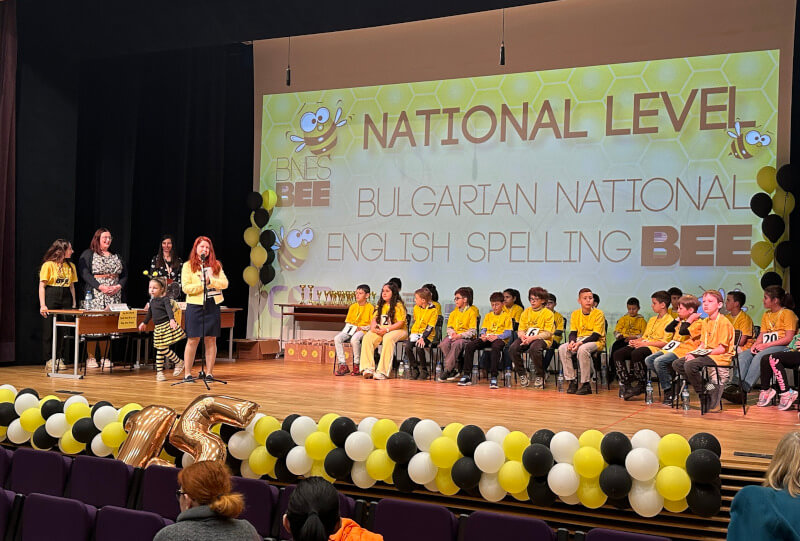
In the village of Kornitsa, in southwestern Bulgaria, the school Spelling Bee round hasn’t been just a competition for years. It’s a celebration. Second-graders put on aprons and become “winter superheroes,” preparing vitamin-packed salads to boost immunity. Older students design plates filled with care and imagination. Parents join in. Teachers guide and watch. The whole school buzzes.
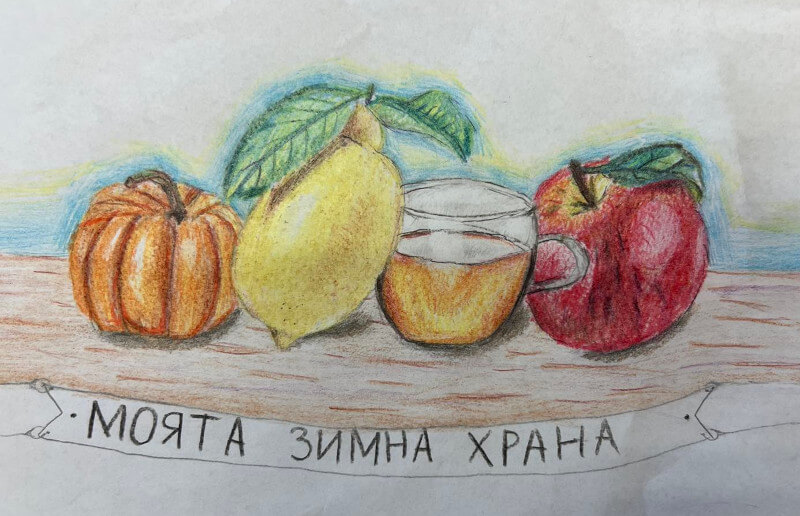
The same energy shows up elsewhere, too. In Gorna Oryahovitsa, students at Georgi Izmirliev Secondary School build three-dimensional superheroes inspired by their favorite “superfoods.” In Burgas, at Dr. Maria Montessori Private School, some children draw, others mix ingredients in the kitchen with their parents, while a third group carefully writes down recipes. In the village of Dabnitsa, broccoli and carrots turn into caped heroes on paper. From the city of Sliven comes an unexpected submission: a still-life painting sent by a sixth-grader from Dimitar Petrov Primary School. The youngest “bees” come from Lazhnitsa, near the Greek border—just starting out, but already part of the same story.
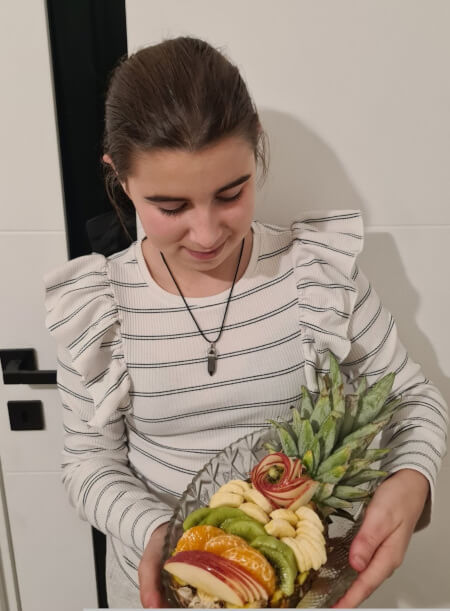
Scenes like these repeat themselves across the country. Children don’t just spell words; they draw, cook, invent, and present their work to one another. Parents step into classrooms. Teachers step out of the role of examiners. What begins as a spelling competition slowly becomes a shared experience, one where learning is no longer a solitary effort.
That meaning is built right into the name: in English, bee means both the honey-making insect and a communal gathering around a shared task.
Not just words, but courage
From the outside, Spelling Bee might look like a spelling test. But only to those who haven’t seen it up close.
In reality, it’s a lesson in courage.
To stand alone. To hear the word. To say it slowly, letter by letter. And to keep going, even if you make a mistake.
That’s what has kept Spelling Bee alive all these years. Not the promise of a prize, but the experience itself. The encounters. The sense of belonging.
Spelling may not be a sport in Bulgaria. But Spelling Bee turns it into something else entirely: a stage, a celebration, and a place where conversations unfold—about language, food, and what it means to raise children today.
And that is no small thing.
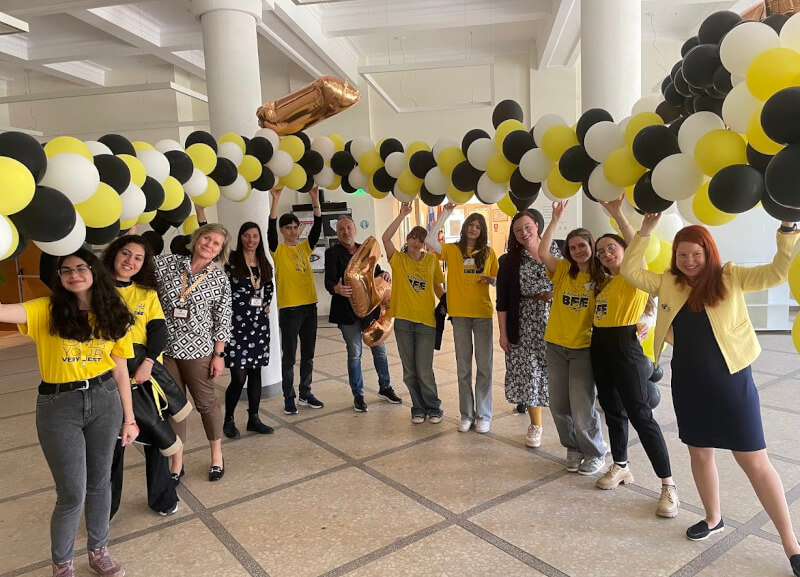
The Bulgarian National English Spelling Bee is made possible with the support of the America for Bulgaria Foundation.