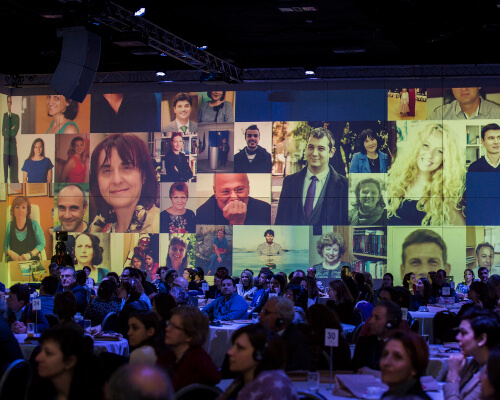
Every once in a while, an exhibition does something rare: it leaves you proud, heartbroken, and eager to call someone the minute you walk out just to say, “You have to see this.”
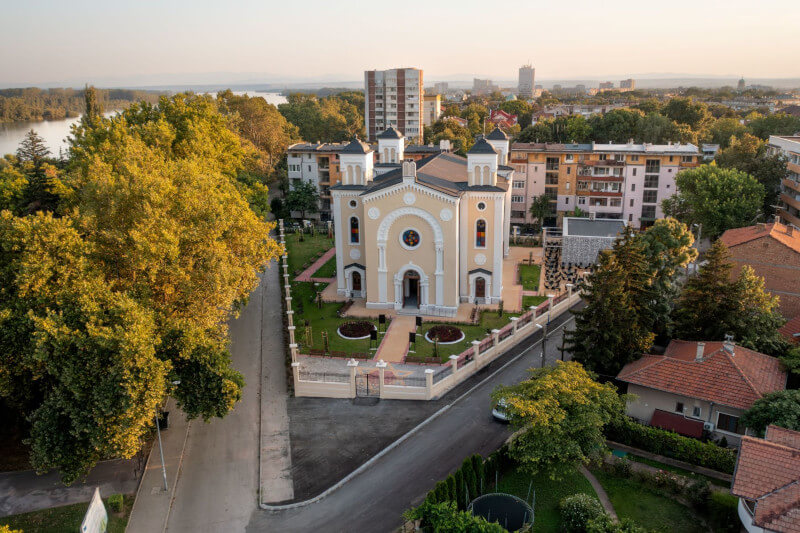
That is exactly what happens inside the restored Vidin Synagogue, now home to the Jules Pascin Cultural Center. The building, brought back to life with European Union funding, is filled with voices again. And its new permanent exhibition, created with support from the America for Bulgaria Foundation, revives a world that has nearly vanished from Vidin’s streets.
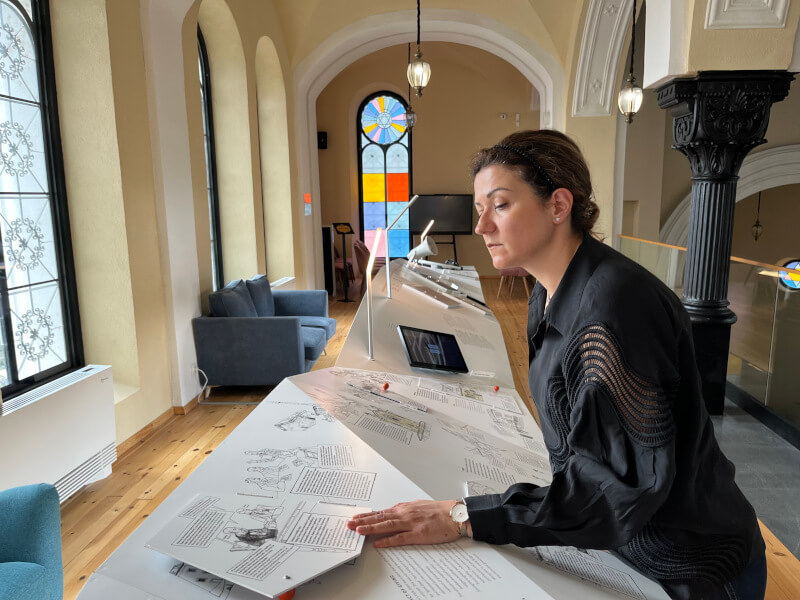
Everything begins with two tables.
One tells the story of Vidin’s Jewish community—a community whose members today, as the exhibition’s creators put it, “can be counted on the fingers of your two hands.” Mostly elderly women remain. Their families once helped finance public buildings, supported poor children and orphans, and sent young people abroad to study. The exhibition avoids dusty timelines and textbook history. Instead, it gives you life: the bustling Kaleto neighborhood, the noise of the marketplace, children playing by the Danube, the smell of family recipes drifting from kitchen tables.
And then come the stories you cannot shake.
A rabbi who jumped into the floodwaters during the devastating 1942 flood to save people, despite not knowing how to swim. A factory owner remembered today as “Vidin’s Schindler,” who employed and protected Jews during World War II, risking both his livelihood and his life. The exhibition does not sidestep the darkness of the 1940s: Bulgaria’s anti-Jewish laws, or the deportations from Greek Thrace and Vardar Macedonia. But it also tells another story: how Bulgarian Jews were ultimately saved through pressure from ordinary citizens, clergy, politicians, and public figures who refused to stay silent.
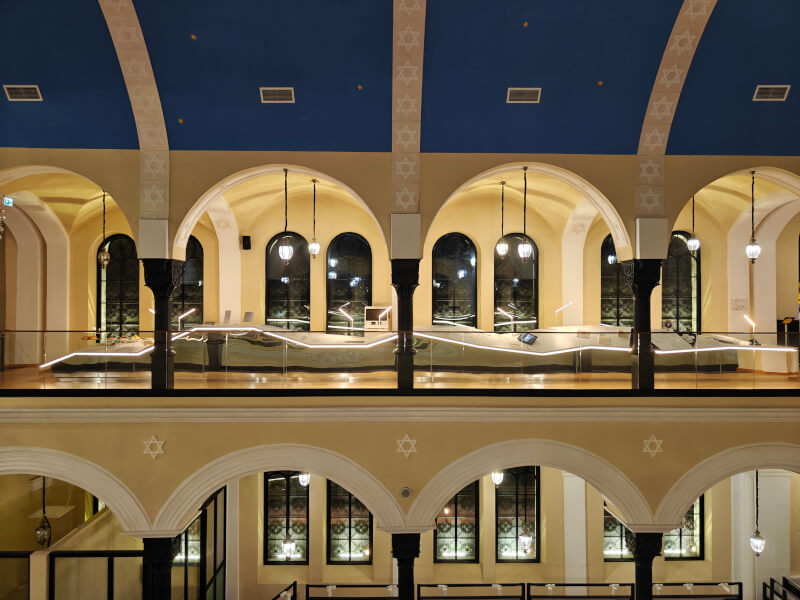
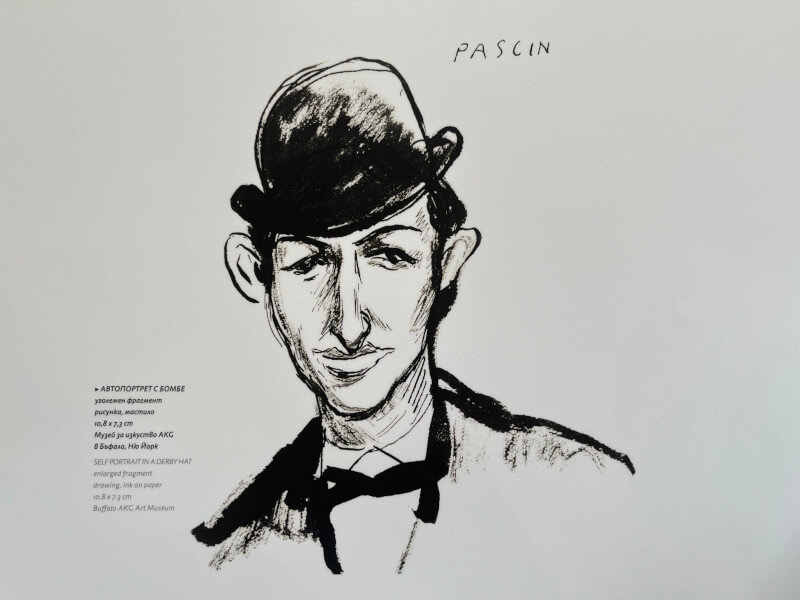
The second table belongs to Jules Pascin, the boy from Vidin who made his way to Paris and New York and became one of the great artists of modernism. A friend of Picasso, Hemingway, and Modigliani, Pascin painted cabarets, circuses, lonely figures, and the restless nights of Paris. Yet the exhibition resists turning him into a marble statue of genius. Instead, it reveals a complicated, deeply human man: witty, fragile, dazzling, and at times self-destructive. His self-portraits are among the exhibition’s most arresting moments—as if the artist is simultaneously mocking himself and searching for who he really is.
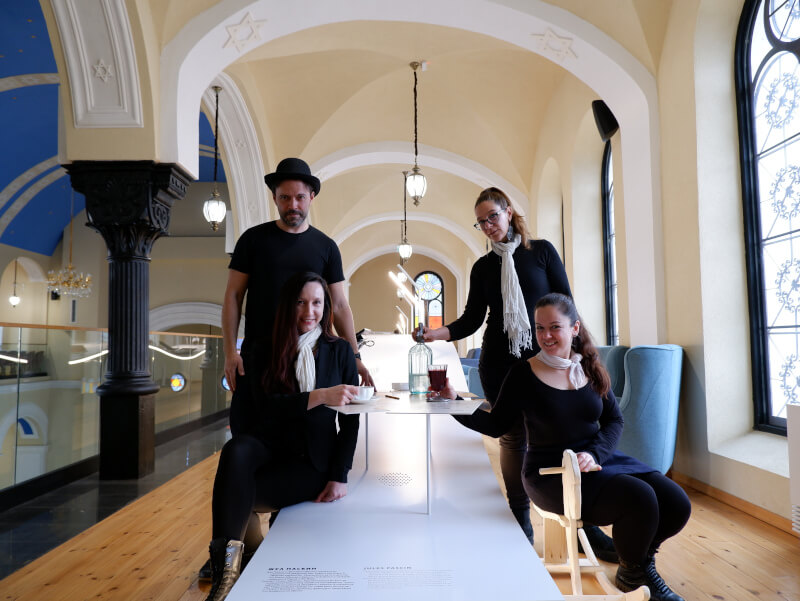
Behind the entire experience is Atelier 3, the architectural studio of Miroslav Velkov, Donika Georgieva, Desislava Kovacheva, and Kristina Kirilova. If you have visited Sofia’s Triangular Tower of Serdica or the Vratsa Treasures exhibition at the Vratsa Regional History Museum, you have already encountered their work. They do not simply design exhibitions. They make the past speak.
The team spent nearly two years creating the Vidin exhibition, building full-scale prototypes, hunting down objects, and restoring ancient inscriptions with the help of consultants in Israel. But what mattered most to them was something else entirely: they wanted visitors to step inside history, not observe it from a distance. That is why the exhibition never feels trapped behind glass. It pulls you closer. It invites you to sit down, listen carefully, and linger.
And when you finally leave, Vidin somehow feels more alive than it did before.
Go to Vidin. Really.
Some places preserve history. Others remind us what kind of people we are still capable of becoming. The restored Vidin synagogue is the second kind.