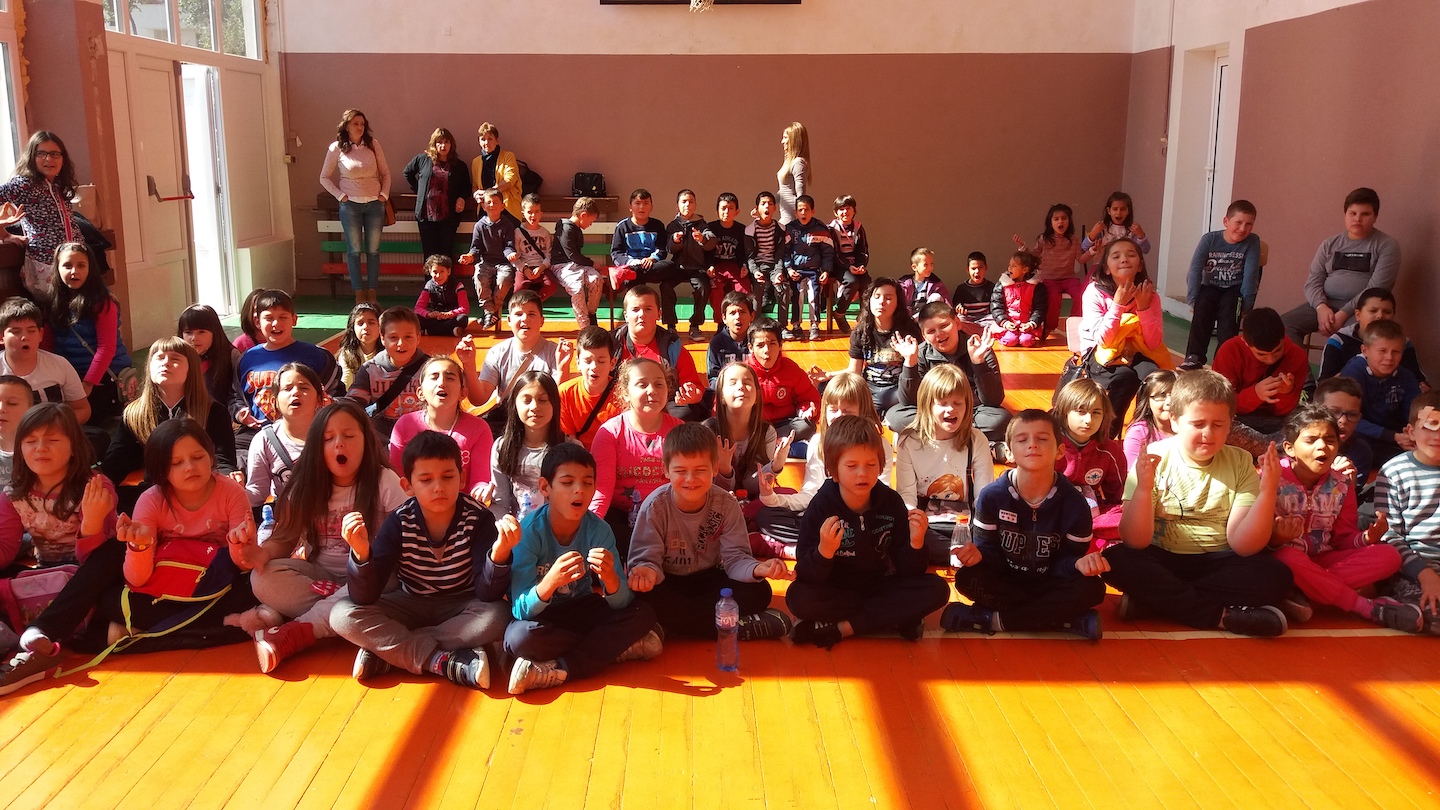
 Something unusual is happening at the only school in a remote mountain village in Southern Bulgaria. In the school hall, a woman is drawing on sand. A camera captures her hands’ movements and a projector transmits them onto a large screen behind her, revealing—to the audience’s delight—the bottom of the sea and its inhabitants. The children in the hall are mesmerized: most of them have never looked so far beneath the sea’s surface, and for some, it is their very first glimpse of the sea.
One girl in the front row, age 6 or 7, is not paying attention to the screen. She is following the actress’s every movement. She never looks away even when the other kids erupt into laughter or into fascinated oohs and aahs. This is likely the girl’s first encounter with a woman who is expressing herself creatively in public.
“Expression through art makes a profound impression on children,” says theater director Petar Todorov, who wishes to give every child in the region access to quality art. The sand performance was in the little girl’s village thanks to his efforts.
Seven years ago, Petar and his wife, actress Desislava Mincheva, created Forbidden for Adults, a theater festival that aims to open new worlds to children and show them different ways of self-expression. For a week each fall, Forbidden for Adults presents a variety of theater and dance productions and at least one new children’s feature film to hundreds of children and young adults in more than 15 towns and villages in Southern Bulgaria.
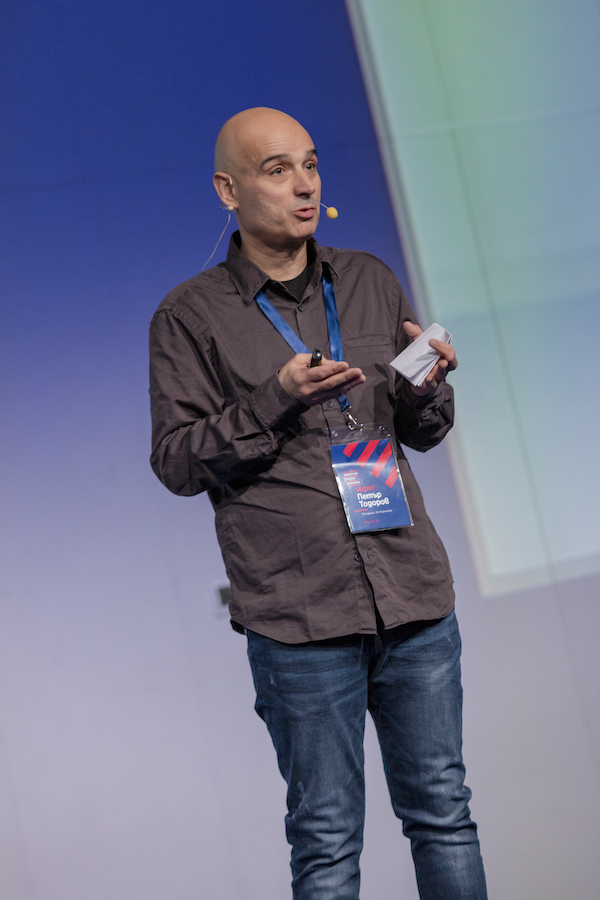 The region disappeared from the theater map in 2010, when the state theater in Smolyan closed. Although it reopened in 2014, its offerings remain limited due to a lack of funding. Thus, Forbidden for Adults is the only contact local communities have with professional theater. Petar’s dedication is the reason the festival has been held for seven years in a row now, with the eighth edition coming in the first week of October this year. “Children need this” is his simple explanation, and this need justifies the hundreds of hours Petar spends selecting or preparing educational productions and traveling around the region in search of support from local community leaders and businesses.
Despite the festival’s name, family performances are an important part of the program. Petar envisions families going to the theater together and then swapping impressions at home. The performances are selected carefully to raise important questions that adults feel uncomfortable answering or simply don’t know how to answer, such as: Why does the boy kiss the girl? Why does a dog give birth to a puppy? Where do flowers and babies come from? Which world is more real—that of human beings or that of technology? Isn’t facing your fears the best way to overcome them?
“This is when art comes to the rescue, because only art has the right tools to answer children’s questions,” says Yuliana Decheva, who manages the Vibrant Communities program area of the America for Bulgaria Foundation. In recognition of the important role of art in children’s lives and the need for quality theater in the Middle Rhodope region, the Foundation has supported Forbidden for Adults since 2013.
The festival includes performances by Bulgarian and foreign theater companies. This is not coincidental. “It is important for children to know that there is a bigger world out there,” Petar says.
Enabling vicarious travel to new worlds isn’t art’s only function; it also helps make our own a better place. Petar explains: “Art teaches children about empathy, about love, kindness, humanity, creation, and friendship.”